An Interview with Dr. Matthias Traub, Vector Informatik Managing Director
Platform Strategies, Evolving roles, and the Shift from a Product to a Solution Provider
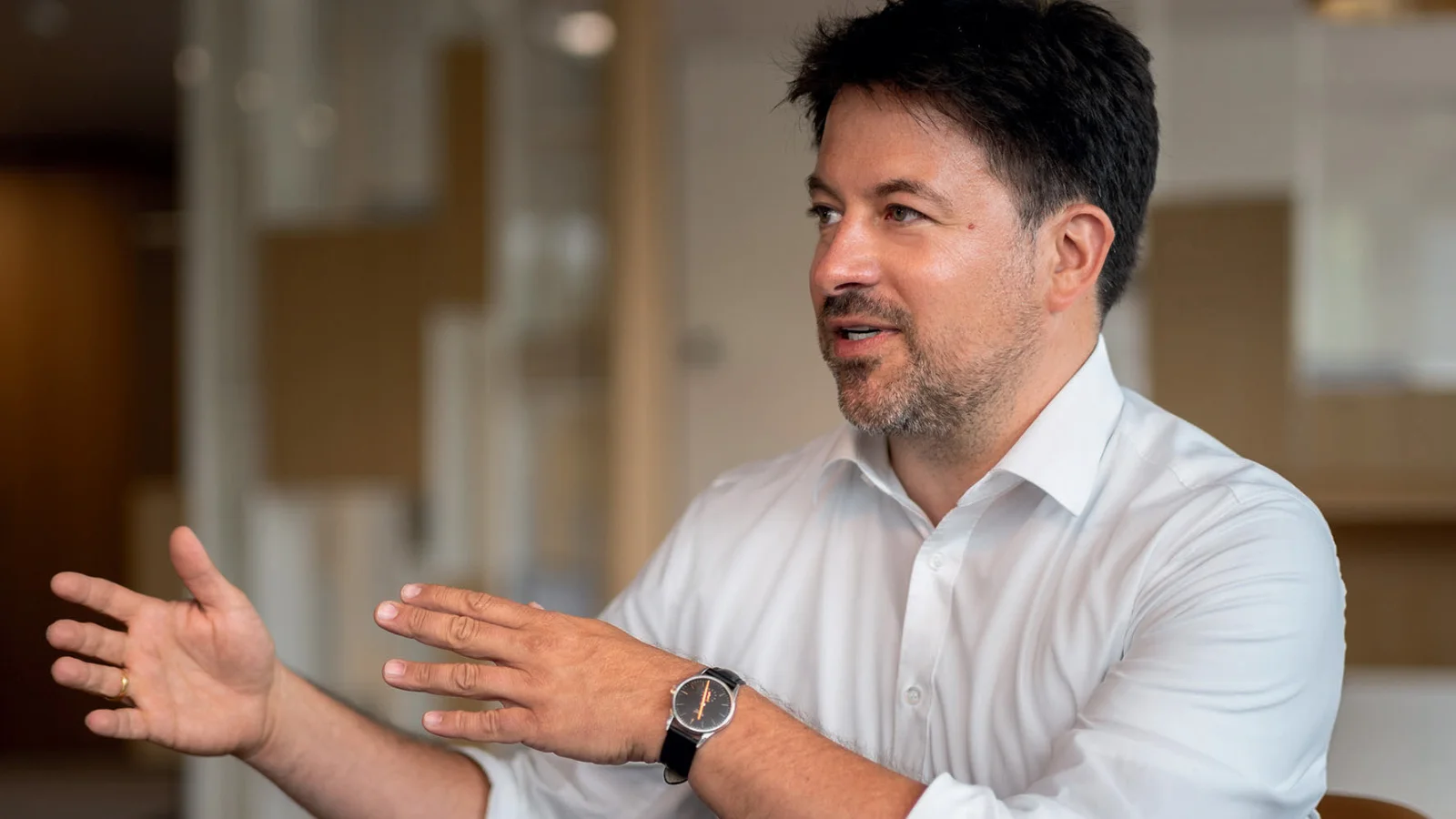
“I clearly feel the momentum across the industry.”
Interview with Dr. Matthias Traub, Vector Informatik
Software, ADAS, autonomous driving – vehicle development is more complex than ever. Vector Informatik aims to accelerate the deployment of new technologies with its solutions. HANSER automotive spoke with Vector Managing Director Dr. Matthias Traub about platform strategies, evolving roles, and the shift from a product to a solution provider.
Software-defined vehicles require a fundamentally new approach – both in terms of the product as well as the development processes. Andreas Hentschel, Editor-in-Chief of HANSER automotive, spoke with Dr. Matthias Traub, one of the two Managing Directors of Vector, about the challenges facing the automotive and supplier industries.

Software has been an integral part of vehicles for decades, but we’ve only started talking about software-defined vehicles in the past four or five years. Why has this term gained so much traction recently?
Vehicle development has undergone a fundamental transformation. When I started in the automotive industry 25 years ago, the electrical architecture consisted of individual ECUs, each responsible for a dedicated function. The turning point came around 2014, when all OEMs adopted CASE – Connected, Automated, Shared, Electrified – as a strategic goal. At that time, everyone had a smartphone and was familiar with software updates. This everyday experience reshaped expectations for the in-car user experience as well. Vehicles, previously isolated systems, became connected to the cloud, with the option to keep systems up to date. Technologically, this was a milestone. Software systems from the vehicle to the cloud had to be designed to even allow updates. But the true essence of the software-defined vehicle lies in the transformation of the development process. It’s not just about technology – it’s about a fundamental rethinking across the entire value chain.
Rethinking in what way?
In the past, the focus was clear: Start of Production (SOP) was the goal – develop the function, deliver it, and you’re done. Today, software responsibility spans the entire lifecycle, including bug fixes, feature enhancements, and even replacing entire functions – all in line with the DevOps approach. This changes everything: processes, roles, responsibilities. It requires a redefinition of ownership and interfaces. OEMs, who used to delegate much of the work to suppliers, are now increasingly investing in their own software capabilities.
So, does that mean OEMs are now developing their own software?
It’s primarily about the software platform. Think of the world of consumer electronics. An Apple device, for example, comes with a stable, well-designed infrastructure – iOS in combination with cloud connectivity – that enables developers to flexibly build new applications without constantly diving into the operating system. The principle is simple yet powerful: You restore a backup on a new iPhone, and everything works as before. That’s exactly the kind of principle we need to establish in the automotive domain – a robust software foundation that allows new features to be integrated flexibly, without having to modify the entire system each time.
But we’re still far from that reality, aren’t we?
The traditional approach of developing series-specific vehicle software no longer works. What’s needed is a software-centric platform strategy – one that enables software development across multiple vehicle generations, rather than for individual model lines. This transformation affects every dimension – organizational, procedural, and technological. It’s a profound challenge that impacts the entire value chain, from semiconductor suppliers to OEMs, and it can be resolved only through joint effort. What’s required is a fundamentally new setup, and a shift in mindset across the industry.
Do you think the automotive industry is on the right track?
I see many encouraging signals. The technological push from China in particular has sparked strong momentum – acting as a catalyst that’s unleashing fresh energy here in Europe. This sense of forward drive is tangible, along with a clear determination not to fall behind but to catch up and, ideally, return to the forefront. In times of transformation, it’s crucial to have players who take the lead. This creates pressure and a productive competitive environment that mobilizes forces and drives change forward.
What makes you confident that this shift is truly happening?
Above all, the growing openness within the industry. Dialogue has become more intensive again, and there’s a renewed focus on collaborative problem-solving. That’s essential for the transformation toward software-defined vehicles. Many OEMs are taking on greater ownership in software development, as responsibilities along the value chain are being redefined. In the past, OEMs defined specifications, and suppliers – often involving Tier 2s – implemented them in detail. Today, OEMs are more directly involved. Our collaboration with them has become noticeably closer, especially when it comes to software platforms.
You mentioned semiconductor manufacturers. What role do they play?
They’re moving to the forefront of the value chain, especially in ADAS and infotainment. Companies like Nvidia, Qualcomm, Mobileye, and Horizon Robotics from China – once pure technology providers – are evolving into system suppliers. They now not only deliver hardware, but complete functionalities. This shift is redefining traditional roles across the supply chain. For European suppliers, this creates significant pressure to act. They must rethink their business models and reposition themselves strategically to stay competitive in this rapidly changing landscape.
Is Vector affected by this shift?
Absolutely. And it opens up clear strategic opportunities for us. This shift has led to a more direct exchange with both OEMs and semiconductor manufacturers, enabling a new level of collaboration. At the same time, we remain committed to supporting our Tier 1 customers, helping them navigate their transformation and providing solutions tailored to emerging requirements. This strengthens our strategic direction: We’re evolving from a traditional engineering and product provider into a software technology player. Our focus is on building a comprehensive software ecosystem for the development of software-defined systems – from tooling to platform.
Your website states: “Mobility is evolving faster than ever, with more software and growing complexity. Who can still master this?” How would you answer that question?
The challenge lies in the changing nature of development. The traditional automotive world was shaped by the V-model. Process steps were executed sequentially, with responsibility handed off at each stage. This led to complex coordination loops. If an error surfaced during integration on the right side of the V, you had to trace it all the way back. This could take weeks. I remember cycle times of up to 30 weeks. Today, things are different. Toolchains provide far better support for developers. With nightly builds, new software versions can be integrated and tested daily. And thanks to the DevOps principle, developers take responsibility across the entire chain, from the initial idea to implementation and integration. That drives tremendous speed.
What exactly enables this increased speed?
The traditional sequence – specifier, developer, integrator, tester, ECU owner – is being replaced. Teams are working more closely together, responsibilities are consolidated, and decisions are made more efficiently. This unlocks enormous potential, but it also demands deep organizational change. Responsibilities must be redefined, teams need to be brought along, and expertise must be built. That’s often underestimated. Someone deeply rooted in specification doesn’t become a software developer overnight. It takes targeted upskilling, a new skillset – and often external expertise to truly master this transformation.
Is this transformation also creating pressure for Vector?
Absolutely. And we’re responding with openness. In tooling and parts of our software stack, Vector made early strategic decisions that now enable us to offer a modern, high-performance development environment. I clearly remember my first weeks at Vector, watching our developers generate customer deliveries from the stack almost like on an assembly line. It was impressive. My immediate thought was: this expertise must be made accessible to our customers and partners through concrete solutions. And that’s exactly what we’re doing today. The real turning point lies in our new collaborative approach with customers. That requires new skills and, above all, a shift in mindset. Enabling our teams for this shift is a key task. Not just for us, but for the entire industry. Collaboration is becoming a strategic asset, especially for European industry.
How do you plan to unlock that potential?
We’re evolving from a product provider to a strategic solution partner. We’re moving away from the traditional specification-driven approach that long defined OEM-supplier projects, where requirements were jointly defined first, and implementation followed. Today, we practice a “code first” approach. We open our repositories and allow customers to work directly with our development teams – to fix, extend, and iteratively evolve solutions. This accelerates development. And that speed is essential to keep pace with the dynamics coming from regions like China, or even to regain technological leadership.
So, you’re opening your development environment to customers?
Exactly. A prime example is our joint SDV project house with Mercedes. There, we work in mixed teams, drive topics forward together, and develop directly on shared repositories, which are hosted either by the customer or by us, depending on the project. What matters is that development happens collaboratively and in real time. This marks a fundamental paradigm shift: away from specification, toward co-development. I’m convinced this will be the key to the speed and innovation needed in future vehicle development.
What role does open source play in this?
It’s becoming a strategic foundation. In embedded software, Eclipse SDV is currently the center of gravity. And we actively contribute to it. Open source plays a vital role in many of our solutions. For example, our system design tool PREEvision uses Eclipse’s integrated development environment (IDE), and we’re one of its main contributors. With our SiL Kit, we offer an open-source solution for simulation, and one of our teams recently released a domain-specific language for AUTOSAR (arDSL). That said, there’s still work to be done in open source – especially regarding business models, long-term software maintenance, certification, and migration strategies. We’re tackling these challenges head-on, in close alignment with our customers and partners. At Vector, we pursue a hybrid approach. We continue to offer proprietary solutions that can be combined with what’s emerging in open source, particularly within Eclipse SDV.
And what does it mean for Vector when OEMs develop their own software platforms?
In those cases, we support them with our development and simulation tools – including PREEvision, SiL/HiL solutions, authoring tools for diagnostics, and solutions for measurement and calibration. Other OEMs recognize the value of pre-integrated solutions and rely on close partnerships with technology leaders. Here, we’re actively engaged as a development partner with several OEMs.
What criteria do you use to select collaboration partners?
We’re a tech-driven company – and it shows. When I talk to colleagues, their technical depth and enthusiasm are palpable. This passion is a core part of our culture. That’s why we actively seek partners who share this mindset, true kindred spirits. When there’s cultural alignment, it can have a powerful impact.
Can you give an example?
Yes. Our collaboration with QNX on our Foundational Vehicle Software Platform. A closely collaborating team works side by side, meeting in person every six weeks to exchange ideas and align processes. Either our colleagues from Canada visit us, or our teams travel there for one to two weeks. By combining our complementary solutions, we create clear added value for customers. Today, we handle much of the integration work that used to be done later in OEM projects, where Vector and QNX were involved separately. Now, we prepare jointly, align our products, and achieve significantly higher performance.
That all sounds very positive. Yet the mood in the German automotive industry is rather gloomy. Why, given the many opportunities you’ve described?
I’ll leave the answer deliberately open. Between 2018 and 2022, there was a real hype. Companies hired aggressively, expecting ADAS systems to reach Level 4 within a few years. It’s now clear that this will take much longer. As a result, overcapacities were built up. At the same time, OEMs are increasingly taking ownership of software development – as we discussed earlier in the context of SDV. This shift means that certain supplier competencies are less in demand, creating noticeable pressure to adapt. But the positive side of a valley is, there’s always an upward path. And I clearly feel the momentum across the industry. New products are in the pipeline, OEMs have defined SOP plans for upcoming vehicle programs. There are many issues that need to be tackled. What matters is that we approach them as a community, and leverage Europe’s strengths. Over the past 25 years, we’ve built a strong technological foundation. Now it’s about securing and expanding it, so that Europe continues to play a leading role as a technology hub.
What are the key drivers to emerge from this valley?
For software-defined vehicles, Europe must leave behind legacy burdens. Only then can we deliver new functions faster, roll out updates more quickly, and overall operate in a more agile manner. Another highly relevant field is autonomous driving. The recent announcement of a European Level 4 shuttle shows that progress is being made. And there will continue to be strong demand for engineering expertise. We also see great potential in our own portfolio. For example, in measurement and calibration tools for cameras and environmental sensors. Artificial intelligence is another major innovation driver, especially in terms of efficiency gains. AI will accelerate our organizations and development processes. One example is our simulation tool CANoe. With AI-supported data analysis, manual searching or scripting for evaluations becomes obsolete – it runs automatically in the background. This significantly shortens integration time for vehicle products. These are tangible levers to accelerate development and reestablish a leading position.
Where do you see obstacles and challenges along the way?
One of the key challenges is empowering employees to engage with these new opportunities. With a clear technology roadmap and strategic planning, we can set the course early on: Where do we need new competencies? Where can we upskill effectively? Another major aspect concerns the entire value chain. The traditional supplier model in the automotive industry is undergoing fundamental change. Every player must redefine their future role, identifying both opportunities and limitations. Some areas remain important, such as maintenance or legacy systems. But they’re no longer the focus of investment. Other fields require new approaches, new roles, new partnerships – and this affects not just individual companies, but the entire industry.
Where do you see Vector’s role in this evolving value chain?
After 35 years as an established mid-sized company, we’re deliberately evolving into a software tech player focused on software-defined systems. That includes not just the software platform – often referred to as the operating system, though it’s actually much more – but also the complete toolchain for developing and integrating applications. Our goal is a holistic software ecosystem that provides both the technological foundation and the right tools for efficient implementation. And that also means closer contact with our customers. In the past, these were primarily OEMs and suppliers. Today, new perspectives are emerging. Many other industries are also moving toward software-defined systems. Medical technology is a good example. It relies on the same technological building blocks. In many of these areas, the automotive sector is five to seven years ahead – and that opens up new opportunities for Vector to apply its expertise effectively in adjacent markets. (ah)
Original German interview in Hanser Automotive 4/2025 »Diese Aufbruchstimmung nehme ich klar wahr.« (2.9.2025)