Traceability Across Tool Boundaries in Model-Based Systems Engineering
Establish a Seamless Digital Thread and Connect Your Model-Based Systems Engineering Data Across All Tools – Without Duplicating Information

In model-based systems engineering (MBSE), complete horizontal and vertical traceability is essential. PREEvision delivers this within its environment, but modern development rarely happens in isolation. With the OSLC connector from MID, you can extend this traceability across your entire toolchain, creating a seamless digital thread.
Why OSLC Matters
PREEvision is a powerful central database and model-based authoring tool that fully supports the RFLP (Requirements, Functions, Logical, Physical) approach. It empowers you to efficiently develop complex cyber-physical systems by permanently linking data. Requirements, development artifacts, and test data connect seamlessly, enabling end-to-end traceability.
However, PREEvision often operates within a broader ecosystem of tools from various vendors. To maximize efficiency and maintain a single source of truth, these tools must integrate flawlessly.
This is where Open Services for Lifecycle Collaboration (OSLC) comes in. OSLC provides the necessary interoperability to connect your data across domains, applications, and organizations.
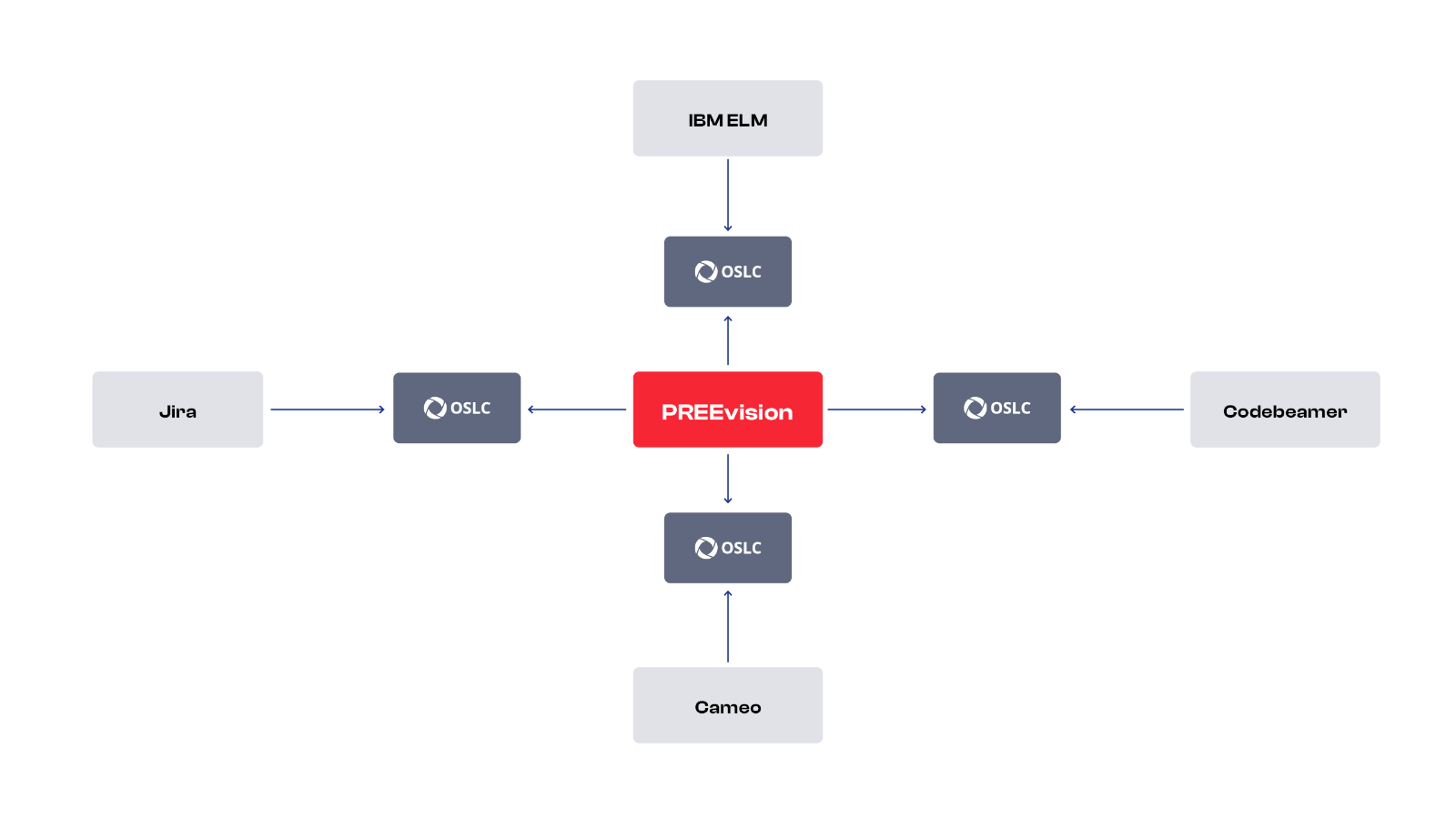
Key Benefits of Using OSLC
- Seamless Integration: Connect diverse tools within your toolchain without duplicating data.
- Compliance Ready: Ensure the traceability required by standards like ASPICE.
- Standardized Approach: Minimize the effort of implementing custom interfaces by relying on established standards.
- Advanced Linking: Support product line engineering with robust versioning and baselining capabilities.
How OSLC Works: Linking Instead of Syncing
The OSLC standard fundamentally changes how tools interact. Instead of relying on cumbersome data export and import processes, OSLC keeps all data exactly where it is created and managed.
Special, stable links – using Uniform Resource Identifiers (URIs) – connect artifacts across tool boundaries. Because data is never duplicated and only these links are stored, OSLC offers limitless scalability.
For you, traceability becomes effortless. You can view information from other tools directly within PREEvision through live previews. This applies not only to individual artifacts but also to diagrams, lists, and model trees.
Core Principles of OSLC
- Bidirectional Navigation: Create, delete, follow, and navigate links from either connected tool.
- Smart Storage: Links are saved only on the dependent (downstream) side.
For instance, a link from a test case to a requirement is stored with the test case. - Automated Change Detection: If an upstream artifact changes, the link is automatically marked as "suspect."
You can then review the change and manually confirm its validity. - Secure Access: Information is only accessible to users with the appropriate rights.
PREEvision and the MID OSLC Connector
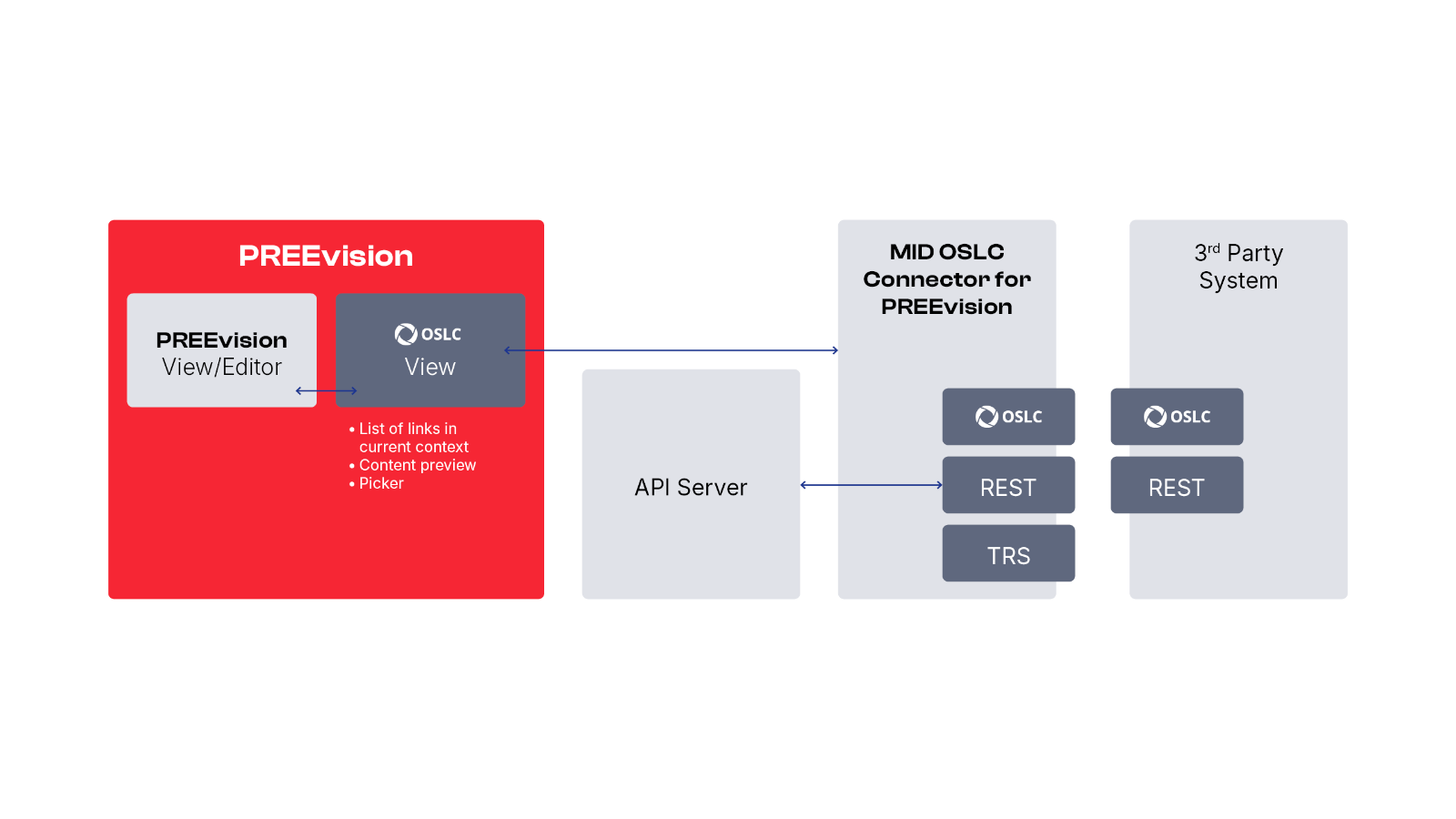
Vector and IT company MID have collaborated to provide a robust OSLC interface for PREEvision. MID offers the OSLC Connector for PREEvision, alongside plugins for other common requirements, configuration, and quality management tools.
This connector leverages PREEvision's REST API, prioritizing open standards over proprietary solutions.
Features of the MID OSLC Connector
- Integrated Traceability UI: A dedicated view in PREEvision displays relevant information from external tools for any selected artifact.
- Comprehensive Link Index: Quickly analyze how an artifact connects to others via incoming and outgoing links.
- External Hierarchy Display: View the information structure of connected tools directly within PREEvision.
- Advanced Reporting: Create queries to check test coverage for requirements or identify recently modified linked artifacts.
A Fully Networked Ecosystem
OSLC is a critical component of PREEvision's strategy to store data once and make it accessible everywhere. This is complemented by a wide array of import and export interfaces and a powerful Server API.
- Versatile Interfaces: Exchange requirements (ReqIF, Excel), architecture data (AUTOSAR, Franca, DBC, FIBEX, LDF), and wiring harness data (VEC, pvcdi, KBL) with ease. Automate regular imports to streamline ongoing operations, such as routing signals from external databases.
- REST API Access: Enable web clients and broader user groups to access model information externally. Other tools can seamlessly read from or write to PREEvision via the Server API.
By combining the power of PREEvision with the connectivity of OSLC, you future-proof your systems engineering process, ensuring momentum and excellence at every stage of development.