Seamless, Agile, and Holistic Model-Based Systems Engineering With PREEvision
White Paper: Future-Proof Your E/E Systems Engineering Practices
Software-defined vehicles drive the future of mobility. To master this growing complexity, you need a future-proof architecture and seamless integration across all development phases. In this comprehensive white paper, we show you how to conquer the challenges of modern E/E systems. Discover how model-based systems engineering with PREEvision creates momentum for your innovation and ensures excellence in your development process.
Abstract
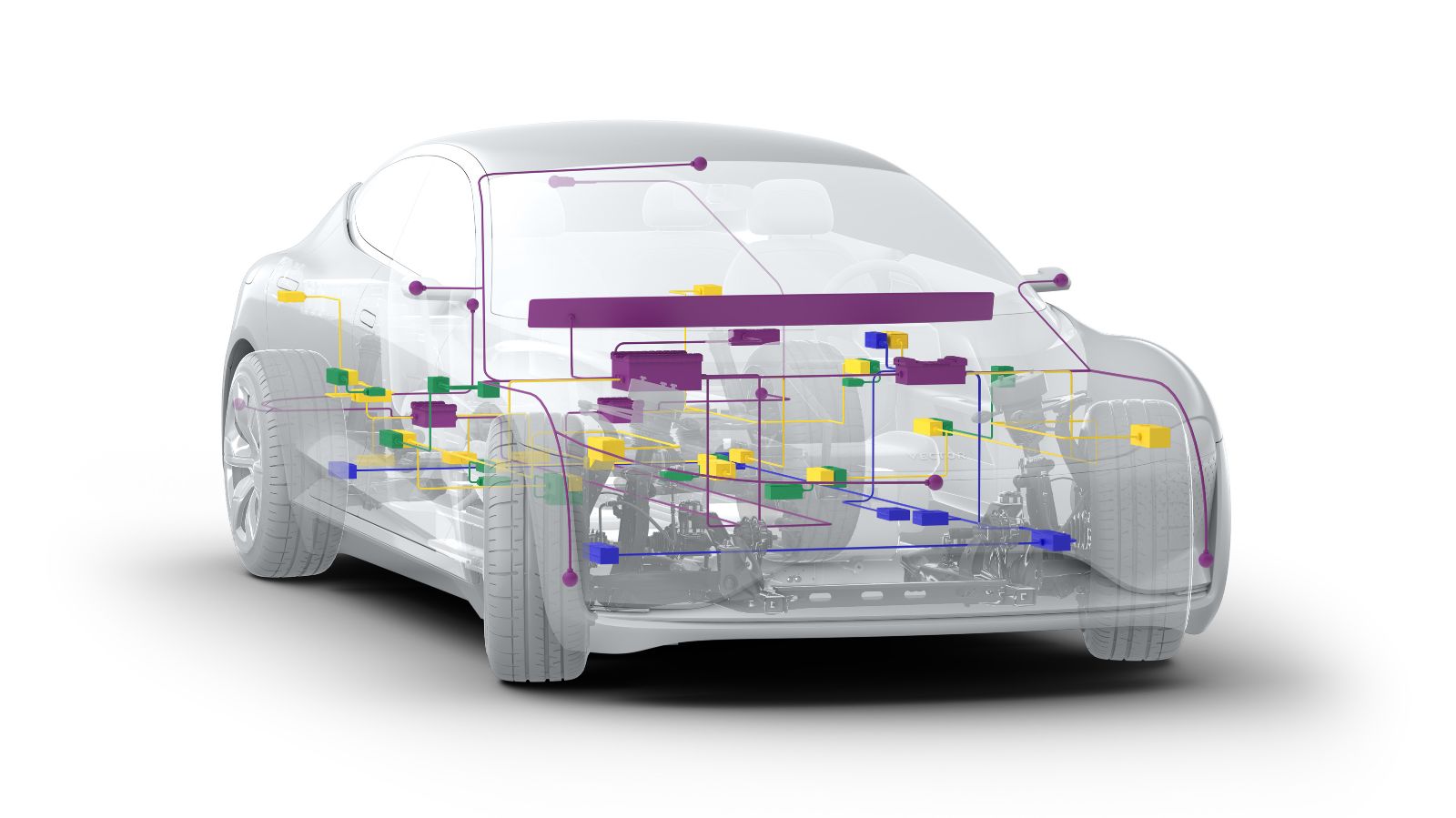
Automotive electrical and electronic architectures (E/E architectures) stand at a tipping point toward digitalization. Software-defined vehicles with high-performance computers drive connectivity, edge and cloud computing, and over-the-air software updates. Service-oriented architectures support the integration of open and dynamically connected cyber-physical systems. You innovate and update these software applications regularly.
To implement vehicle functions, these architectures offer an extended design space with new degrees of freedom. This requires mastering modern technologies and considering vehicle-specific constraints. You face high demands on real-time performance and functional safety alongside comparatively long product life cycles.
Today, software-defined vehicles integrate different software platforms (AUTOSAR Classic, AUTOSAR Adaptive, Android Automotive). You integrate the signal-oriented and service-oriented sub-architectures created on these platforms into a hybrid architecture. Delivering regular and long-term software updates with short release cycles demands agile software and system engineering processes. You build a system, software, and hardware architecture that enables long-term maintenance and further development beyond the start of production.
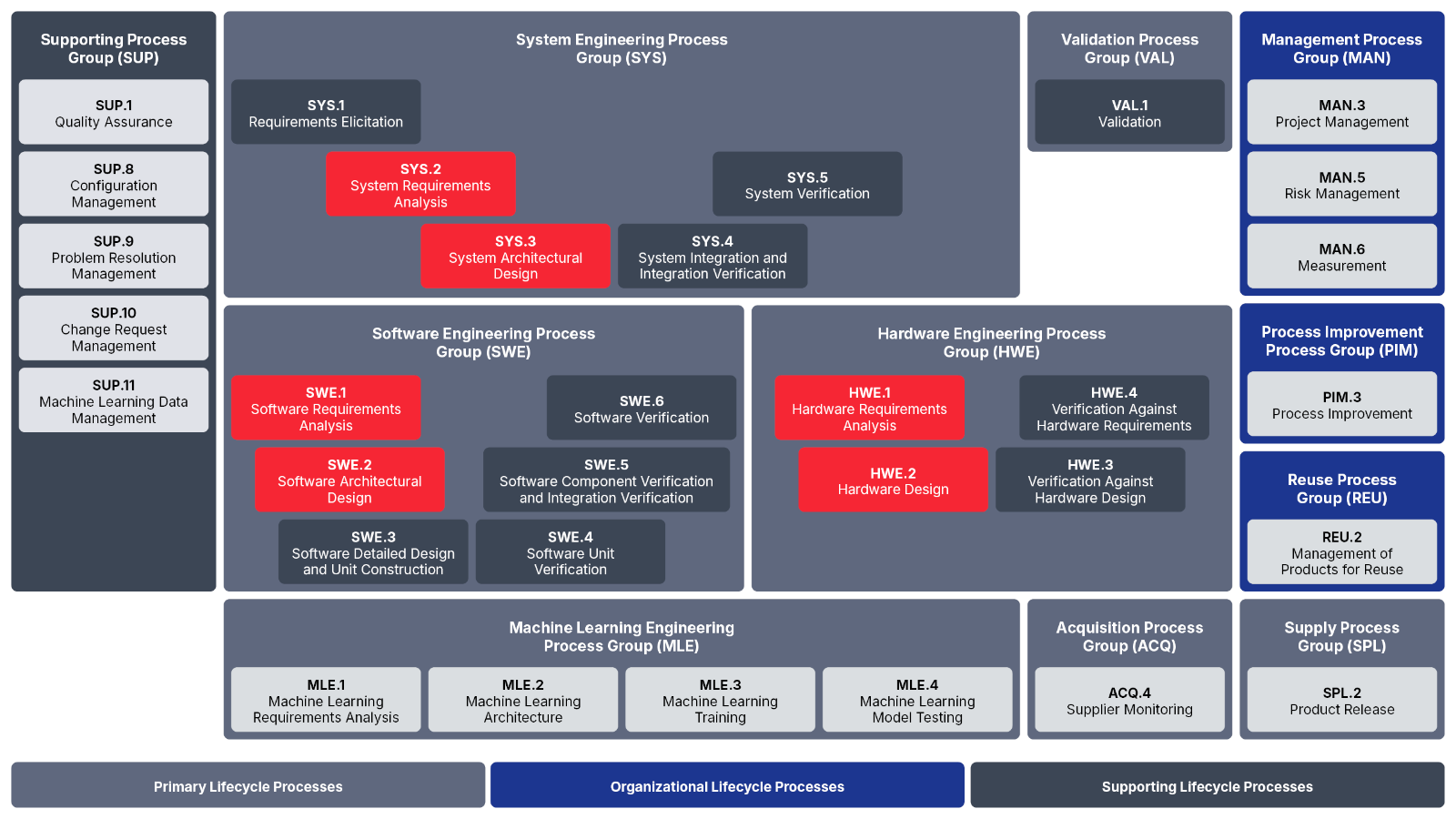
This white paper presents a contribution from Vector and Cognizant Mobility to master these challenges. We examine how you design future-proof systems engineering practices for E/E systems. We consider normative standards for automotive E/E systems development, such as Automotive SPICE (ASPICE) and ISO 26262, alongside methodologies like RFLP and modeling languages like SysML.
We focus on the experiences and knowledge gained from the broad practical use of PREEvision for systems engineering in large series development organizations worldwide. We place special emphasis on seamless traceability from requirements to system design, software and hardware architecture, and test specifications for verification and validation.
You ensure this traceability, especially when developing safety-relevant systems according to ISO 26262. It remains a core topic in ASPICE-compliant systems and software engineering processes. Model-based systems engineering (MBSE) methods offer significant advantages here. The underlying PREEvision data model for the automotive E/E domain and the PREEvision Collaboration Platform enable traceability within the model and collaboration across companies. The automotive-specific product scope of PREEvision reduces customization and integration effort to a customer-specific level and enables rapid product introduction.
White Paper Overview
- Section 3 outlines current trends and challenges in automotive systems engineering.
- Section 4 illustrates the need for systems engineering methods and provides an overview of ASPICE 4.
- Section 5 details selected process groups of ASPICE 4.
- Section 6 highlights highly relevant aspects in industrial practice that determine the success of systems engineering approaches.
- Section 7 illustrates all systems engineering steps consistently in PREEvision using a crash detection system as a practical example.
- Chapter 8 highlights the customizing and integration aspects of PREEvision.
- Chapter 9 emphasizes the expertise of Vector engineering partners like Cognizant Mobility.
- Chapter 10 summarizes the main points.
Request Access to the White Paper Download
Seamless, Agile, and Holistic Systems Engineering With PREEvision
How to Future-Proof Systems Engineering Practices for E/E Systems
PREEvision White Paper
Version 2.0 | March 2025
Major update in version 2.0: Availability of SysML-based sequence diagrams in PREEvision.
Authors:
- Dr. Nico Adler | Vector
- Jörg Schäuffele | Vector
- Tomasz Witkowski | Cognizant Mobility