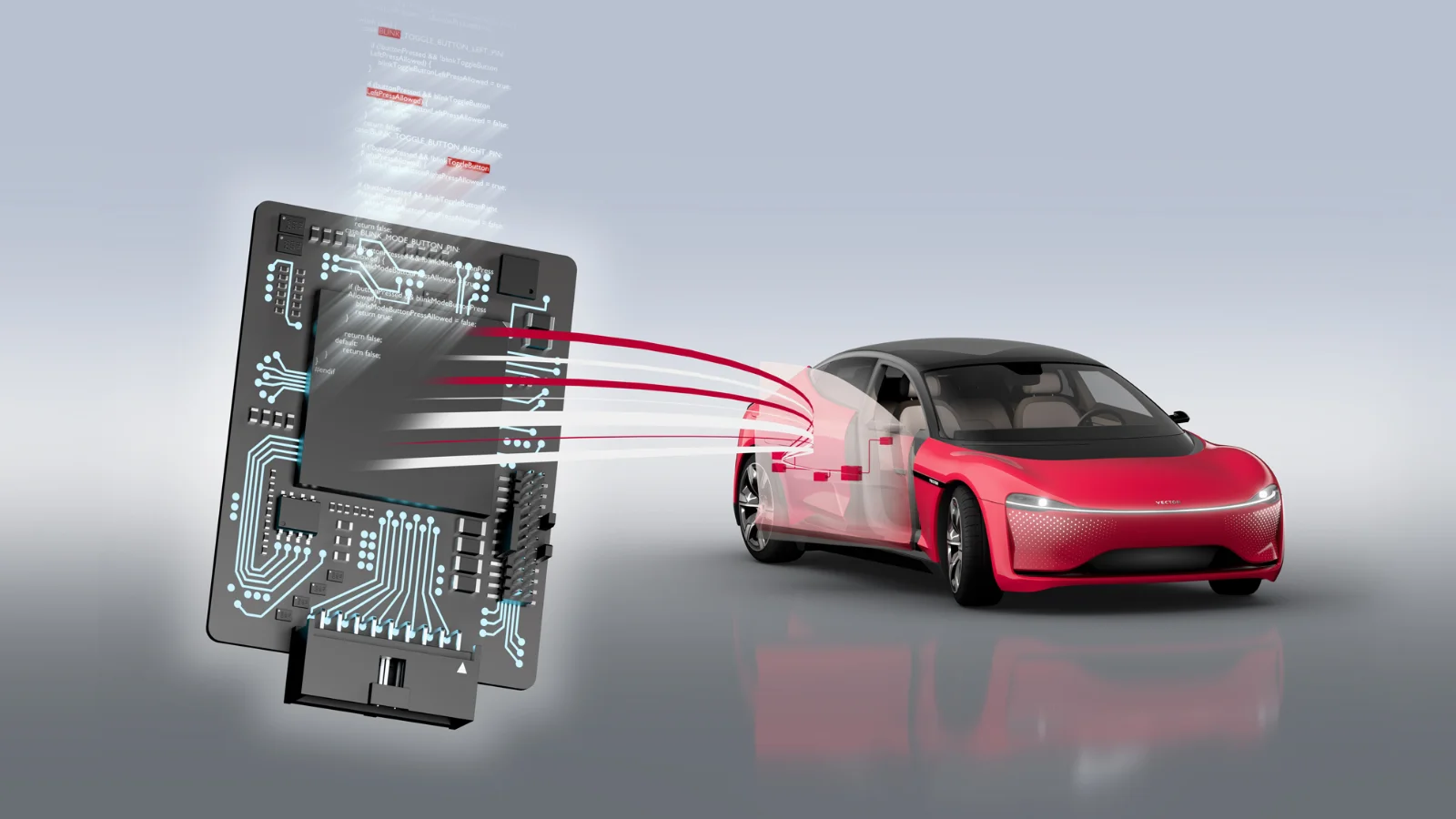
MICROSAR IO
MICROSAR IO takes a radically different approach. It enables economically viable Software‑Defined Vehicle architectures at the mechatronic edge.
This lightweight, safe and reliable software base layer is specifically designed for small mechatronic ECUs. By shifting OEM‑specific functions and network integration to a central ECU (such as a zonal controller or HPC), small sensor and actuator ECUs can remain ultra‑lean and highly cost‑efficient. This architectural split reduces complexity, enables scalable SDV concepts and turns small ECUs from cost drivers into lightweight building blocks of modern vehicle architectures.
Key Benefits at a Glance
MICROSAR IO focuses on what you need for small ECUs: a lean, reusable foundation, fast onboarding on resource‑limited hardware and a clear architecture that reduces integration effort across projects and variants while supporting seamless network integration and safety‑critical applications by design.
- 50% Hardware Cost Savings: Low footprint base setup. Including OS and software update functions. Enabling the use of cost‑efficient microcontrollers and reduces overall system complexity.
- 70% Faster Development: High re-usability, suitable for a wide range of platforms and projects, reduces time to market and simplifies variant management
- 100% Predictable Overall Cost: Standardized software base and flexible pricing models ensure transparent cost structures with no hidden overhead costs.
- 0 Additional Ram-Up Required: Simple integration into zonal and companion ECU architectures requires no project‑specific adaptations or deep automotive toolchain expertise.
- 10 Minutes for Initial Setup: Pre-configured projects and an IDE‑centric workflow (PlatformIO) enable fast onboarding without dedicated configuration tools.
- 0 Additional Tools: Ready to use with minimal configuration effort, no additional tools required. Developers can work directly in a familiar IDE environment, reducing setup complexity and tooling overhead.
Get to Know MICROSAR IO
When small ECUs become complexity drivers, SDV architectures need a leaner and more efficient solution. Watch how MICROSAR IO enables companion ECU setups that keep sensors and actuators lean while integrating seamlessly into the vehicle network.
Key Features of MICROSAR IO
Integration Options
MICROSAR IO is designed to integrate small ECUs cleanly into larger E/E architectures. Companion ECU extensions support structured integration into OEM vehicle networks and align with common platform strategies.
Developer Workflow
A developer-friendly, IoT-like workflow enables fast onboarding and efficient development without complex configuration steps. MICROSAR IO integrates into modern IDE-(integrated development environment)-centric environments and supports streamlined project setup.
Safety & Security
MICROSAR IO provides a safety‑ and security‑ready software foundation for mechatronic ECUs. It supports safety‑critical applications up to ASIL D and is developed according to state‑of‑the‑art automotive processes with long‑term support.
Communication & Interfaces
A service‑oriented, bus‑agnostic communication model enables consistent application behavior across different in‑vehicle network technologies. This simplifies integration into heterogeneous vehicle architectures and supports flexible communication setups.
Central ECU Architecture
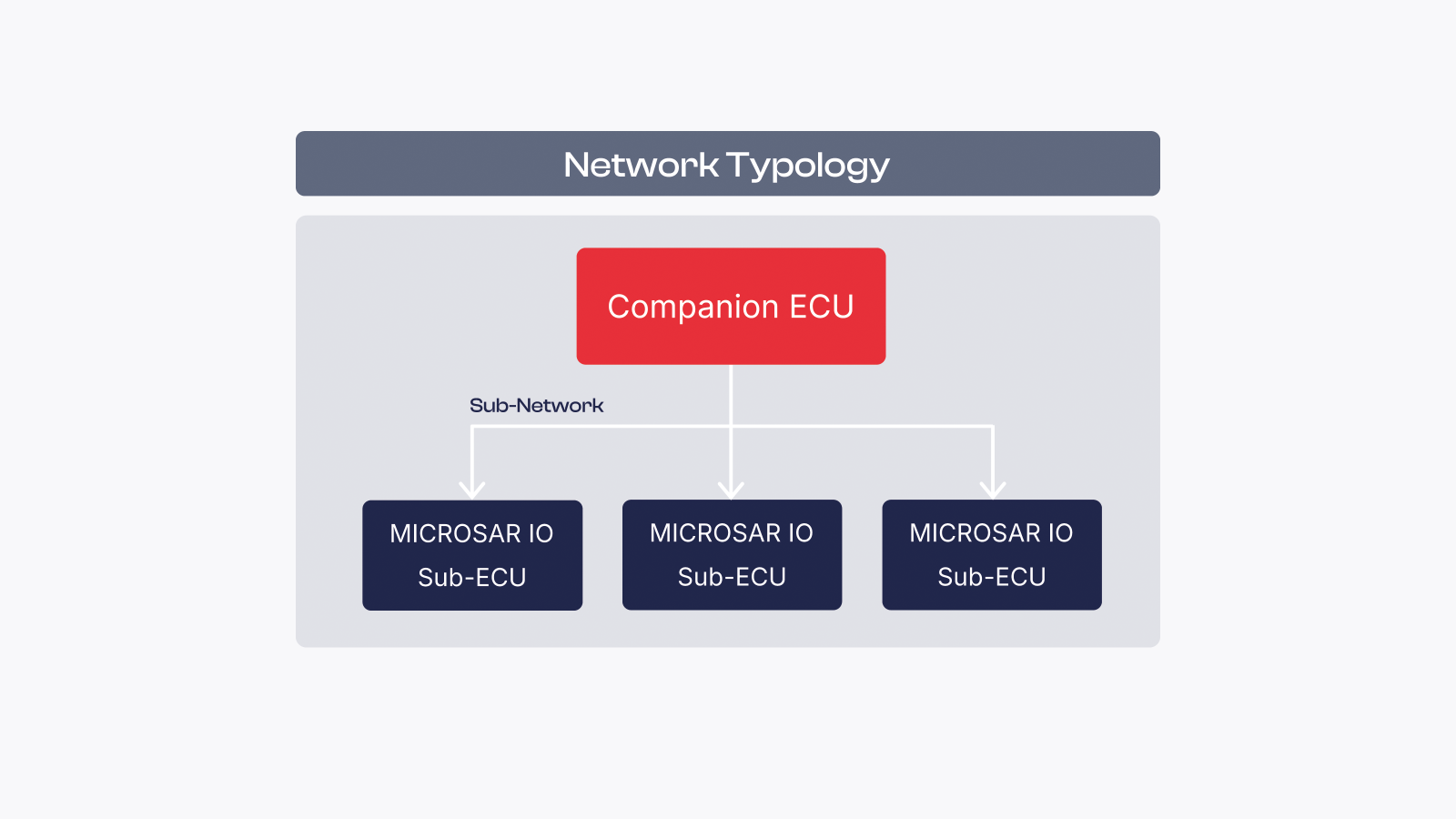
MICROSAR IO is designed for companion / central ECU approaches, where OEM‑specific functions and vehicle network integration are handled centrally by a companion ECU. Small Sub‑ECUs running MICROSAR IO remain focused on their dedicated mechatronic tasks, while integrating cleanly into the overall system.
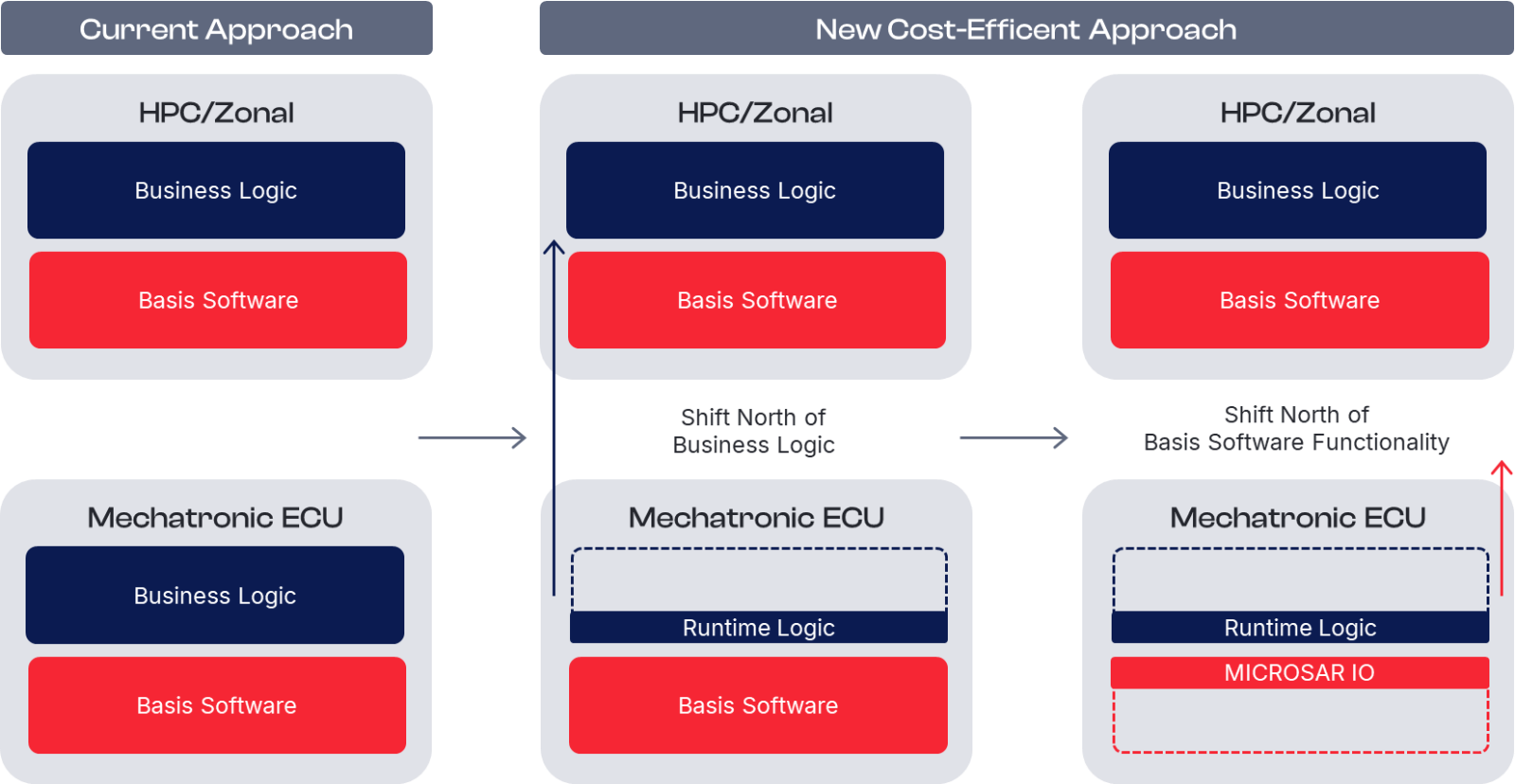
How Does MICROSAR IO Enable SDV Architectures?
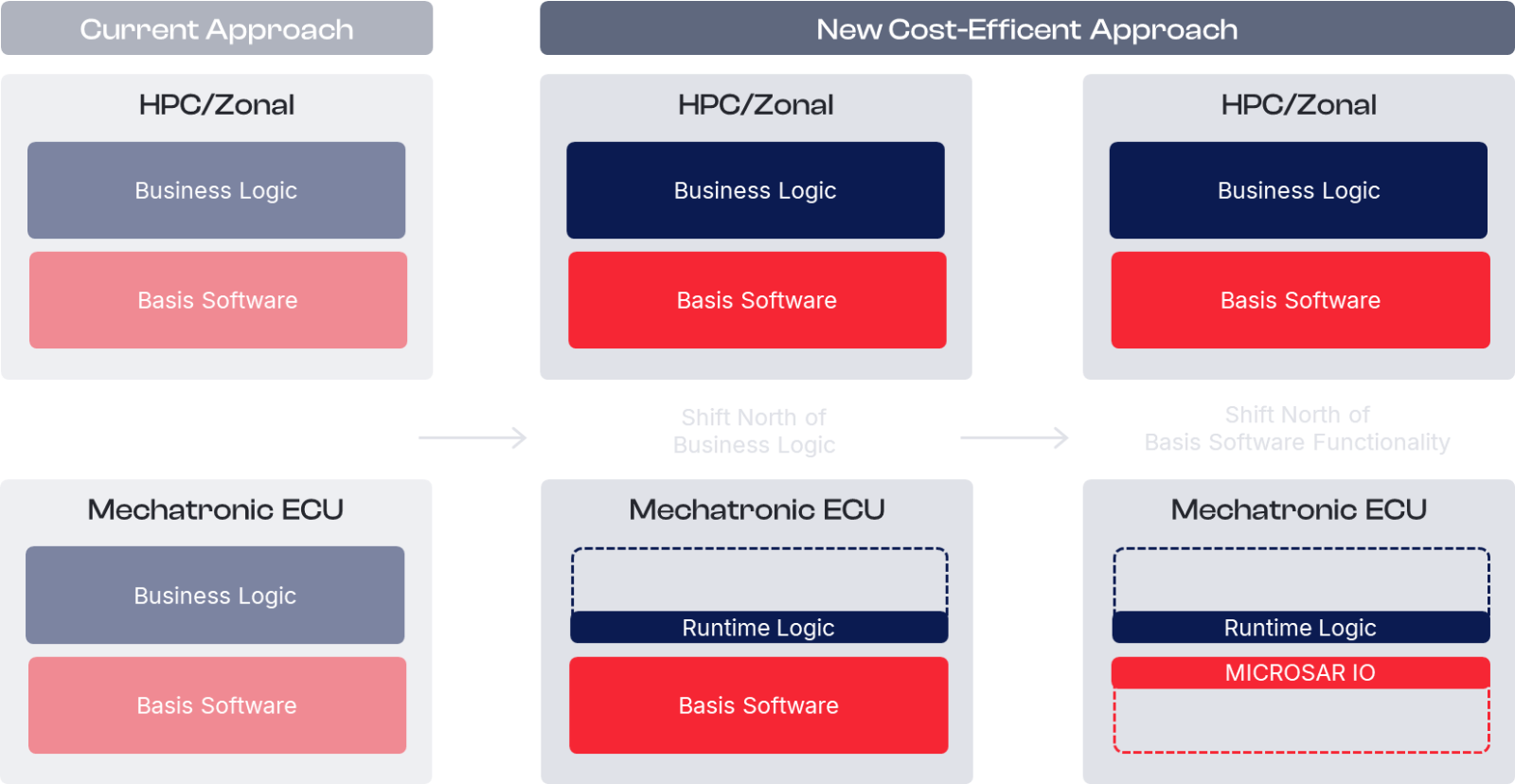
The Shift to Software‑Defined Vehicles is clear: Modern vehicles are moving toward centralized computing and zonal E/E architectures. Functions shift north to HPCs and zone controllers to reduce complexity and enable faster innovation.
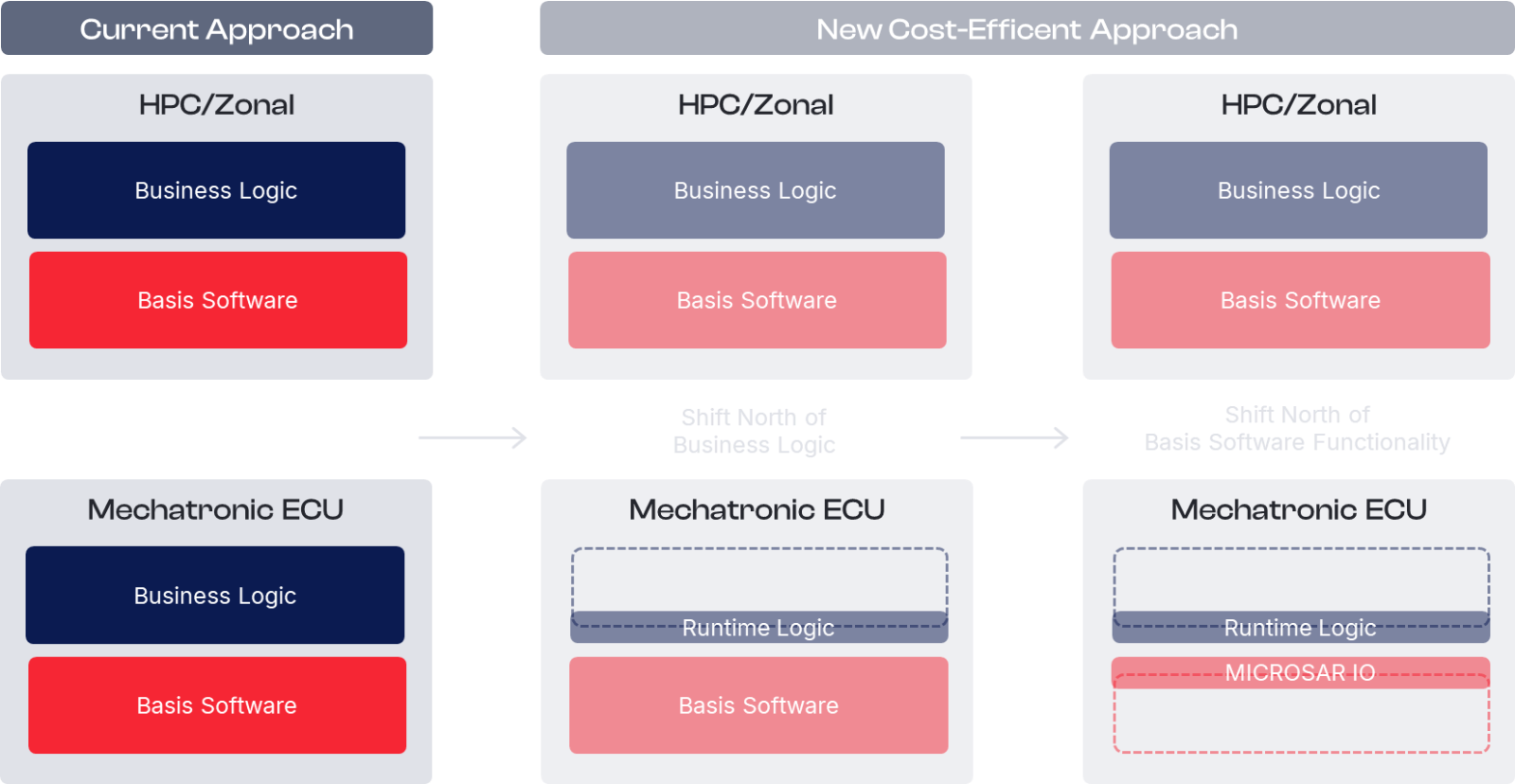
Why the Edge Becomes the Bottleneck
Software‑Defined Vehicles require a new way of thinking about small ECUs. As functionality shifts toward centralized computers and zonal controllers, sensors and actuators should no longer carry heavyweight, OEM‑specific software stacks. Yet in many architectures, small ECUs remain overloaded creating unnecessary complexity, duplicated functionality and rising hardware costs across the vehicle.
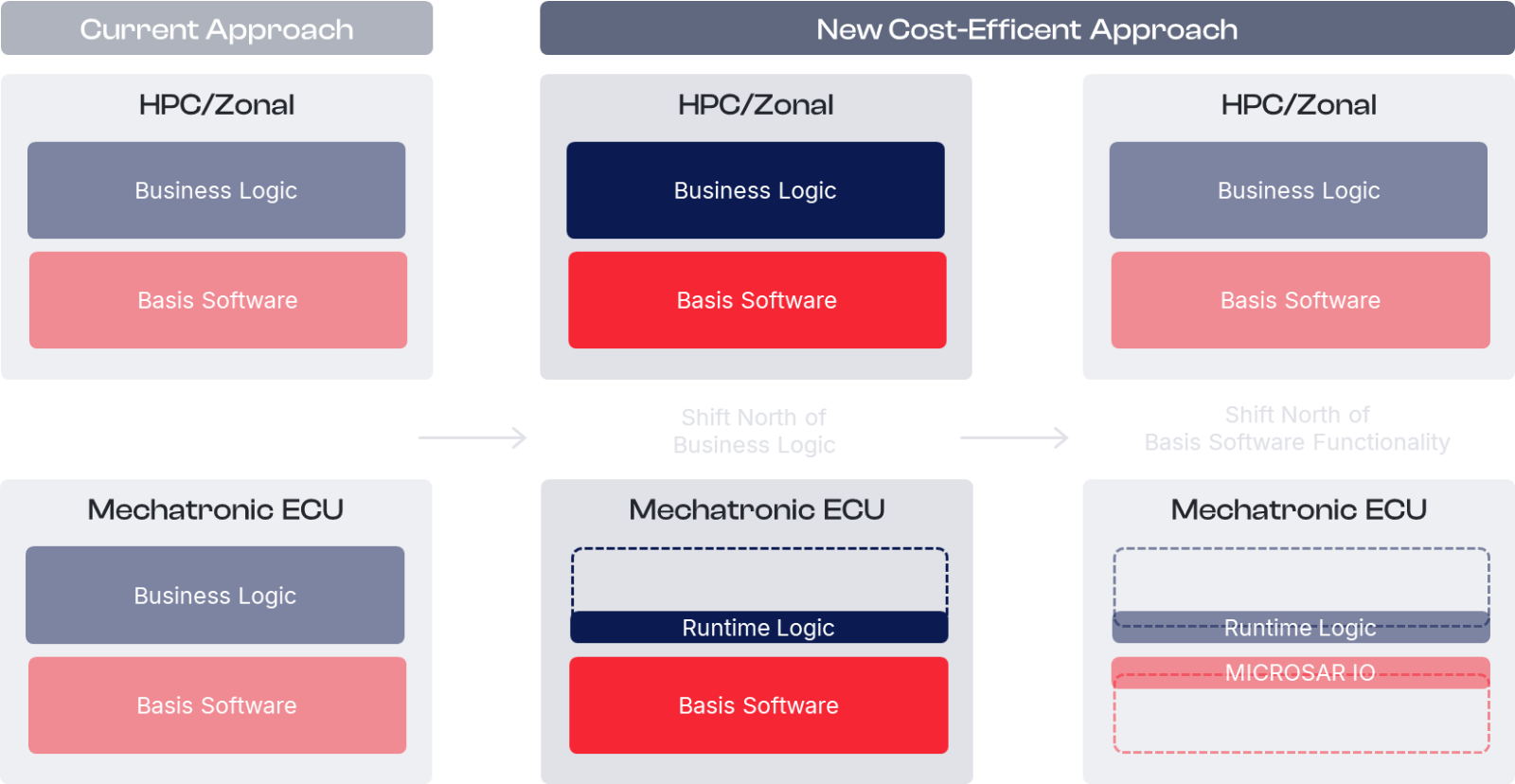
Standardizing the Mechatronic Layer
SDV architectures require a clear separation between business logic and the executing sensor and actuator ECUs. A lightweight, abstracted mechatronic layer enables easy feature updates on more complex controllers while mechatronic ECUs are reduced back to their basic functionalities.
MICROSAR IO: Lightweight Edge Software for SDV
MICROSAR IO is a lightweight software base for small sensors and actuators. It enables SDV architectures by shifting OEM‑specific complexity to companion ECUs, keeping Sub‑ECUs ultra‑lean at the edge.
MICROSAR IO is not a smaller version of existing ECU software. It is a mindset shift that turns small ECUs from hidden cost drivers into lightweight, scalable building blocks of modern Software‑Defined Vehicles.
From Complexity to Scalable Efficiency
OEMs gain faster, hardware-independent development, while Tier-1 supplier build re-usable COTS (Commercial off-the-shelf) components across platforms. By leveraging central ECU architectures, the result is lower hardware cost, fewer variants, more efficient use of software resources and faster SDV delivery.
By outsourcing the heavy-weight functions to zonal controllers or HPCs, OEMs and Tier‑1s reduce hardware costs, variants and engineering efforts. Small ECUs become generic, re-usable building blocks, scaling efficiently across platforms and vehicle lines.
Typical Use Cases of MICROSAR IO
MICROSAR IO is designed for projects where small ECUs must stay lean but still integrate cleanly into a scalable system architecture.
Download Whitepaper
More Insights
Software Platform Services
Software Defined Vehicle
Software Platform Blog
Collaboration Partners