AI Understanding Your Engineering Domain
Vector applies AI where it creates real engineering progress, directly within the workflows that define how systems are built, validated, operated and updated.
By combining domain expertise, engineering data and Vector tooling, AI becomes an integral part of your development environment, turning expertise into measurable and controllable results.
Why Engineering Demands a Different Kind of AI

AI can accelerate work. But in complex, safety-critical environments, speed alone is not enough. Too often, results lack context, tools remain fragmented, and outcomes are hard to trace or reproduce.
In some cases, outputs seem plausible but cannot be verified or are even incorrect. This is why Vector takes a different approach. We build AI specifically for engineering – so it understands your context, fits into your processes, and keeps results traceable and under human control at every step.
AI That Works in Real Engineering Environments
Vector AI brings intelligence directly into your engineering workflows, combining domain expertise, data and tooling into one controlled and effective system. Designed for complex and safety-critical environments, it ensures that AI supports real engineering work, not isolated automation.
What You Gain in Practice
- Faster decisions through AI-supported analysis and exploration
- Less manual effort through guided automation in familiar tools
- Reliable outcomes with results that stay reviewable and verifiable
- Full flexibility without vendor lock-in
How It Stays Controlled and Reliable
- Transparent and traceable results supporting compliance and governance
- Human-in-the-loop and human-on-the-loop operating models
- Continuous validation of AI-generated outputs within engineering workflows
- Scalable integration into existing tools and development environments
How Vector Applies AI
Vector applies AI based on four principles that ensure it works in real engineering environments.
Domain Expertise
With over 35 years of embedded expertise, Vector understands embedded technologies, data, and workflows at depth, forming the foundation for practical and effective AI-supported solutions.
Architectural Sovereignty
A modular, mix-and-match approach – from individual MCP tools to turnkey solutions – gives you full flexibility, maintains interoperability, and avoids vendor lock-in with LLM-agnostic architectures.
Workflow Governance
AI remains controlled and reliable through observability and reviewability, compliance with HITL / HOTL principles, and continuous validation of AI-generated results within tight agentic feedback loops.
Operational Efficiency
Vector equips each workflow with the right AI capabilities – optimizing both speed-to-solution and cost-to-result, so you can implement AI in a focused and efficient way.
From Engineering Context to Intelligent Workflows
Vector AI connects engineering context with execution, ensuring that AI is both useful and under control in real development environments.

Make Context Accessible
Vector enables AI to understand and act within real engineering environments. Engineering knowledge such as standards and project context becomes accessible through retrieval-augmented generation (RAG).
Tool capabilities are exposed to AI via MCP and related interfaces, making Vector functions safely usable through LLM-based systems. A workflow layer enables orchestration across customer-specific environments while preserving freedom of choice across models, frameworks and architectures.

Embed AI in Workflows
Vector embeds AI directly where engineers work. AI is integrated into Vector tools through assistants, guided interactions and embedded support.
Engineers use AI in familiar environments across command-line interfaces, scripts, IDE integrations, wizards and integrated assistants.
Enable Controlled Execution
Closed verification loops keep outcomes reliable by allowing AI to explore, change and validate systems, while humans supervise, review and approve.
This ensures that AI operates within defined boundaries where results remain transparent, traceable and aligned with real engineering requirements.

Achieve Reliable Outcomes
The result is a connected workflow where AI supports execution, validation and analysis across the system.
All steps remain traceable, reviewable and aligned with engineering and compliance requirements, enabling faster progress without losing control.
Where Vector AI Delivers Measurable Impact
Vector AI creates value where software-defined systems demand it most, enabling teams to move faster without losing control.
- Shorter release cycles through faster development and validation without compromising safety or compliance
- Engineers remain in control, with AI supporting execution while decisions stay accountable
- Reliable outcomes with results that are traceable, reviewable and verifiable
- Freedom of choice through modular integration that adapts to your architecture, without vendor lock-in
- Data sovereignty by design, ensuring your data remains under your control
Vector AI can be applied in the way that fits your strategy, from AI-accessible building blocks for your own orchestration to embedded capabilities directly within your workflows.
This allows you to scale AI step by step, from individual use cases to fully integrated development environments.
How AI Works in Real Engineering Workflows
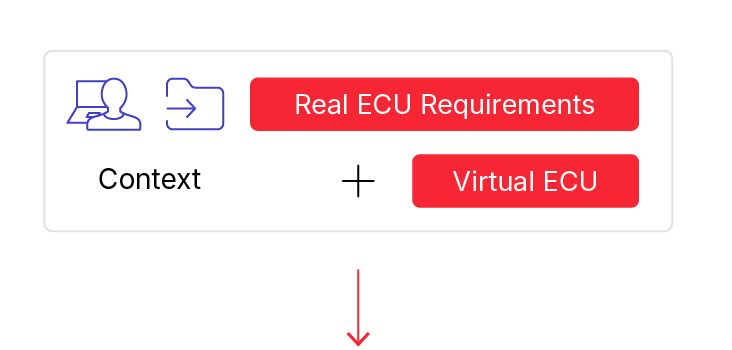
Context
Vector AI operates within a controlled engineering environment where requirements, architecture, and constraints (e.g. from PREEvision) are available and connected to a toolchain for test design, execution, and analysis.
Governance principles such as traceability, reviewability, and compliance are enforced, with human supervision ensuring alignment with real engineering processes.
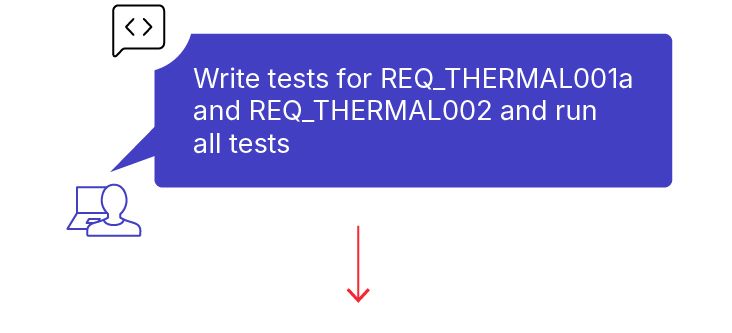
Request
The workflow is initiated via a natural-language request, e.g. “Write tests for requirements and run them”, entered through a conversational interface.
This request triggers intent recognition, context retrieval, and orchestration of the required workflow steps.
AI-Driven Execution
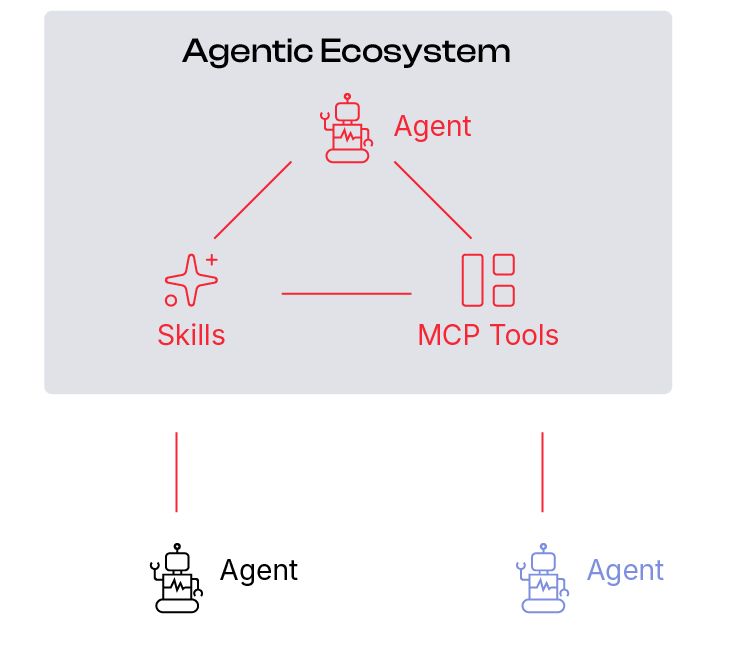
An AI agent interprets the request in context, decomposes it into structured engineering tasks and orchestrates execution across the toolchain.
Reusable skills cover context analysis, test generation, execution setup and result evaluation, ensuring consistent and engineering-aligned execution.
Execution is performed via integrated tools such as PREEvision, vTESTstudio, CANoe and vVIRTUALtarget. These tools retrieve context, generate tests, execute them and analyze results in a traceable and tool-integrated manner.
The workflow can also trigger external systems such as reporting, ticketing and notification services, extending execution into end-to-end process integration.
The result is a connected workflow from request to execution, analysis, and follow-up. All steps remain traceable, reviewable, and aligned with real engineering and compliance requirements.
How Vector AI Is Used in Practice

Test Generation and Selection
Turn requirements into executable, traceable test cases with AI-supported generation, reducing manual effort while keeping engineers in control.

Video Anonymization
Anonymize faces and license plates in large video datasets using AI, ensuring data protection compliance without compromising processing efficiency.