Stimulation of Sensor Values Using CANoe and VX1000
Stimulation of Sensor Values Using CANoe and VX1000
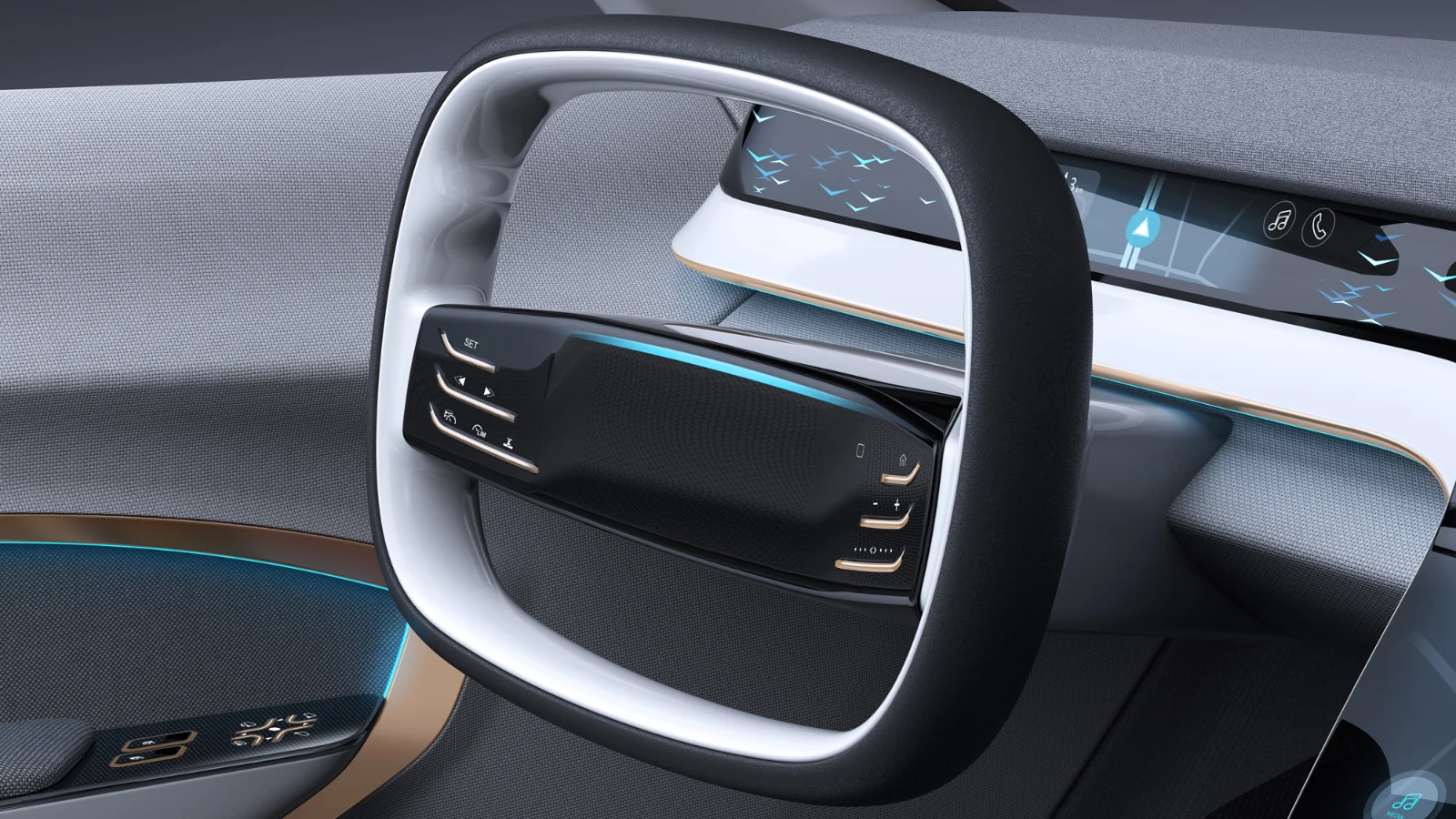
Stimulation of Sensor Values Using CANoe and VX1000.
Preh & Vector – a collaboration for more efficient development projects.
The Customer
The Preh Group is a globally active automotive supplier that was founded in Germany in 1919. Its development and manufacturing expertise includes human-machine interfaces in vehicle interiors for passenger cars and commercial vehicles as well as e-mobility components. Product examples are climate control systems, center stacks with displays and multifunctional switches - including for steering wheels - as well as control units for battery management, on-board chargers and high-voltage systems.
The Challenge
Simple playback of analog signals for testing
To ensure the optimal functionality of the products based on the requirements, Preh subjects its solutions to regular testers. The software developed is tested in various scenarios and the requirements are checked.
The input signals of the software, which describe the various scenarios, are based on analog sensor values that are evaluated every millisecond and can only be manipulated with considerable effort. The aim is to be able to simulate the various scenarios as sensor inputs with little effort so that the different requirements can be easily tested.
The Solution
Stimulation of sensor values using CANoe and VX1000
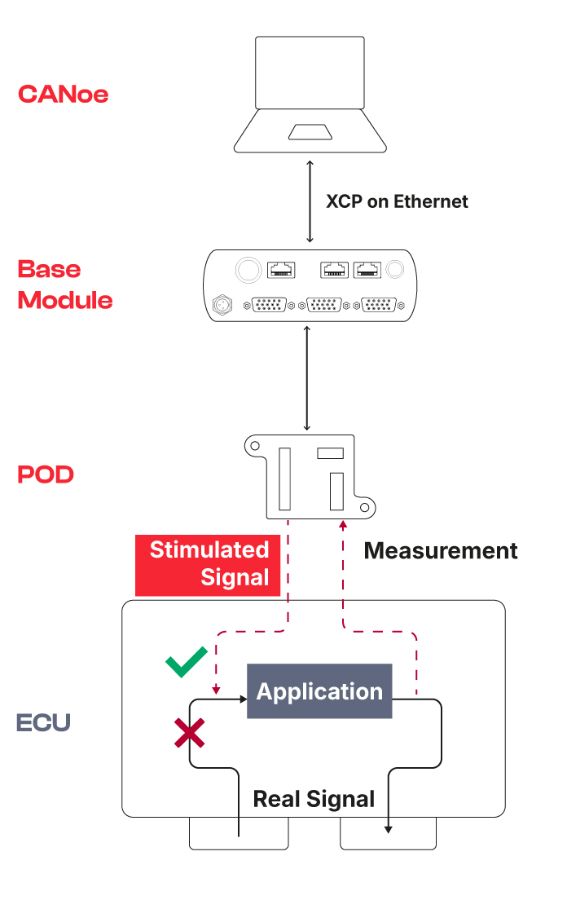
- Complex, analog sensor values are modeled using CAPL nodes in CANoe.
- The analog sensor values are stimulated synchronously with a 1kHz frequency via CANoe.XCP and the VX1000 hardware in the ECU's RAM.
- Sensor data recorded in practice is also used as a replay for further testers.
- The stimulated analog sensor values overwrite the actual sensor values and thus represent the scenarios to be tested.
- The results from the ECU are evaluated via CANoe.XCP and the VX1000 hardware.
- The entire process is automated.
The Advantages
- Fast Cycle Time: Writing and reading to and from the memory of the ECU in 1ms intervals.
- Hardware Efficiency: Reuse of existing debug interfaces without the need for new or additional hardware. This minimizes costs and complexity.
- Low Implementation Effort: Lightweight VX1000 driver integration into the ECU code.
- Familiarity with Standards: Existing knowledge of CCP/XCP can serve as solid foundation, simplifying the onboarding process.
- Seamless Integration: Easily connects with existing test solutions like CANoe via the ASAM XCP standard.
- Enhanced Visualization: Offers clear graphical visualization of internal variables (e.g., RAM) using CANoe.