BSW Test Efficiency Achieved With Virtual Engine ECU Generated by vVIRTUALtarget
Success Story Hitachi Astemo
Hitachi Astemo (formerly Hitachi Automotive Systems1) has been working on virtual engine ECU and automated testing. It has implemented Vector's vVIRTUALtarget as a virtualization tool and applied it to some BSW modules that form AUTOSAR. As a result, it has succeeded in shortening the execution time of a test scenario considerably. It has also achieved other effects such as improvement in testing thoroughness and the use of the same test scenario with HILS (integration test).
Tackling Virtual BSW to Improve Test Efficiency
Through the standardization of ECU software architecture, the use of AUTOSAR (AUTomotive Open System Architecture) is becoming more widespread as it helps drive the reuse of software parts and reduce development and verification efforts.
One of the Japanese suppliers that started working on AUTOSAR relatively early is Hitachi Astemo (formerly Hitachi Automotive Systems)1, a company that provides powertrain systems, automated driving and advanced driver assistance systems (ADAS) to various OEMs in Japan and worldwide. Some of Hitachi Astemo's initiatives are introduced in the article titled "AUTOSAR application by a bottom-up approach" in the vol. 16 of the Vector Journal (published in May 2018), which can be used as an additional reference.
Hitachi Astemo has been working on virtual ECU and automated testing by using Vector's ECU virtualization tool vVIRTUALtarget (Figure 1) with the aim of improving the efficiency of engine control ECU BSW and SW-C testing. "If we can reproduce ECU on personal computer virtually, we can check its behavior quickly and efficiently without preparing any prototype ECU and I/O hardware," said Mr. Yoshimi Yamazaki,Software Platform Design, Hitachi Astemo. "Our ultimate goal is the virtualization of the entire ECU but we have decided to proceed with the virtualization of some BSW modules first."
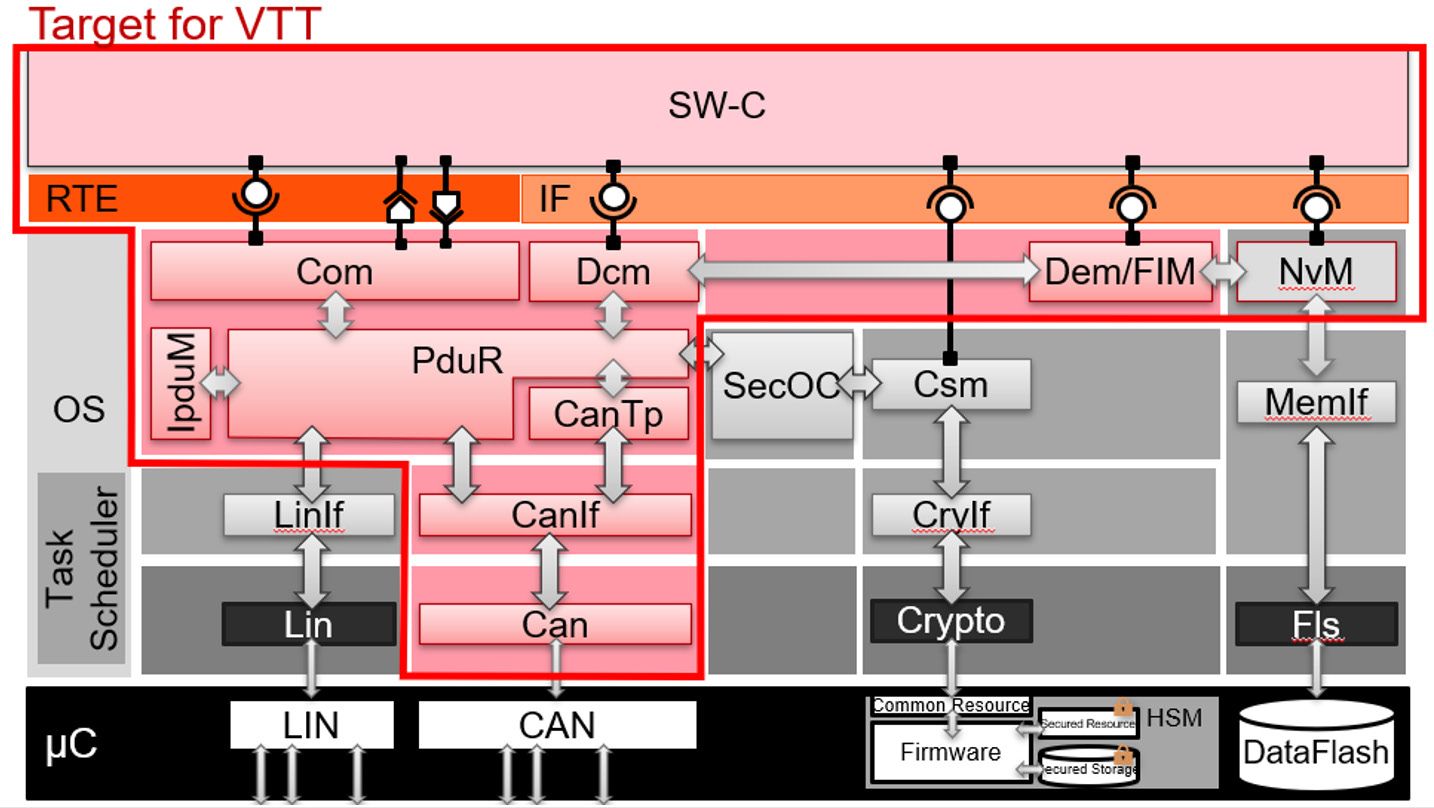
Test targets in the virtual environment are DEM/FIM (Diagnostic Event Manager/Function Inhibition Manager), DCM (Diagnostic Communication Manager) and COM (Communication Manager) in engine control ECU BSW (Figure 2). This document explains DEM/FIM, of which Mr. Yamazaki is in charge.
DEM is a module that compiles diagnostic information of engine and catalyst determined by BSW's other modules and ASW (SW-C), turns on the warning light of the instrument panel in response to a failure and records failure information on nonvolatile memory. About 1,500 types of failure are relevant to the engine ECU discussed in this document.
Meanwhile, FIM is a module that minimizes the effect of a failure based on engine failure information by limiting functions such as the deactivation of the cruise control function. It also compiles failure information and notifies SW-C.
vVIRTUALtarget Selected Based on Tool Integration and Execution Performance
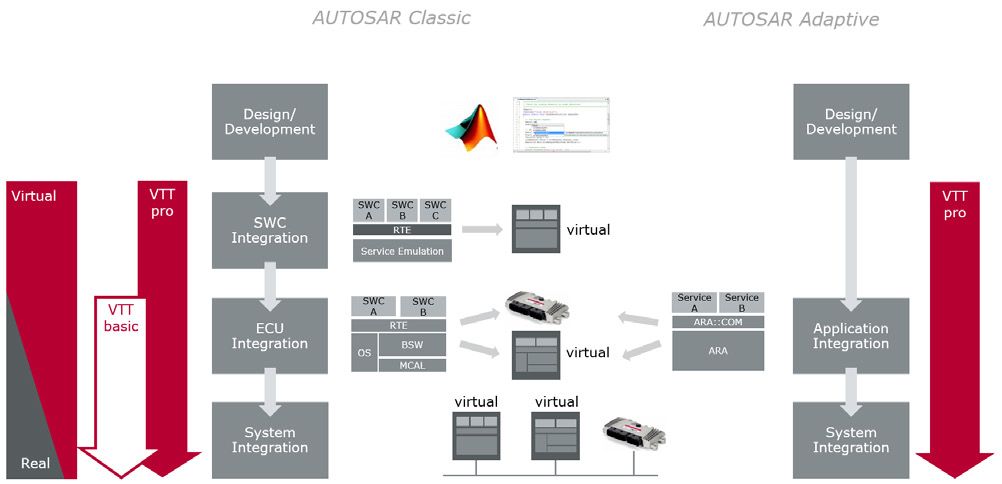
Vector's vVIRTUALtarget implemented by Hitachi Astemo is a tool software that enables it to generate a virtual AUTOSAR environment on Microsoft Windows 10. It can conduct testing and integration of Vector's MICROSAR (AUTOSAR Classic) BSW part or SW-C part and testing and integration of Vector's Adaptive MICROSAR, equivalent to AUTOSAR Adaptive.
Two types of product variant are provided: vVIRTUALtarget pro which covers all of the above, and vVIRTUALtarget basic which supports only MICROSAR BSW integrated virtual ECU (Figure 3).
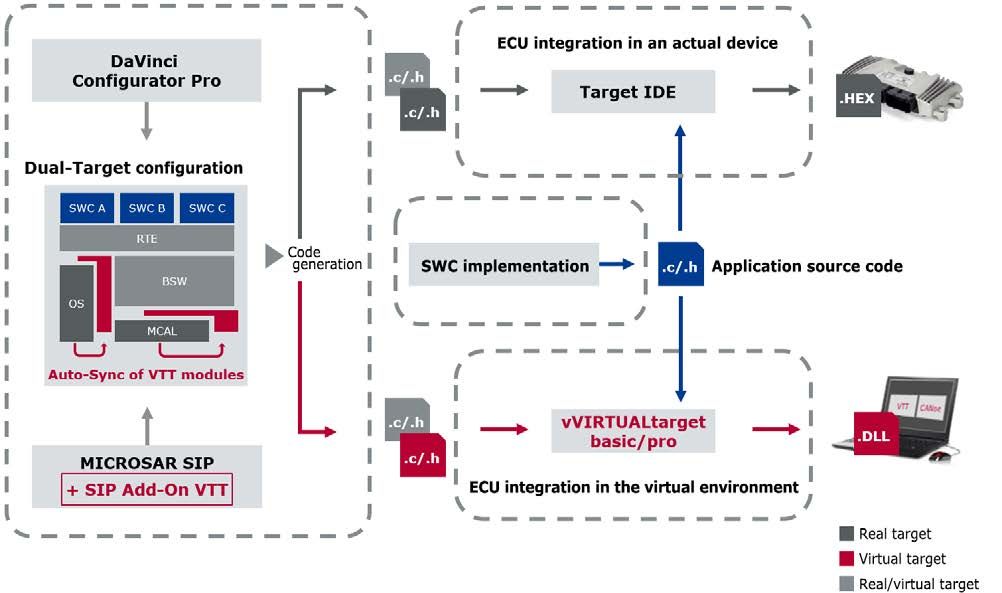
"Hitachi Astemo uses the Vector MICROSAR as AUTOSAR BSW and has also implemented other Vector tools including CANoe," said Mr. Yamazaki. "There are several ECU virtualization solutions in the market but we have selected vVIRTUALtarget partly because it can achieve seamless integration with the existing environment."
Another reason cited by Mr. Yamazaki is execution performance. "Traditionally we conducted DEM/FIM tests by using emulators provided by microprocessor vendors and the behaviors of microprocessors were reproduced accurately but the challenge was that the processing speed was slow", said Mr. Yamazaki. "The use of vVIRTUALtarget could make the processing speed several times faster and that was one of the reasons we decided to use vVIRTUALtarget."
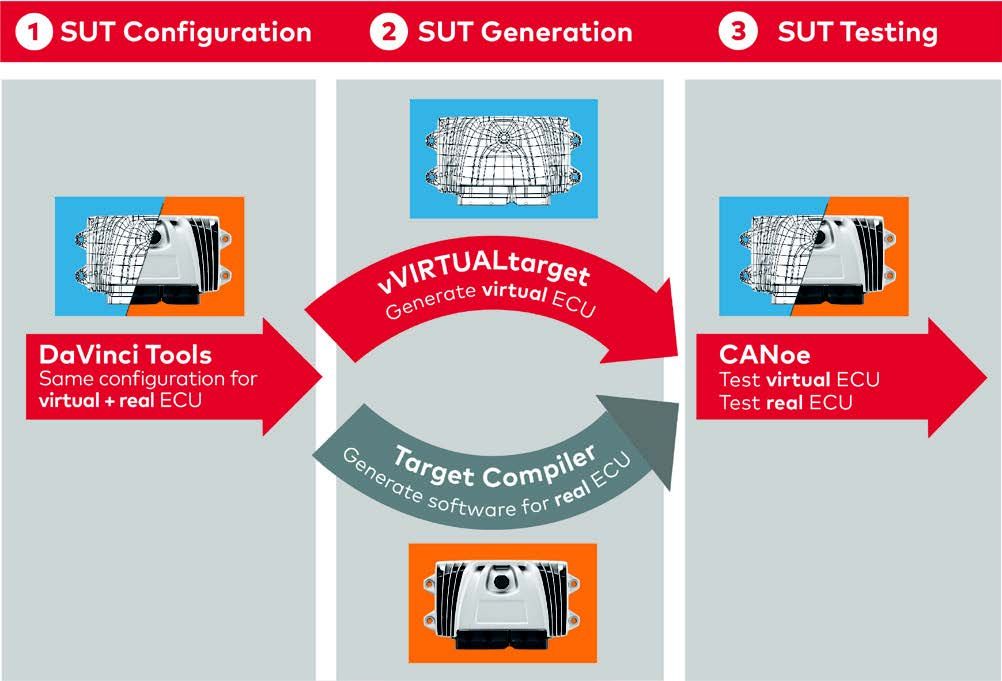
Figure 4 shows a rough idea of system integration flow in MICROSAR. Vector's DaVinci Configurator Pro, a BSW set-up tool, is used to conduct MICROSAR configuration and a generated code (.c/.h) is provided to vVIRTUALtarget. Virtual ECU is generated on vVIRTUALtarget and executed on CANoe.
It is also possible to integrate a code generated by DaVinci Configurator Pro on real ECU (Upper part of Figure 4).
Execution Time of a Test Scenario Reduced to Onethird It improves Thoroughness and Contributes to Quality
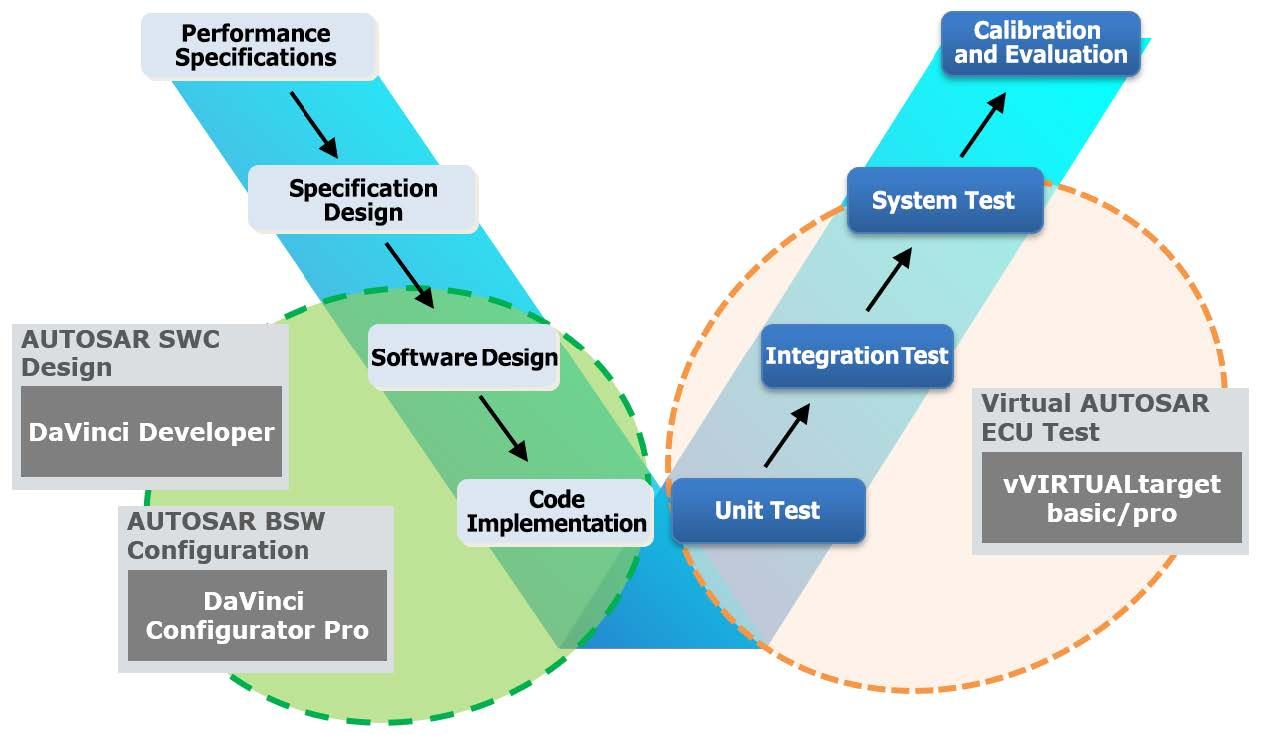
Figure 5 shows a rough idea of workflow at Hitachi Astemo. In the left part of the V-shaped model, Vector's DaVinci Developer is used in the development of AUTOSAR SW-C and DaVinci Configurator Pro is used in MICROSAR BSW structural setting and code implementation. In the right part of the V-shaped model, vVIRTUALtarget is used to improve the efficiency of BSW testing on virtual ECU (Currently only single testing of BSW modules).
Virtual ECU built by vVIRTUALtarget is integrated into CANoe and gives some kind of response to input from virtual CAN bus such as output of value to CAN bus, writing on flash memory and communicating with other BSW modules and SW-C.
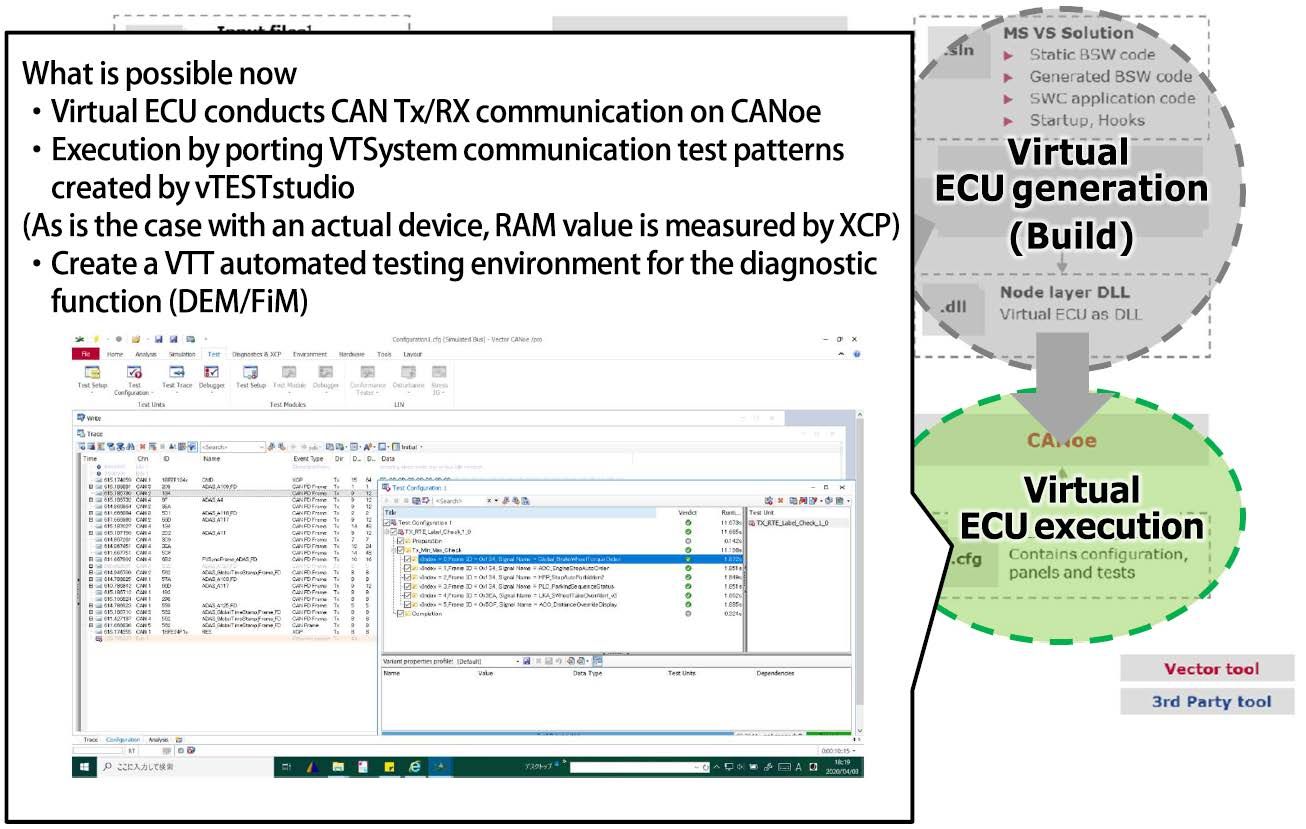
A test scenario is made by Vector's vTESTstudio, an automated test sequence creation tool, and Hitachi Astemo's in-house tools. Furthermore, the use of the HILS test scenario that uses Vector's VT system improves CAN communication test efficiency and prevents errors due to duplication (Figure 6).
Mr. Yamazaki explained the effect of implementing vVIRTUALtarget as follows: "First of all, the execution performance of testing has been dramatically improved. It is capable of loading and executing several ten thousand test scenarios, producing results and completing the aggregation of a Microsoft Excel file in eight hours, or about one third of time required before, compared with emulators provided by microprocessor vendors. For example, if you activate vVIRTUALtarget when you leave work for the day, test results are available in an Excel file next day when you come to your office, so you can check them immediately."
Shortened test time has made it possible to conduct more thorough testing than before and also led to quality improvement, according to Mr. Yamazaki. "Hitachi Astemo has been conducting development at multiple locations in the world," he said. "In the virtual environment, there is no need to distribute real ECU to each location and therefore it is also efficient at proceeding with global development."
The challenge in the virtual environment is the difference in the execution timing with real ECU. For this reason, for a standard test scenario or test that cannot be conducted without hardware, testing is done on real ECU (prototype hardware).
Also Tackling Virtual CI/CT and Virtual SW-C Aiming to Achieve Greater Efficiency
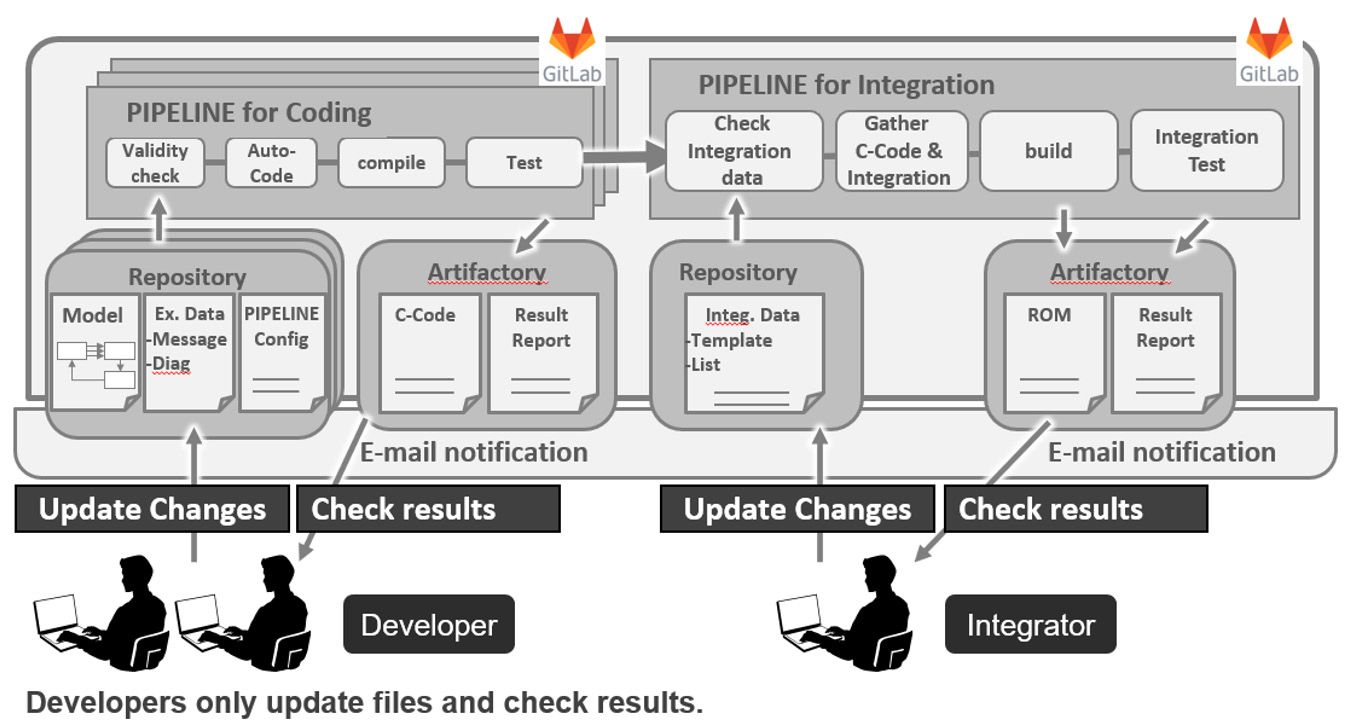
Hitachi Astemo has also been working on CI/CT (Continuous Integration/Continuous Testing), repeated testing and modifying conducted in a short cycle.
CI/CT is a development method aimed at reducing rework through a small iteration cycle in which testing and modifying are conducted frequently rather than testing and correcting problems found during tests all at once. This approach is common to DevOps and CI/CD. That is to improve quality and shorten the time required for release through the integration of development and operation, which is becoming more widespread in the area of information technology.
CI has already been in use in an environment created on cloud where configuration, code generation and build are done together with the use of CI/CD standard methods such as gitlab and artifactory (Figure 7).
"It is possible to reflect bug correction and function change readily and quickly and also possible to proceed with the development on cloud regardless of location," said Mr. Yamazaki. "Currently we handle only integration (CI) but plan to start working on testing (CT) soon."
To meet these needs, Vector provides vVIRTUALtarget Server Edition which is optimized for CI/CT scenarios.
How Hitachi Astemo uses vVIRTUALtarget has been explained in the above. In the development of engine ECU, a basic design is often used for several types of car and various OEMs and therefore shortened execution time of a test scenario will be greatly beneficial. Hitachi Astemo aims to improve the efficiency further by expanding the scope of virtualization including the integration tests of BSW and SW-C.
Vector will continue to meet the needs of Hitachi Astemo by providing vVIRTUALtarget and other advanced tools.