Software Quality and Compliance in Medical Device Development
As medical devices increasingly rely on software to define core functionality and clinical workflows, the paradigm of Software-Defined Medical Devices (SDMD) creates both opportunity and complexity. With more software, ensuring quality and compliance becomes critical, as regulatory scrutiny intensifies with every line of code and feature delivered.
Manufacturers must navigate evolving frameworks like the FDA and MDR, complex device classifications, and tight timelines for safe, effective product delivery. Integrating software quality and compliance from the first lines of code through clinical deployment is essential to successfully meeting these challenges.
Static Analysis and Coding Standards: The Role of PC-lint Plus
Quality assurance begins at the source code level. PC-lint Plus provides IEC 62304-certified static code analysis for C and C++—a certification widely expected by regulators, especially for higher-risk Class IIb and Class III devices.
It enforces corporate and device-specific coding standards alongside widely accepted guidelines like MISRA and CERT C, enabling early detection of defects, unreachable code, and security vulnerabilities. This proactive “shift-left” method reduces risk and supports full traceability, generating robust documentation for regulatory submission.
PC-lint Plus’s detailed reports demonstrate compliance with coding standards required by frameworks such as FDA and MDR. Integrated into continuous integration (CI) pipelines, it inspects every code change in real time, ensuring rapid resolution of issues before they challenge project schedules.
Test Automation, Code Coverage & On-Target Verification: VectorCAST
Building on static analysis, VectorCAST delivers certified unit, integration, and functional testing with deep code coverage analytics. Certified to IEC 62304 by TÜV SÜD, it supports component testing from host simulation up to embedded on-target environments, allowing validation of critical software behavior across microcontrollers and microprocessors.
While VectorCAST focuses on robust testing during development, it also provides code coverage metrics that extend through the system test phase—supporting regulators’ expectations for thorough demonstration of software safety in high-integrity Class C or FDA Class III devices.
Its traceability linking requirements, tests, and results enables defendable compliance audits, and tight integration with CI/CD pipelines and nightly builds streamlines automated execution and evidence collection.
Continuous Quality Monitoring: Squore
Quality processes continue beyond testing. Squore runs from the first line of code and continuously monitors software quality metrics, requirement coverage, and test progress.
Its dashboards provide real-time insight into development status, requirement maturity, and potential stability concerns, keeping teams, QA, and management informed and audit-ready.
Squore complements PC-lint Plus and VectorCAST by aligning quality monitoring with regulatory expectations throughout the SDMD lifecycle. Its ongoing oversight assists in quickly identifying compliance risks and prioritizing corrective actions—vital for devices evolving through software updates and iterative releases.

Combining Tools with Medical Device Classifications
Medical software risk classes (MDR Class I, IIa, IIb, III; FDA Class I, II, III) dictate quality assurance rigor.
For Class I and IIa devices, PC-lint Plus ensures baseline code quality.
For higher-risk devices (IIb/III, FDA Class III/PMA), regulators expect:
enforcement of coding standards,
rigorous code coverage via VectorCAST,
continuous quality monitoring with Squore.
Together, these tools address regulatory expectations for traceability, transparency, and risk-based verification—especially critical for SDMDs where software shapes clinical safety and efficacy.
Integrating Continuous Integration and Audit Readiness
Embedding PC-lint Plus, VectorCAST, and Squore within modern CI/CD pipelines and nightly builds is best practice for medical device software. This setup supports automated static and dynamic analysis plus ongoing quality tracking.
It ensures immediate identification of code quality issues, generates compliance documentation throughout development, and facilitates audit-ready traceability across the full delivery chain.
CI/CD integration empowers collaborative, efficient teams to maintain compliance and accelerate SDMD deployment in global markets.
Related Pages
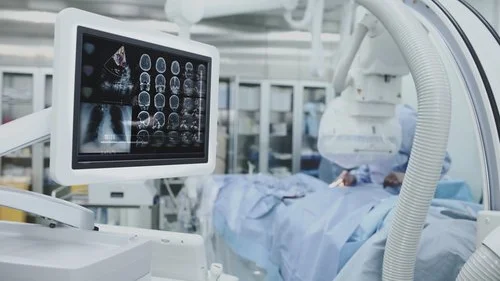
Safety-Critical Embedded Software
Executable-ready embedded stacks and drivers that simplify development and support regulatory compliance.
System Test & Simulation
SIL, HIL, and model-based test environments to streamline system verification and validation across the development lifecycle.
Cloud, Connectivity & Interoperability
Seamless and secure cloud integration, device connectivity, and interoperability with communication protocol solutions such as SDC, DDS, and other medical middleware.
SDMD Services & Certification
Enabling the next generation of Software-Defined Medical Devices (SDMD) — powered by Software Factory and Consulting Services.