As embedded software grows in complexity, traditional hardware‑based testing alone no longer delivers the required speed and scalability. Software‑in‑the‑Loop (SIL) testing enables early, automated, and hardware‑independent validation across the development lifecycle.
Why Software in the Loop Matters
SIL is more than a test method. It is a strategic enabler for modern embedded software development. It shifts validation to where software changes happen. Vector's SIL testing platform equips software teams and offers several distinct advantages:
- Earlier validation
Begin ECU software validation as soon as code is ready. This helps minimize late system integration problems and lowers project risk. - Scalable testing
Run tests in parallel, automate regression testing, and scale validation beyond hardware limitations. - Faster development cycles
Shorten feedback loops and accelerate time to market with virtual, repeatable test environments. Reduce dependency on HIL benches. - DevOps‑ready
Integrate SIL testing into CI pipelines and software factories for continuous validation.

Unified Validation Through ECU Virtualization
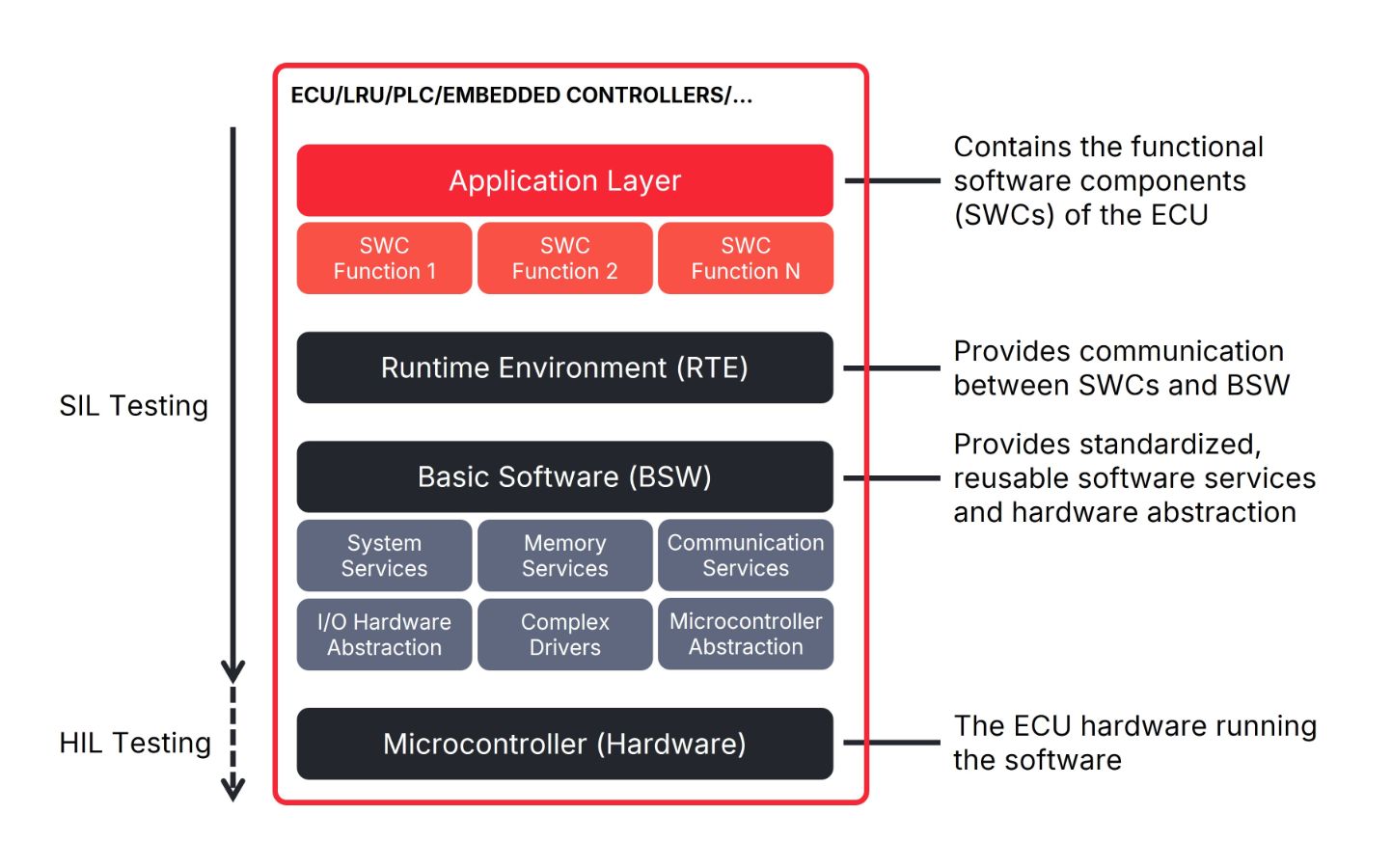
In SIL testing, Electronic Control Units (ECUs) are virtualized, meaning their software runs in a simulated environment rather than on physical hardware. This approach transforms how validation is performed: instead of waiting for hardware prototypes, developers can test the software’s behavior, application logic, and component interactions entirely on the software level. By decoupling validation from hardware, teams can begin testing much earlier in the development cycle, iterate quickly, and address issues before they reach integration. Importantly, the assets and test cases built in SIL can be seamlessly reused for Hardware-in-the-Loop (HIL) testing, preserving consistency and saving effort. HIL then validates aspects that require real hardware - such as timing, peripheral interaction, or electrical effects - ensuring that both software and hardware are robust. This combined process leverages early software maturity from SIL and thorough hardware validation from HIL, all while maintaining an efficient and unified validation workflow.
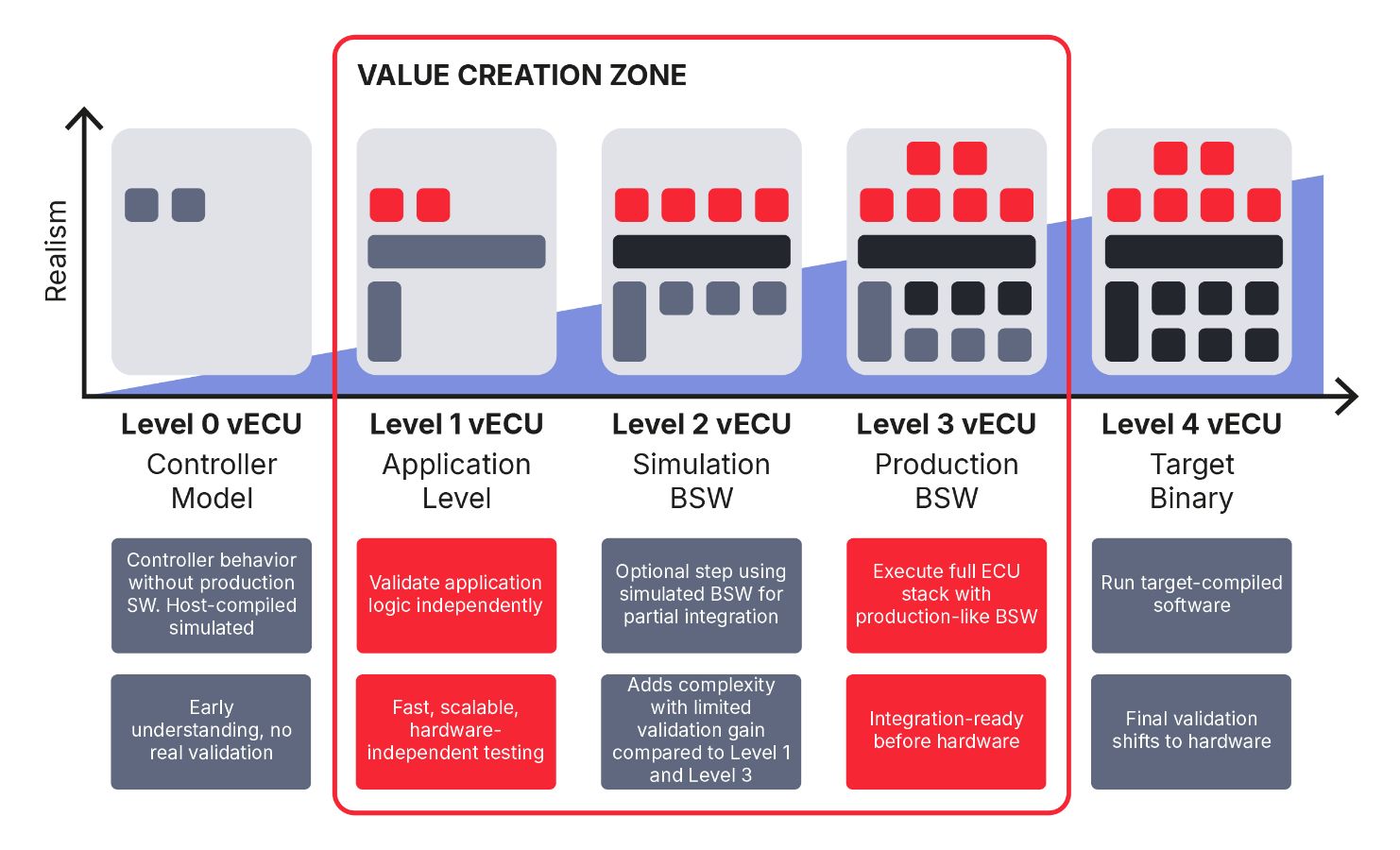
Virtualization enables a clear shift-left in the software validation maturity path.
Starting at vECU Level 1, application validation happens immediately after implementation, allowing teams to verify logic independently and sooner.
The major step-change comes at vECU Level 3, where integration testing moves into Software-in-the-Loop. Here, the full ECU software stack runs with production-like basic software in a scalable virtual environment. This turns system integration into a continuous, repeatable activity rather than a late-stage risk.
HIL at vECU Level 4 remains essential, but its role changes. It focuses on final validation of hardware-dependent behavior, not on finding basic integration issues.
Our SIL Solution
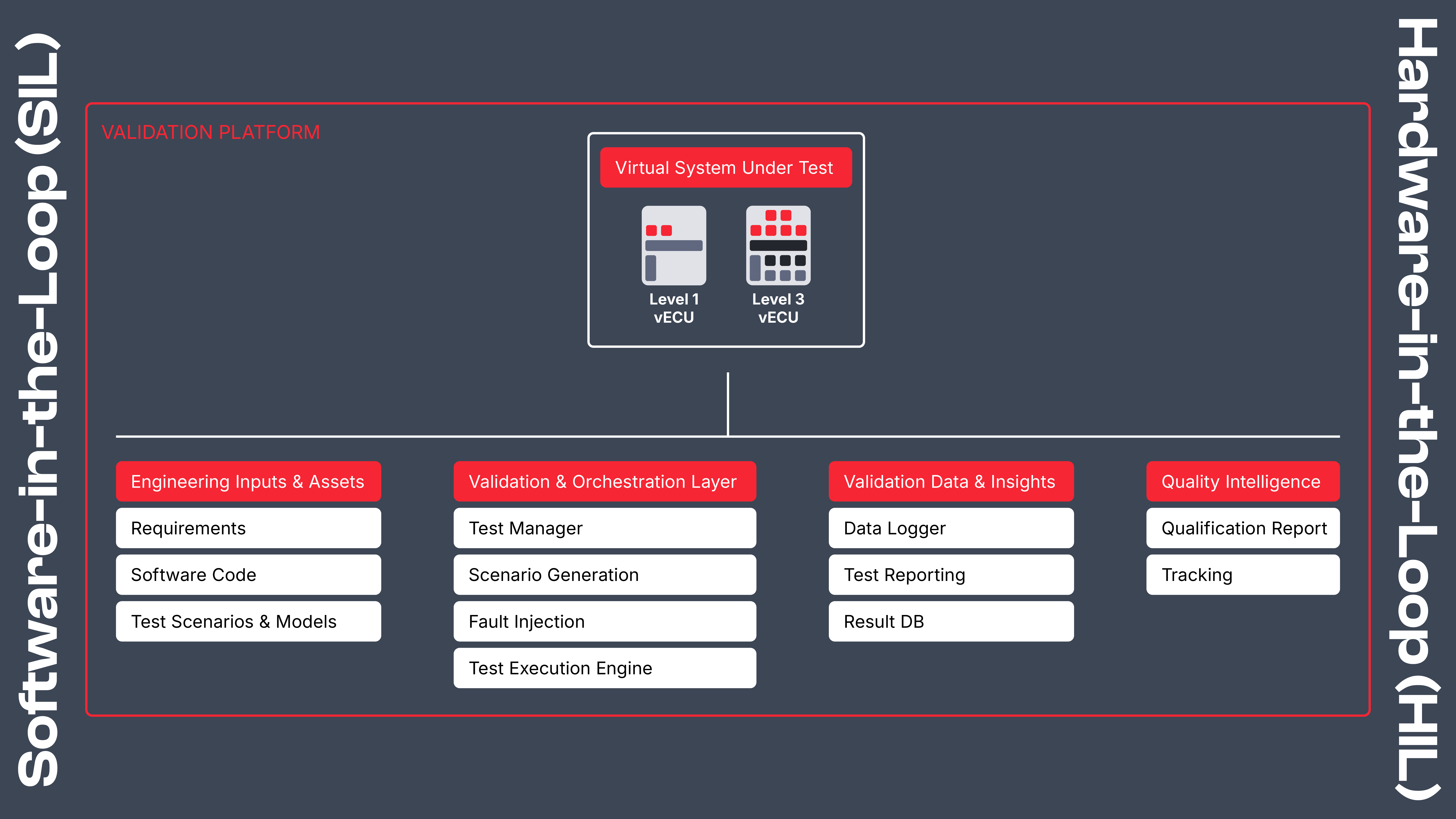
Rather than relying on just one tool or a standard toolchain, we are considering an ongoing validation operating model that covers everything from Software-in-the-Loop to Hardware-in-the-Loop. This entire operating model is continuous from SIL to HIL. We shift validation to the left, reduce hardware dependencies, and at the same time create consistency, reuse, and full transparency across the entire development process.
FAQ