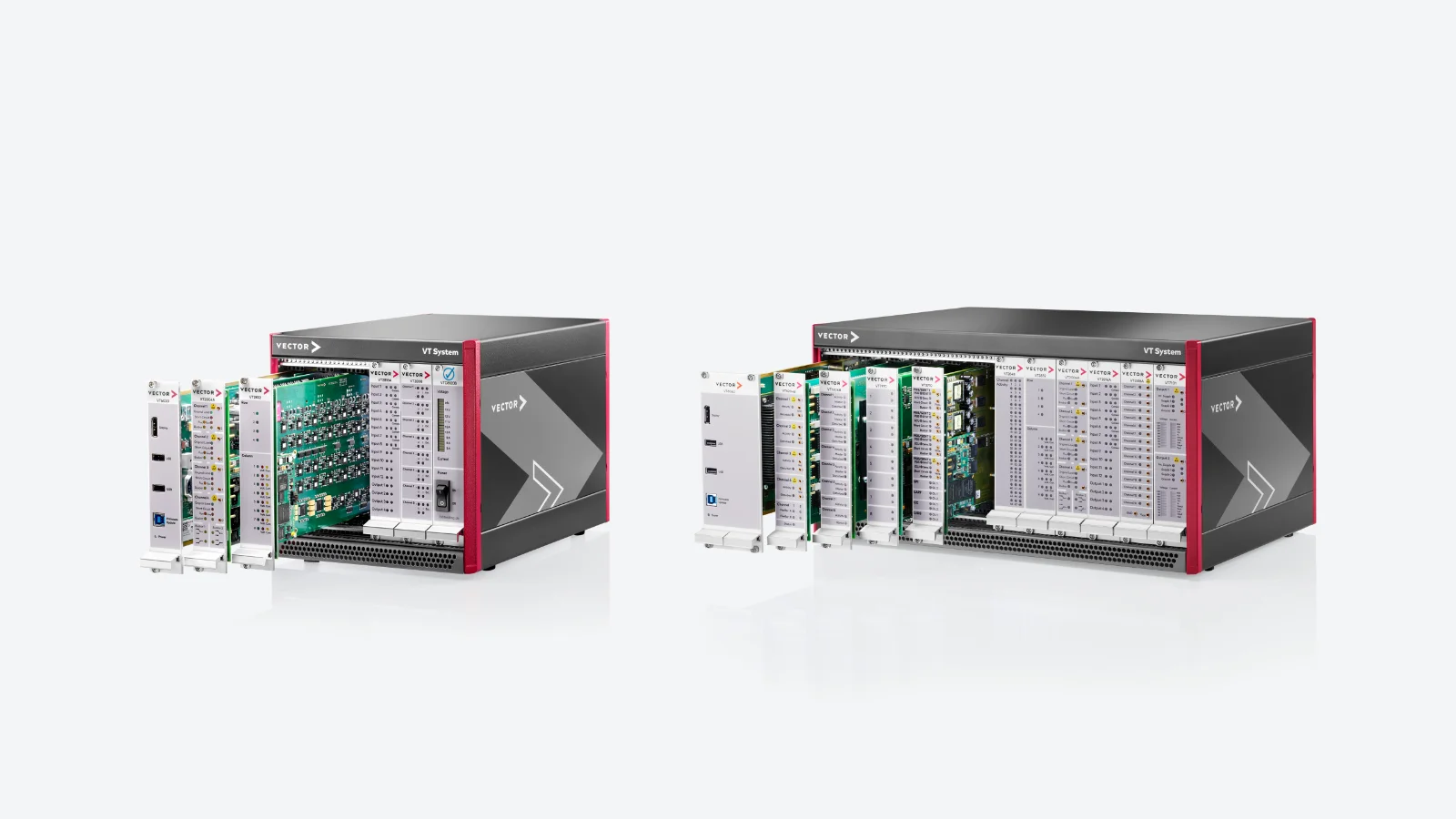
When developing ADAS or automated driving functions, you need to test your software under realistic conditions, ideally in a reproducible and efficient way.
This is precisely when data replay becomes important by using real driving and sensor data directly in your development and test environment. Camera, radar, lidar, bus, network, timing, and video data are fed into your system under test (SUT) in an authentic and fully synchronized manner. This allows validation of perception, sensor fusion, and decision logic under real-world conditions without the effort, cost, or risk associated with extensive test drives.
As an open-loop test methodology, data replay follows a clear principle: the replayed data provides a well-defined stimulus to the system, while the system’s responses do not influence the input signals. This gives you full control. You can replay identical traffic scenarios as often as needed, objectively compare software versions, and quickly and reliably detect regressions.
In short, data replay establishes a stable foundation for efficient, transparent, and scalable ADAS and AD validation in the lab.
Why Use Data Replay?
- Realistic sensor data – Replay real camera, radar, and lidar data to realistically test perception and fusion algorithms on the target hardware.
- Deterministic open-loop testing – Identical input data enables objective comparisons of software releases, parameter sets, and hardware generations.
- Precise timing and synchronization – Reproducible timestamps, frame rates, and signal relationships across sensor, bus, and Ethernet interfaces.
- Targeted robustness and fault testing – Deliberate manipulation of sensor data (e.g., delays, drops, disturbances) to validate fault-handling and degradation strategies.
- Higher test coverage in the lab – Repeatable testing of rare and safety-critical scenarios, independent of test drives and environmental conditions.
- Seamless HIL integration – Consistent switching between data replay and HIL within a unified test architecture.
- Efficient data utilization – Targeted reuse of large driving datasets from data lakes for automated test campaigns.
- Faster validation – Early defect detection, reproducible results, and shorter development and validation cycles.
A Proven Test Concept for Additional Industries
What has proven effective in the automotive domain for ADAS and automated driving functions can be directly transferred to other industries. Wherever complex systems rely on real sensor data and algorithms, data replay delivers significant added value. It combines real system experience with controlled test processes, creating the foundation for reproducible results, reliable decision-making, and high development quality for complex systems.

- Commercial Vehicles: Evaluation of driver assistance, safety, and automation functions using real load, environmental, and sensor data – including demanding use cases such as construction sites, logistics operations, and off‑road scenarios.
- Avionics: Analysis and validation of safety‑critical systems through deterministic replay of sensor, mission, and telemetry data.
- Rail Systems: Testing and validation of sensor‑based monitoring, assistance, and automation functions under real operating conditions –reproducible and without interfering with ongoing operations.
- Medical Technology: Reproducible replay of real measurement and device data for objective evaluation of algorithms, software updates, and system changes.
- Robotics: Validation of perception, navigation, and control functions based on real environmental and sensor data.
Data Replay Solution – Targeted Evaluation of Perception and Sensor Fusion
When validating ADAS or automated driving functions in a HIL environment, reproducible and time-accurate processing of real sensor data is essential. With open-loop replay, driving scenarios that were synchronously recorded in real test vehicles – especially timestamped camera video streams along with associated vehicle bus data – are deterministically replayed into the real electronic control unit.
The System Under Test (SUT) processes these input signals exactly as it would in the vehicle, without its outputs feeding back into the simulation inputs. This allows you to deliberately isolate internal algorithms and evaluate perception, sensor fusion, and decision logic under controlled, realistic conditions.
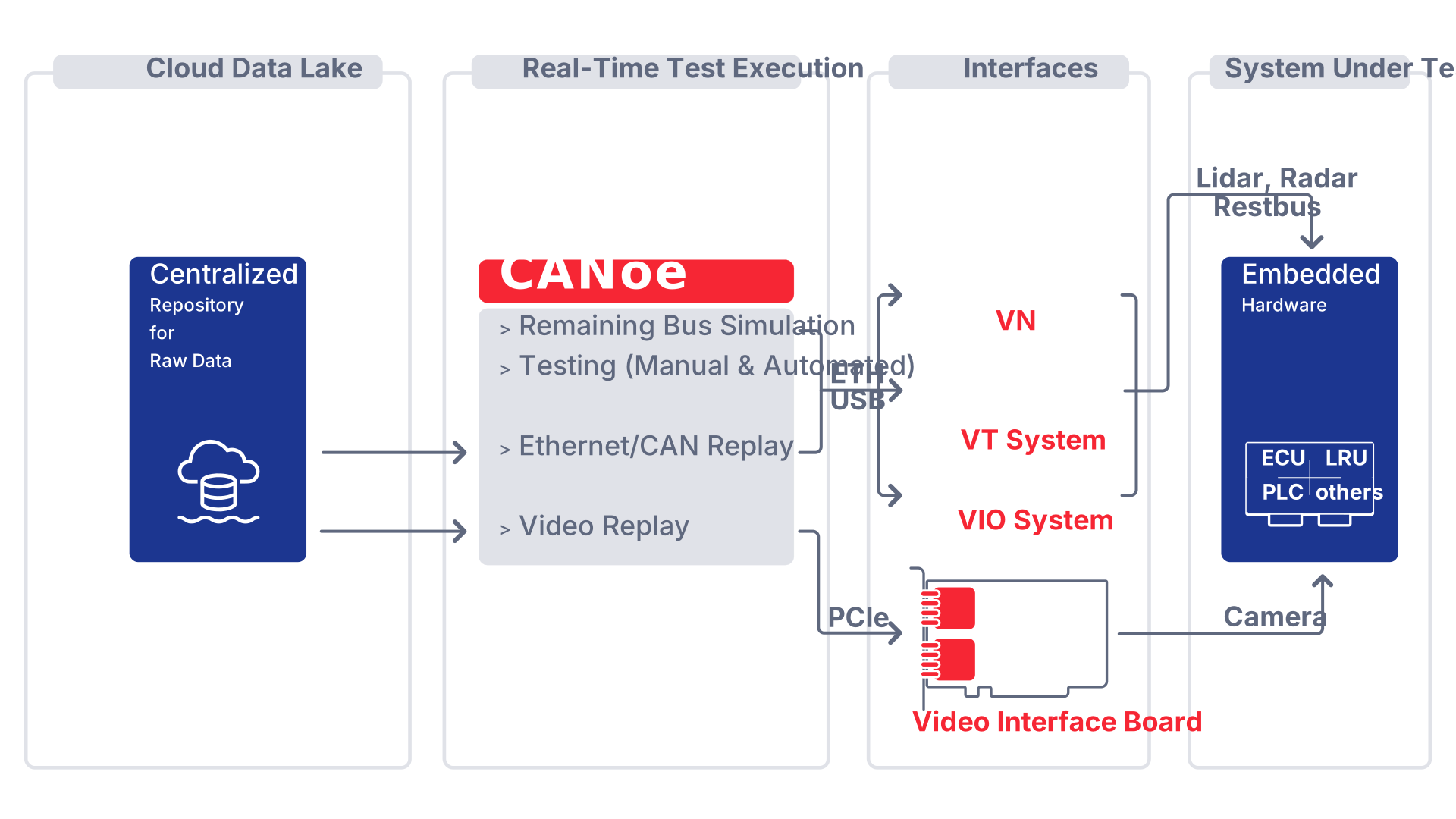
For this purpose, you use a comprehensive and practice-proven open-loop test solution jointly developed by Vector and Solectrix for HIL applications.
The recorded raw data is replayed with precise timing and synchronization and injected directly into the SUT via physical interfaces. Missing or unrecorded bus messages can be selectively supplemented using residual bus simulation to ensure a consistent system context. The video data is then transmitted to a Video Interface Board (VIB), supplying the real control unit with original video streams as if it were still installed in the test vehicle.
The SUT’s responses – such as detected objects, lane trajectories, or free drivable space – are systematically analyzed and directly compared against ground-truth data. This provides the technical foundation for objective, scalable, and efficient validation of modern driver assistance and automation functions.
Video Interface Board – A Modular Solution for Video Injection
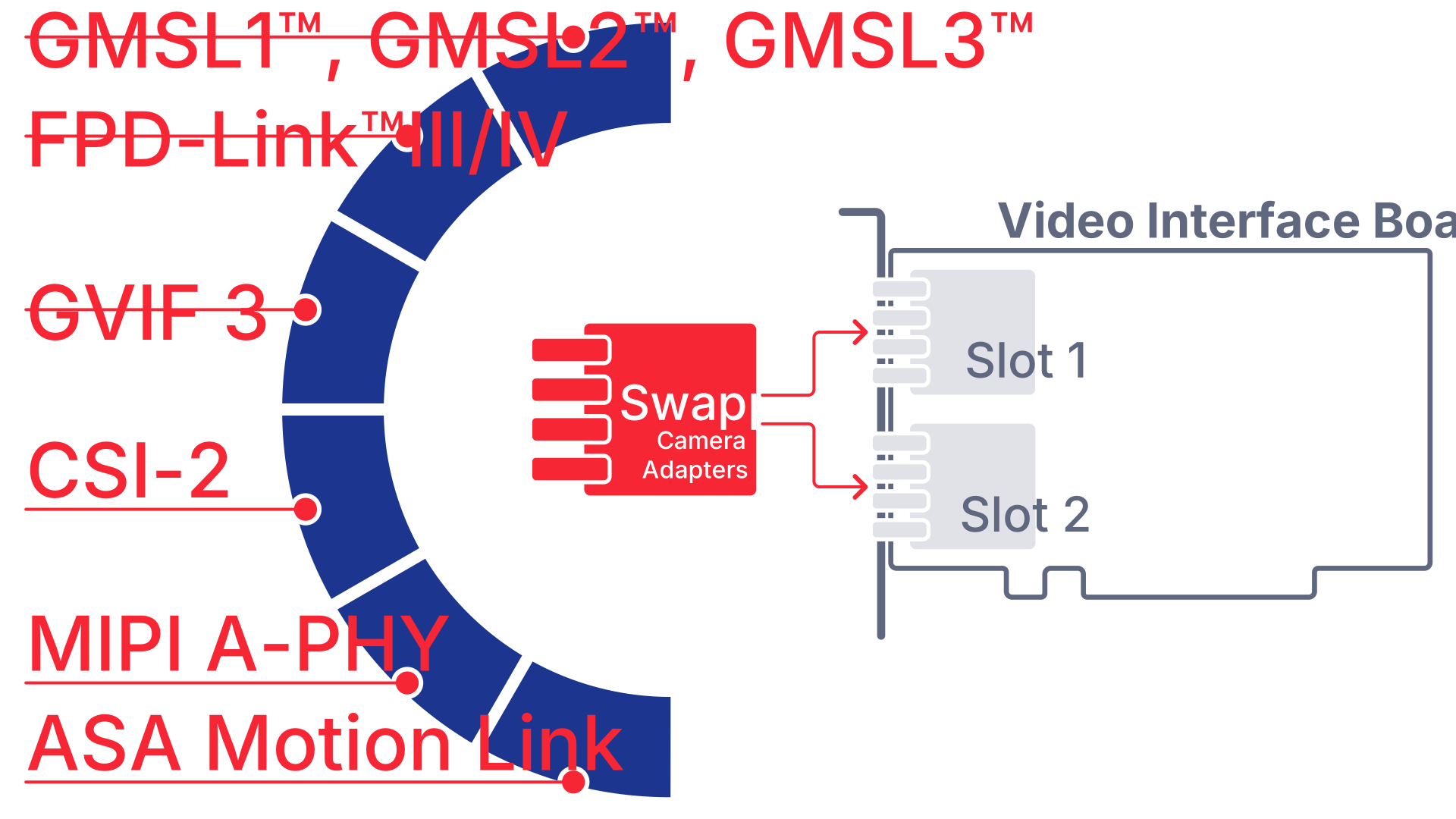
With the FPGA-based Video Interface Board (VIB), you can capture, process, and replay CSI‑2 video data with precise timing and synchronization. The modular system supports a wide range of established Serializer/Deserializer Technologies (SerDes), video transmission protocols, enabling straightforward connection of diverse cameras and embedded control units:
GMSL1™, GMSL2™, GMSL3™ | FPD-Link™ III/IV | ASA Motion Link | GVIF 3 | CSI‑2 | MIPI A‑PHY
This allows you to easily implement heterogeneous setups and remain flexible over the long term, even as interface requirements evolve.
High Bandwidth for Demanding Applications
With the Video Interface Board, you rely on a solution designed for demanding test environments. You benefit from precise and consistent playback of high-bandwidth video content for detailed analysis and evaluation of system behavior – both in ADAS/AD applications and in aerospace, industrial, and medical technology domains.
Modular Design for Maximum Flexibility
The Video Interface Board consists of a base board and interchangeable camera adapters with integrated serializer/deserializer interfaces. Thanks to this modular design, the system can be quickly, easily, and cost-effectively adapted to your individual requirements.
Fault Injection – Targeted Validation of Robustness
With fault injection in the context of data replay, you can systematically evaluate how your systems respond to real fault condition – reproducibly, in a controlled manner, and without requiring additional driving data. All tests are conducted in compliance with the standards LV124, LV148, ISO 16750, and ISO 7637. This approach makes critical scenarios predictably testable and enables evaluation of system behavior under realistic conditions.
In general, two methods are used, each addressing different classes of faults:
- I2C manipulation,
- Power-over-Coax (PoC) fault injection.
By combining both methods, you can assess the robustness, fault behavior, and degradation strategies of ADAS functions under precisely defined conditions. Critical situations can be compared reproducibly – efficiently, safely, and without risky test drives.
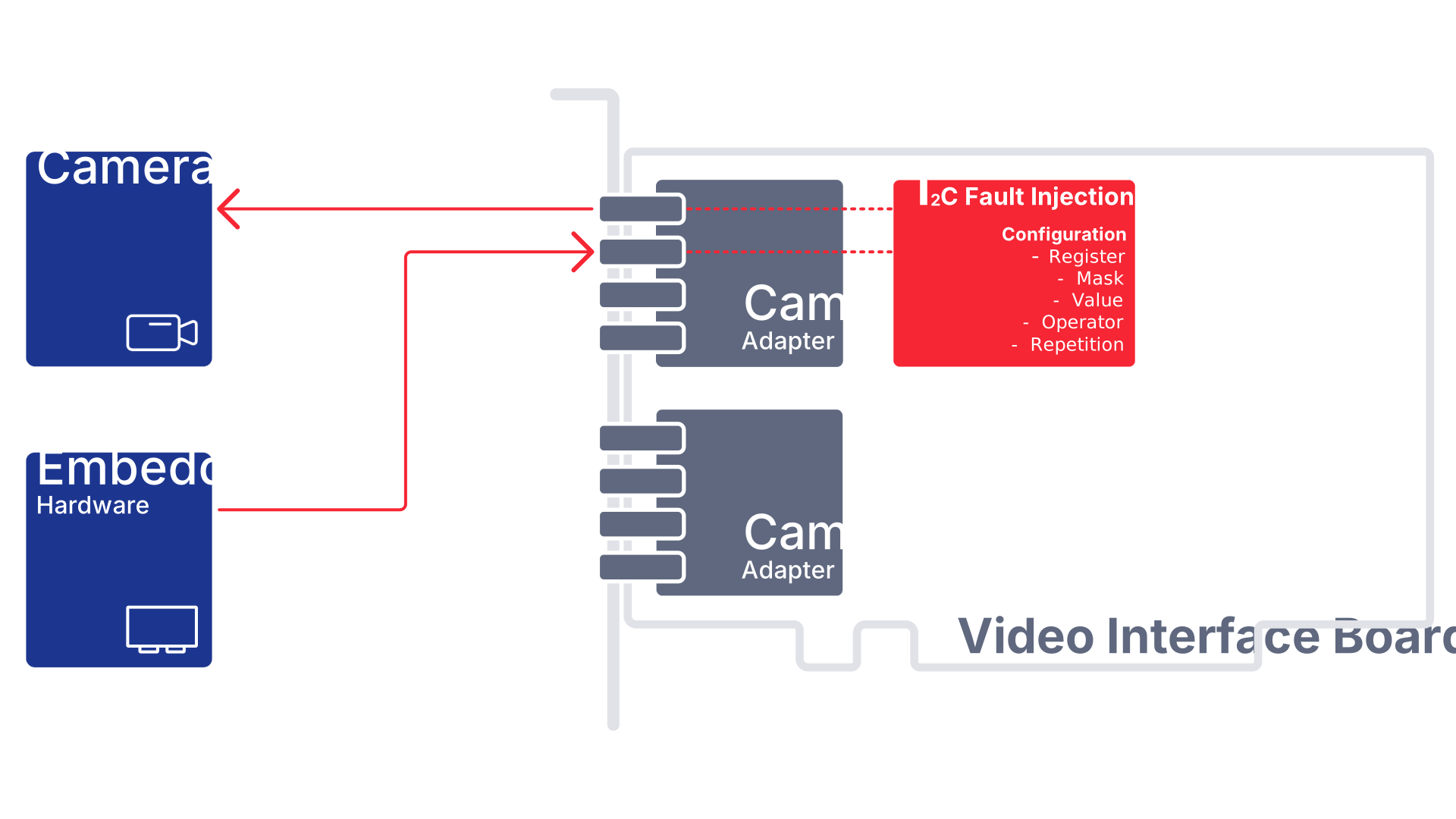
I2C Manipulation
With I²C‑based fault injection, you deliberately and controllably intervene in the control, configuration, and data communication between the camera and the ECU. This enables targeted simulation and analysis of both functional and image-related faults. Typical use cases include:
- Extended ECU validation through targeted I²C and video data manipulation
- Controlled interference with data communication between camera and ECU
- Simulation of camera-side fault conditions by manipulating I²C communication
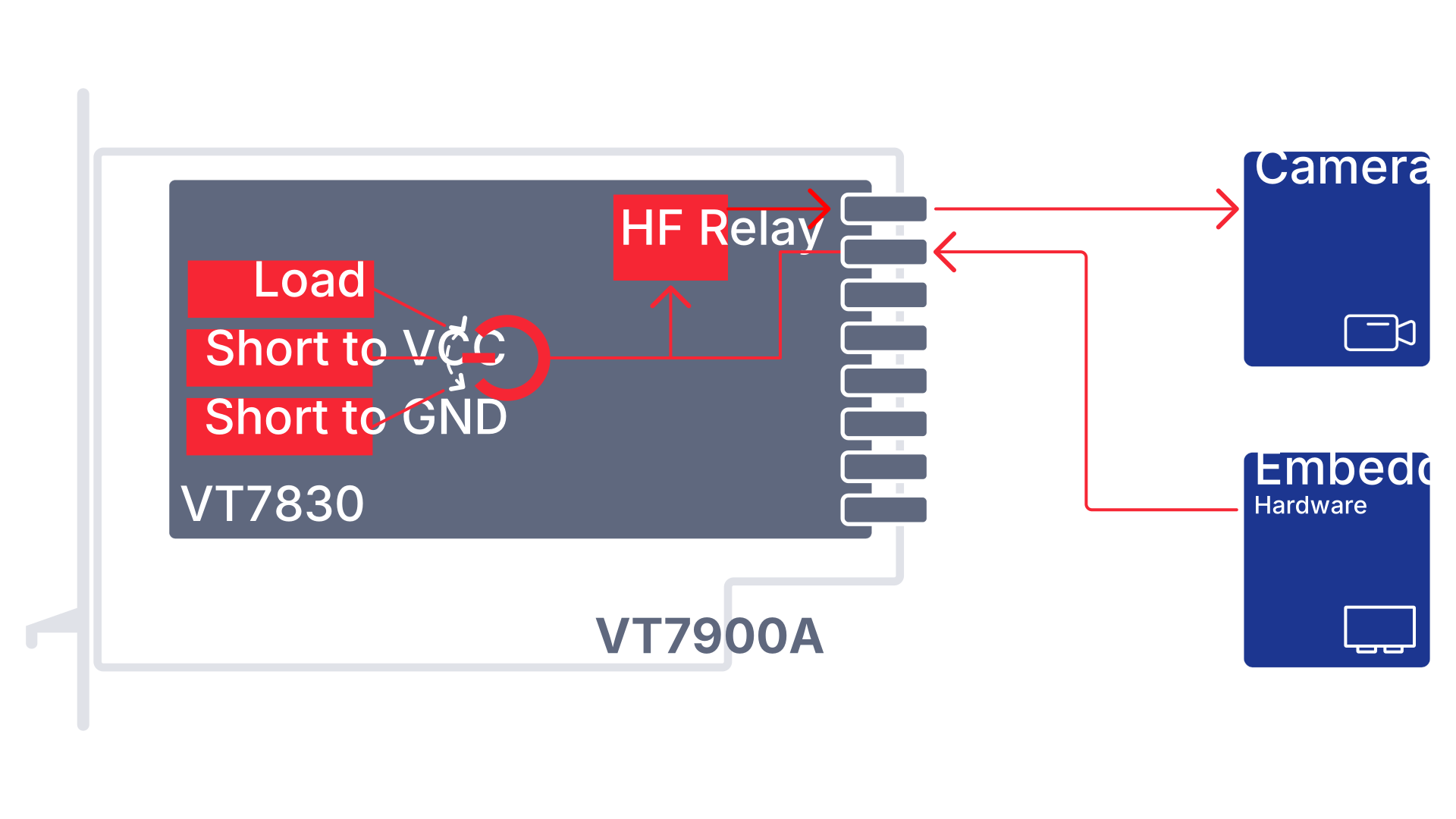
PoC Fault Injection
PoC fault injection directly targets the physical signal transmission layer. Electrical faults are realistically reproduced by selectively intervening in power and signal paths without damaging the camera. The following fault conditions can be simulated, among others:
- Closed signal line (fault-free condition)
- Open signal line (interruption)
- Short circuit to GND (ground)
- Short circuit to VBAT (supply or battery voltage)
- Overcurrent and undercurrent scenarios without hardware damage