SIL and HIL Testing for Reliable Control Systems
Ensure the highest quality and reliability for your control systems with Software-in-the-Loop (SIL) and Hardware-in-the-Loop (HIL) testing methods. Integrated into the development process, you can identify software or hardware issues early on. The combination of SIL and HIL, in particular, leads to increased efficiency. Scale flexible SIL tests and thereby reduce the need for HIL capacities to the necessary minimum. This way, you achieve the highest level of quality, functionality, and speed when transitioning to real-world operations.
Test With Success, Develop With Confidence – With Vector as Your Partner
- Thought out together and seamlessly integrated – Obtain complete SIL and HIL systems for comprehensive validation and verification of your embedded systems.
- Maximum flexibility – Customize your test system to fit your development processes.
- Scalable architecture – Expand your system modularly according to your requirements.
- Fast time to market – Reduce your development time through optimized testing processes.
- Efficient & economical – Validate resource-efficiently and cost-effectively.
SIL and HIL Testing Combined for Maximum Testing Efficiency
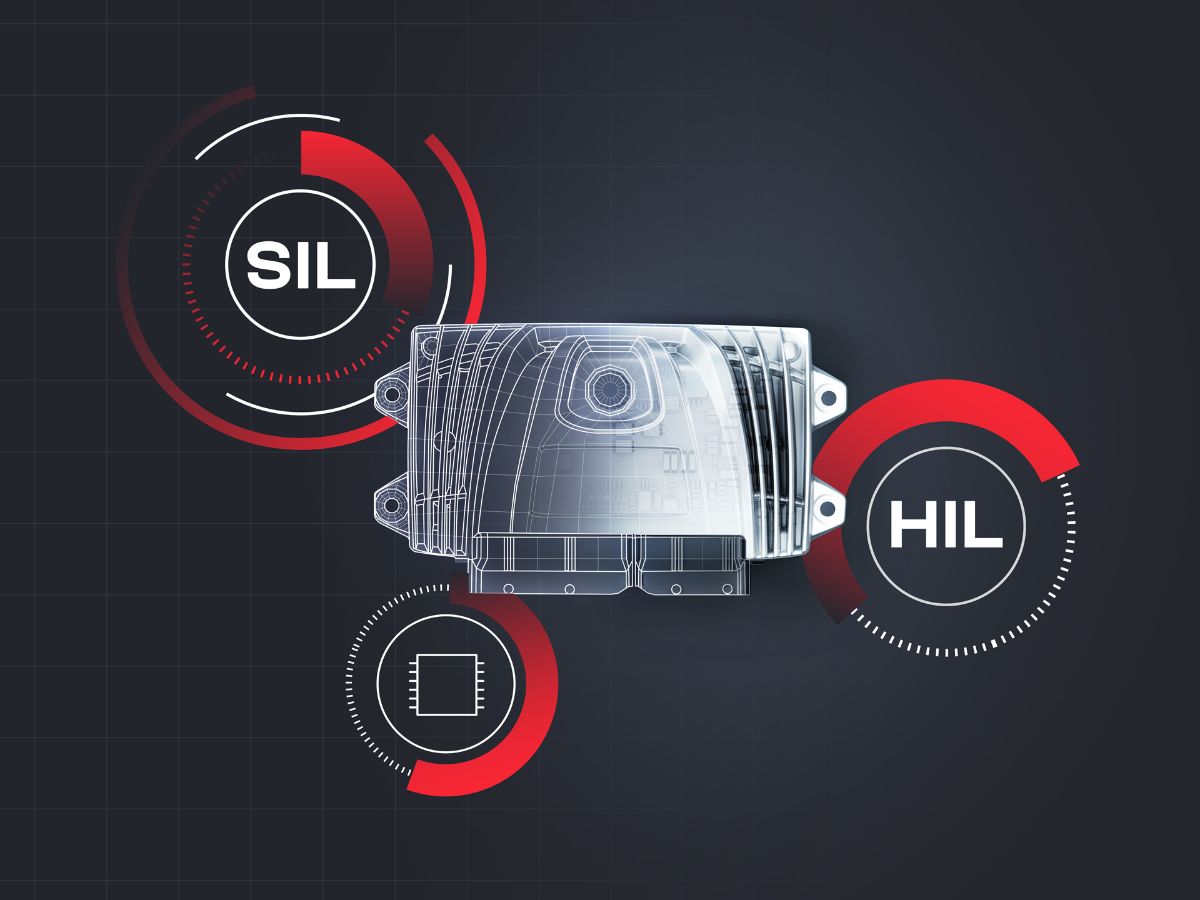
Comprehensive Validation From Software to Hardware
The combination of SIL and HIL testing enables comprehensive and efficient validation of your control unit software in automotive development. With SIL tests, you can perform early validation and optimization in a virtual environment, while HIL tests allow you to verify your software under realistic conditions with actual hardware. This seamless testing process helps you identify errors early, shorten development times, and significantly improve the quality of your control unit software.
Software-in-the-Loop (SIL) – Efficient Validation in the Early Development Phase
With SIL tests, you can validate your control unit software during the initial development phase – even before real hardware is available. You efficiently optimize your algorithms in a simulated environment, reducing costly iterations. SIL is the crucial step before HIL, allowing you to identify errors early, ensure quality, and significantly shorten your time-to-market.
Hardware-in-the-Loop (HIL) – Realistic Testing for Maximum Reliability
With HIL tests, you connect your actual control unit hardware to a vehicle simulation. This allows you to test functions under practical conditions long before prototypes are available. You can identify errors precisely, optimize your control unit software, and benefit from accelerated development cycles. HIL bridges the gap between virtual tests and real-world driving trials, ensuring safe and efficient vehicle development.
Vector Tools for SIL and HIL Tests: Continuous Test Solutions for Every Development Phase
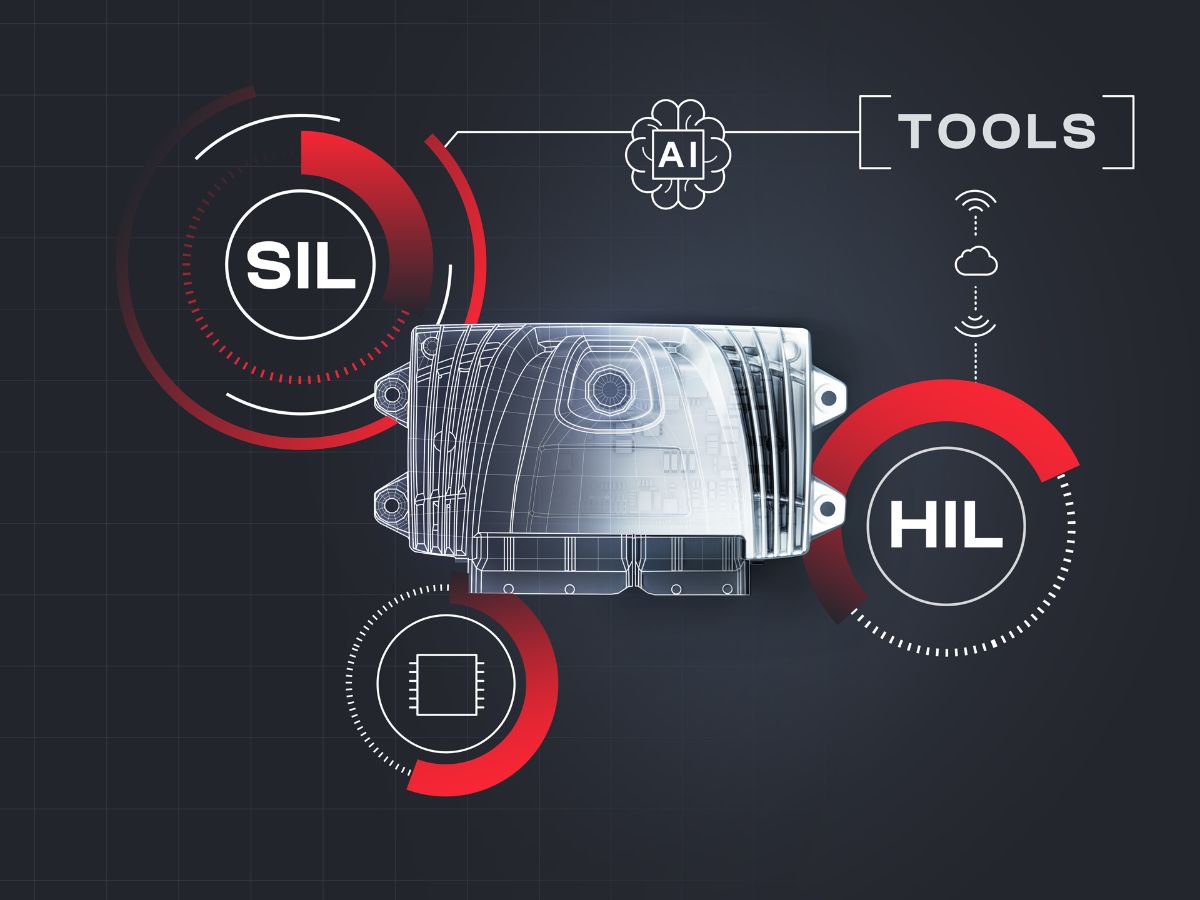
Rely on Vector's powerful tools for seamless test processes in every development phase. With Vector's continuous tool chain, you can achieve consistent test results, accelerate your development and ensure the highest quality - from the first code line to the final drive test.
Learn More About Our SIL and HIL Solution
SIL Testing
Test your control unit software efficiently and flexibly with Vector CANoe – seamless integration, high scalability, and maximum automation for rapid validation.
HIL Testing
Accelerate your control unit testing with Vector HIL test systems – customized Hardware-in-the-Loop solutions for precise, efficient, and automated validation.
Worth Knowing

HIL Tests: Case Study Airbus
The use of CANoe and the VT System has significantly reduced the test time for the Cabin Intercommunication Data System (CIDS). The Airbus Test Automation Framework (TAF) increases the flexibility and reusability of tests, which led to a reduction in test time from one week to a few hours.
Technical Article: Seamless Test Solutions
To increase the efficiency of E/E development, it is necessary to validate all development steps with suitable, modular test hardware. Vector’s test solution enables a continuous design process from early validation in the development process through to integration on the target platform.