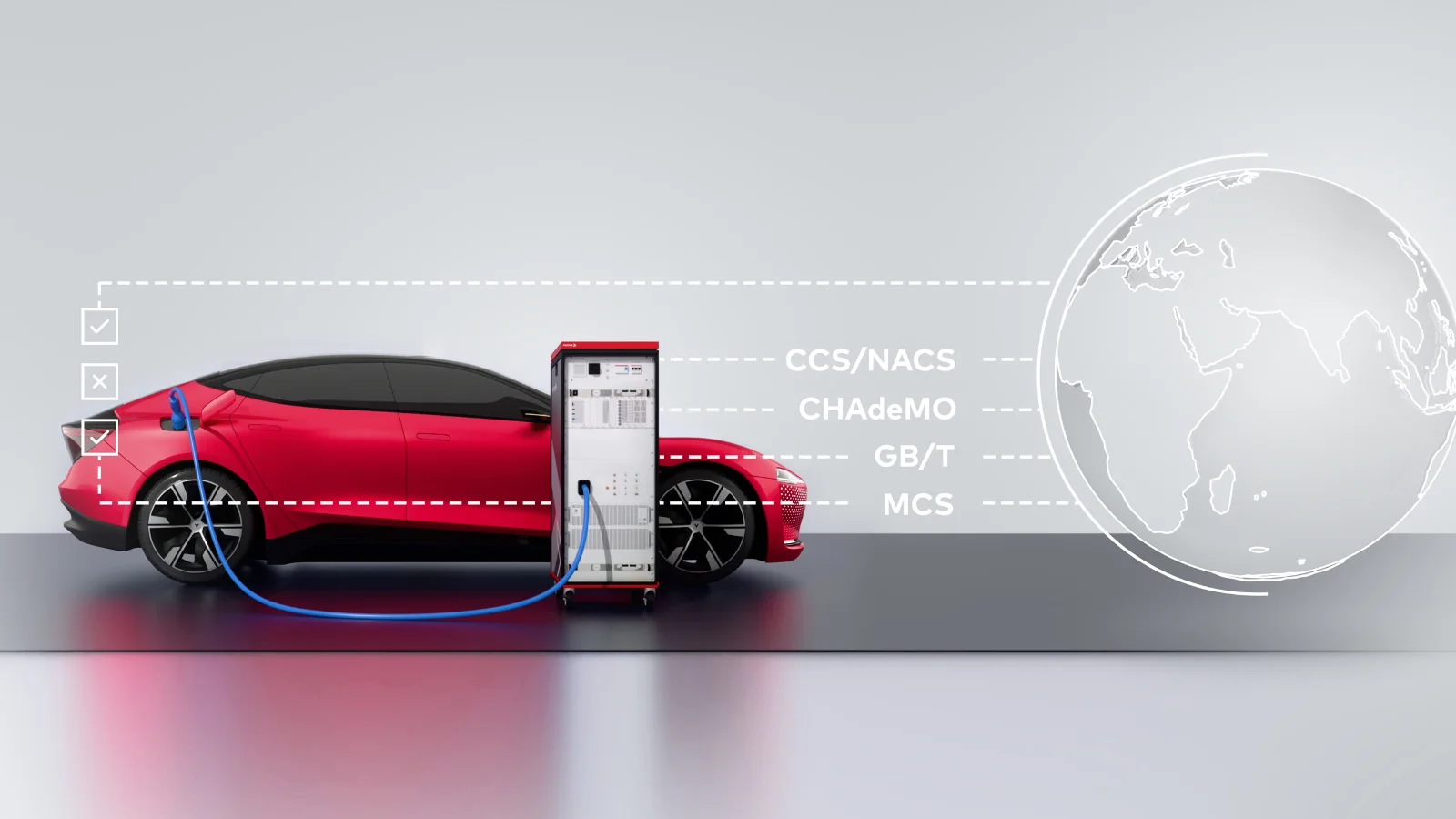
CANoe Emulation Package EV
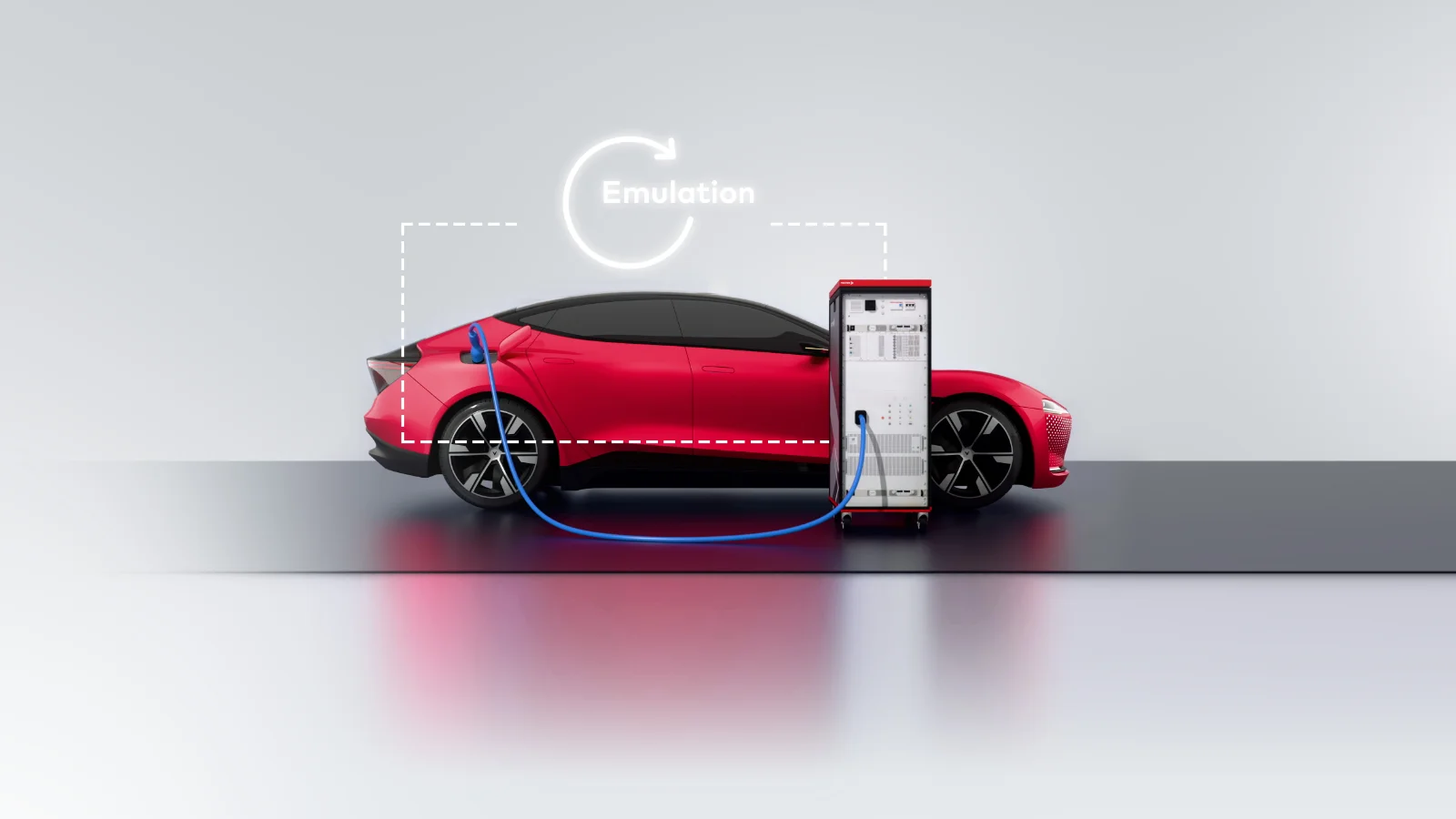
The CANoe Emulation Package EV is an extension for CANoe that transforms recorded charging sessions into parameterized emulation models. These models reproduce the communication behavior of real charging stations with a special focus on error cases and limit scenarios.
The EV emulation package is aimed at development and tester teams who need to validate charging communication, interoperability and robustness - without repeated on-site testing. It is suitable for laboratory, SIL and HIL setups where reproducibility and automation are critical.
Advantages
The CANoe Emulation Package EV converts real charging data into reproducible virtual test partners.
- Emulate real charging stations:
Replace physical EVSEs with emulations derived from real charging sessions. - Reproduce fault and edge cases:
Make rare or hard-to-trigger issues repeatable in the lab. - Increase test reproducibility:
Work with stable, deterministic charge behavior instead of fluctuating field conditions.
- Reduce time and costs:
Minimize travel, setup effort and repeated on-site tests. - Enable automated validation:
Integrate emulation-based testers into continuous test procedures.
Product Overview
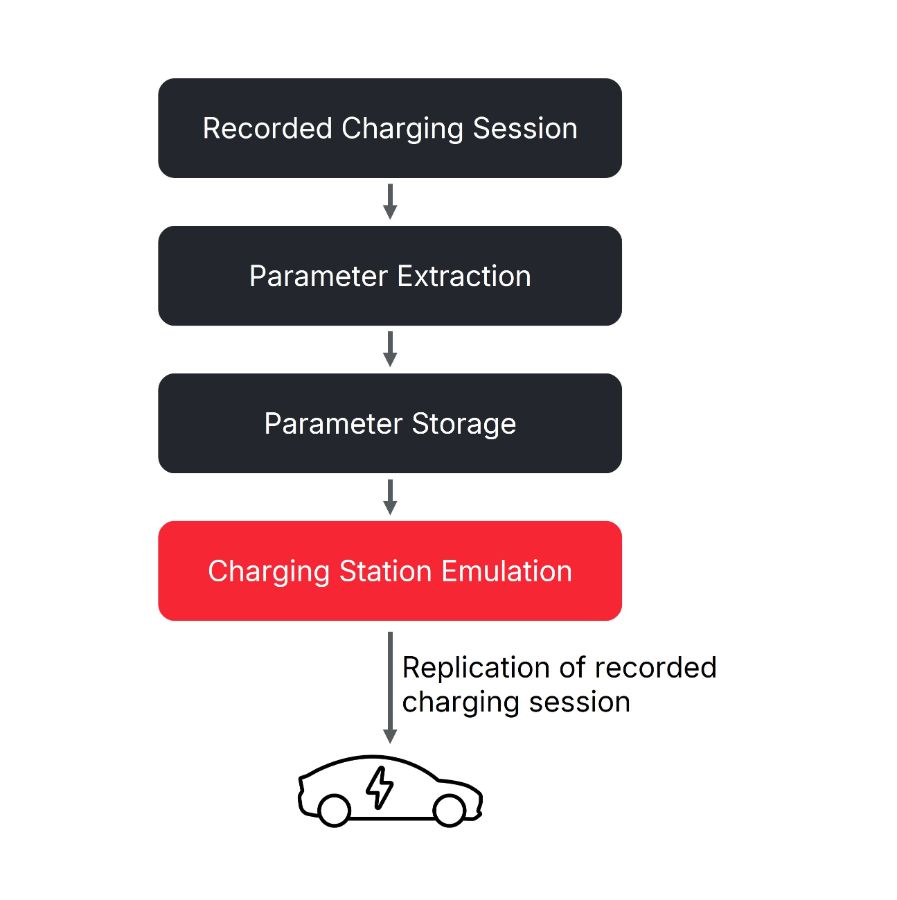
The CANoe Emulation Package EV translates recorded charging communication into executable emulation models. Instead of repeatedly testing with real charging stations, you work with virtual EVSE behavior derived directly from field data.
Typical Workflow
Import recorded charging sessions (e.g. BLF or PCAP files) into CANoe.
Play back the communication and analyze it automatically.
Automatically extract protocol parameters and communication features.
Parameterize a CANoe test unit.
Emulate the charge behavior of the station in a controlled environment.
The result is a virtual charging station that behaves like the real one observed in the field, especially in terms of protocol handling, parameter negotiation, timing and error behavior.
Key Features
- Automated log analysis
Analyze recorded loading sessions in the form of e.g. BLF and PCAP and extract log properties, message sequences and behavior patterns without manual effort. - Data-driven parameter extraction
Derive emulation parameters automatically from real communication data and save them in structured variant profiles. All transport and application-oriented OSI layers are taken into account. - Realistic EVSE emulation
Execute emulations based on standardized load communication by using a generic tester whose behavior is completely defined by extracted parameters. - Error-oriented behavior reproduction
Reconstruct and replay real-life fault scenarios and deviations observed in charging sessions in the field. - Reproducible laboratory testing
Use virtual charging stations as stable and repeatable test partners in SIL and HIL environments up to full vehicle tests. - Seamless CANoe integration
Use existing CANoe options and workflows without introducing separate simulation tools.
Related Pages