
Charging communication is a key enabler of reliable and safe e-mobility. The Vector Charging Communication Testing Solution provides a holistic toolchain to analyze, simulate, emulate, and test communication between electric vehicles (EV) and charging stations, also known as electric vehicle supply equipment (EVSE) – from early development to full system validation.
Ensure interoperability, compliance, and performance of your charging solutions, while reducing development effort and time-to-market.
Why Vector? – Your Benefits at a Glance
- One platform. All integration levels.
Use one consistent solution from Software-in-the-Loop (SIL) to real-vehicle validation with Hardware-in-the-Loop (HIL) to ensure seamless workflows across the V-model. - Automated quality & compliance
Validate against international standards such as CCS, NACS, MCS, GB/T, and CHAdeMO with automated conformance and interoperability tests.
- Scalable and modular architecture
Adapt your setup from developer workstation to high-performance test systems according to your project needs. - Early error detection
Shift-left testing with virtual environments and simulation, identifying issues before hardware is available.
Use Cases
The solution covers all key tasks of charging communication testing: from first analysis to full system validation. Explore the four use cases to understand how you can ensure reliable and standards-compliant EV and EVSE communication.

Gain Full Transparency
Analysis is the foundation for reliable charging communication. It enables you to gain full visibility into the interaction between electric vehicles (EV) and charging stations (EVSE) in both development and real-world environments. With Vector’s solution, you can capture and evaluate CCS and NACS communication on the control pilot line, including the low-level PWM communication. This makes it possible to identify protocol deviations, timing issues, and unexpected behavior. The tools support both lab-based debugging and field data analysis, allowing you to validate real charging sessions under realistic conditions. By combining detailed signal measurement with protocol-level insights, developers can efficiently trace errors to their root cause. The analysis capabilities integrate seamlessly with simulation and testing workflows, enabling a continuous validation process across all stages.
What You Achieve
Analyze CCS- and NACS-based communication behavior
Capture field data and evaluate real charging sessions
Identify protocol deviations and performance bottlenecks

Enable Early Development
Simulation allows you to develop and validate charging communication logic long before physical hardware becomes available. With Vector tools, you can simulate both EV and EVSE behavior and configure them flexibly to represent different charging scenarios. This enables developers to test communication flows, parameter variations, and system interactions in a controlled environment. Simulation is particularly valuable for validating new features, testing edge cases, and reproducing issues without the need for complex hardware setups. By integrating simulation into your development workflow, you can shift testing activities to earlier phases and significantly reduce iteration cycles. The simulated components can also serve as intelligent communication partners for control units, supporting continuous integration and automated testing. As simulation models can be reused and extended, they provide a scalable foundation for long-term development.
What You Achieve
Early validation without dependency on physical hardware
Flexible testing of communication scenarios and variants
Reduced development effort through reusable simulation setups

Ensure Compliance and Interoperability
Testing ensures that charging communication meets all functional and regulatory requirements. Vector provides automated test environments that enable systematic validation of EV and EVSE implementations against international standards such as CCS, NACS, MCS, GB/T, and CHAdeMO. Predefined test case libraries cover relevant conformance and interoperability scenarios, helping teams ensure compliance efficiently. Automated execution allows repeated testing across software versions and system configurations, increasing reliability and reducing manual effort. In addition to functional testing, the solution supports robustness and security validation to identify vulnerabilities early. Testing can be executed across different integration levels, from software-based environments to hardware test systems. This consistency ensures traceability and comparability of results throughout the development lifecycle.
What You Achieve
Automated validation of conformance and interoperability
Reduced risk of integration issues and compliance gaps
Scalable and repeatable testing across development stages

Validate Realistic System Behavior
Emulation enables realistic validation of charging communication by combining virtual and physical components. With Vector’s solution, you can emulate EV or EVSE behavior and integrate it into complex system setups. This allows you to reproduce real charging scenarios and validate system interactions under dynamic conditions. Emulation is particularly useful for testing integration scenarios where complete systems are not available or need to be replaced by controllable counterparts. By bridging the gap between simulation and physical testing, emulation provides a flexible environment for system-level validation. It also supports Hardware-in-the-Loop (HIL) and Software-in-the-Loop (SIL) approaches, ensuring consistent testing across all integration levels. As a result, teams can verify system behavior more efficiently and reduce dependency on physical availability of EV or EVSE.
What You Achieve
Realistic validation of system behavior under dynamic conditions
Flexible integration of virtual and physical components
Reduced dependency on availability of real DUT counterparts
From Developers to Decision Makers
For Engineers
- Faster debugging and validation
- Early testing without hardware dependencies
- Integrated, efficient toolchain
For Project Leads
- Reduced development cycles
- Lower integration risks
- Scalable test strategies across teams
For Decision Makers
- Accelerated time-to-market
- Assured compliance with global standards
- Reduced cost of quality through early validation
Solution Overview
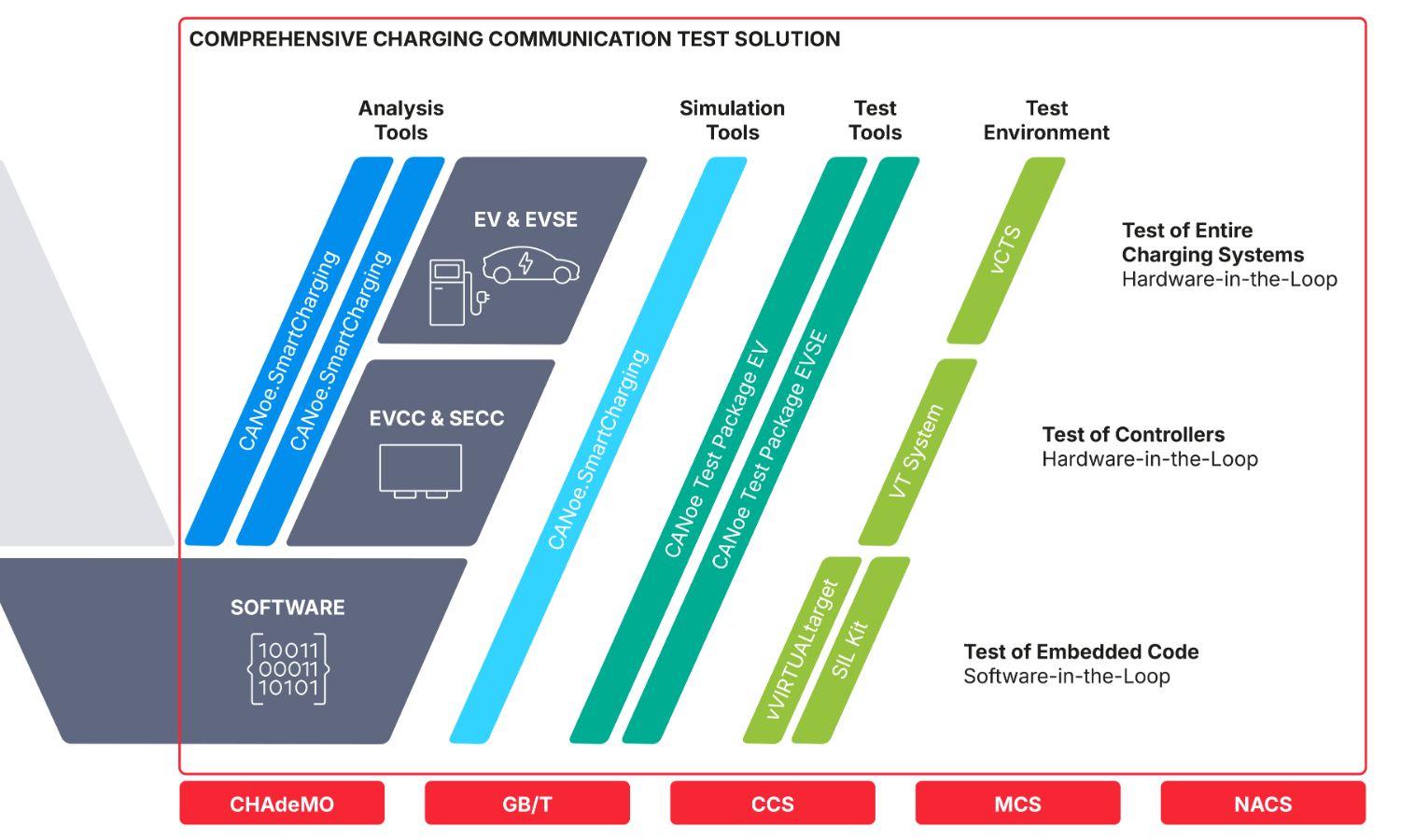
The Vector Charging Communication Testing Solution covers the complete lifecycle:
- Understand communication behavior
- Virtualize system components
- Validate functionality and standards compliance
- Reproduce real-world charging scenarios
Tool Overview
CANoe.SmartCharging
Simulate EV and EVSE charging communication. Flexible, parameterizable communication partner for development and testing.
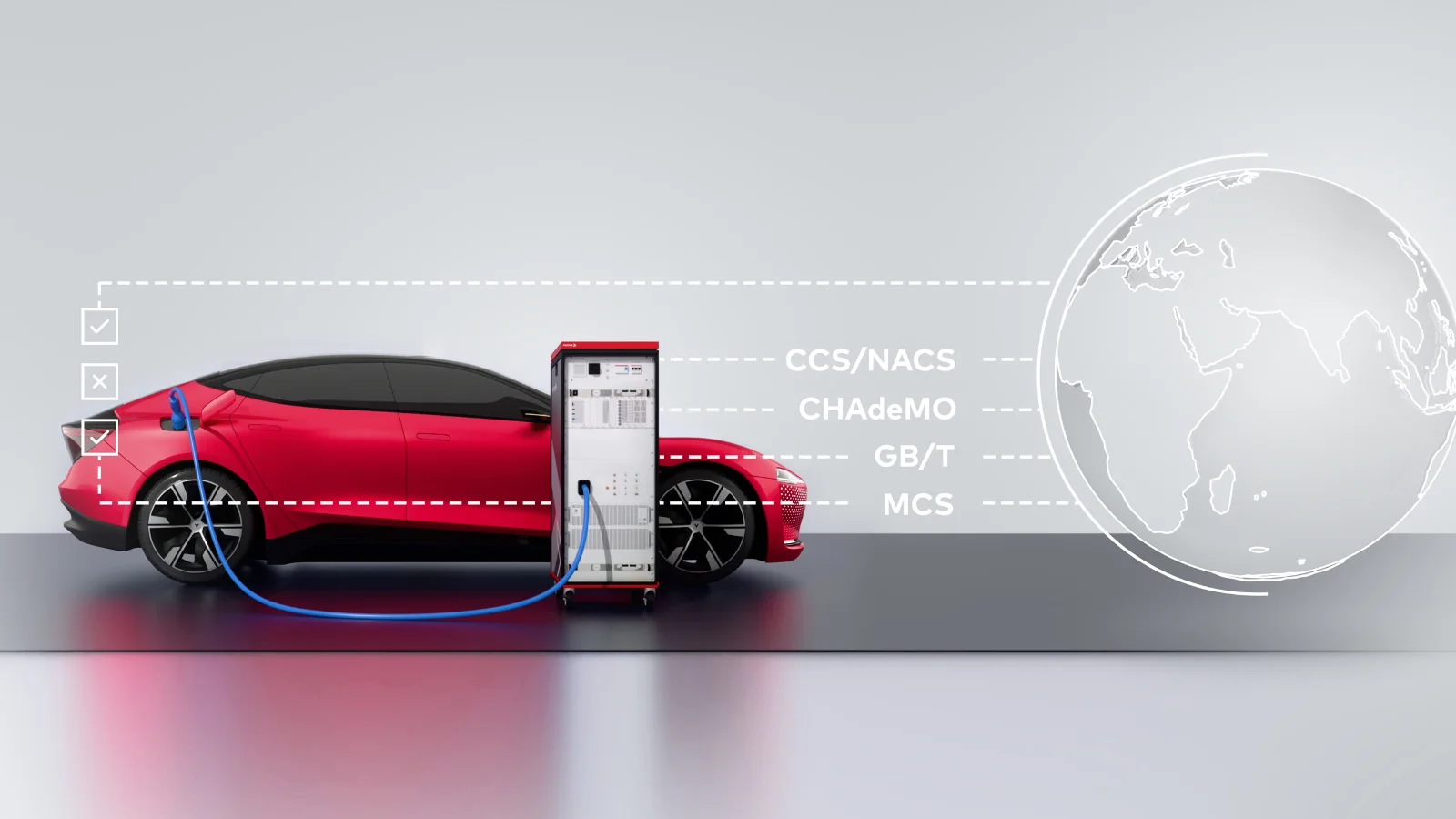
CANoe Test Package EV
Automated test cases for EV conformance and interoperability. Ensures efficient validation against international charging standards.
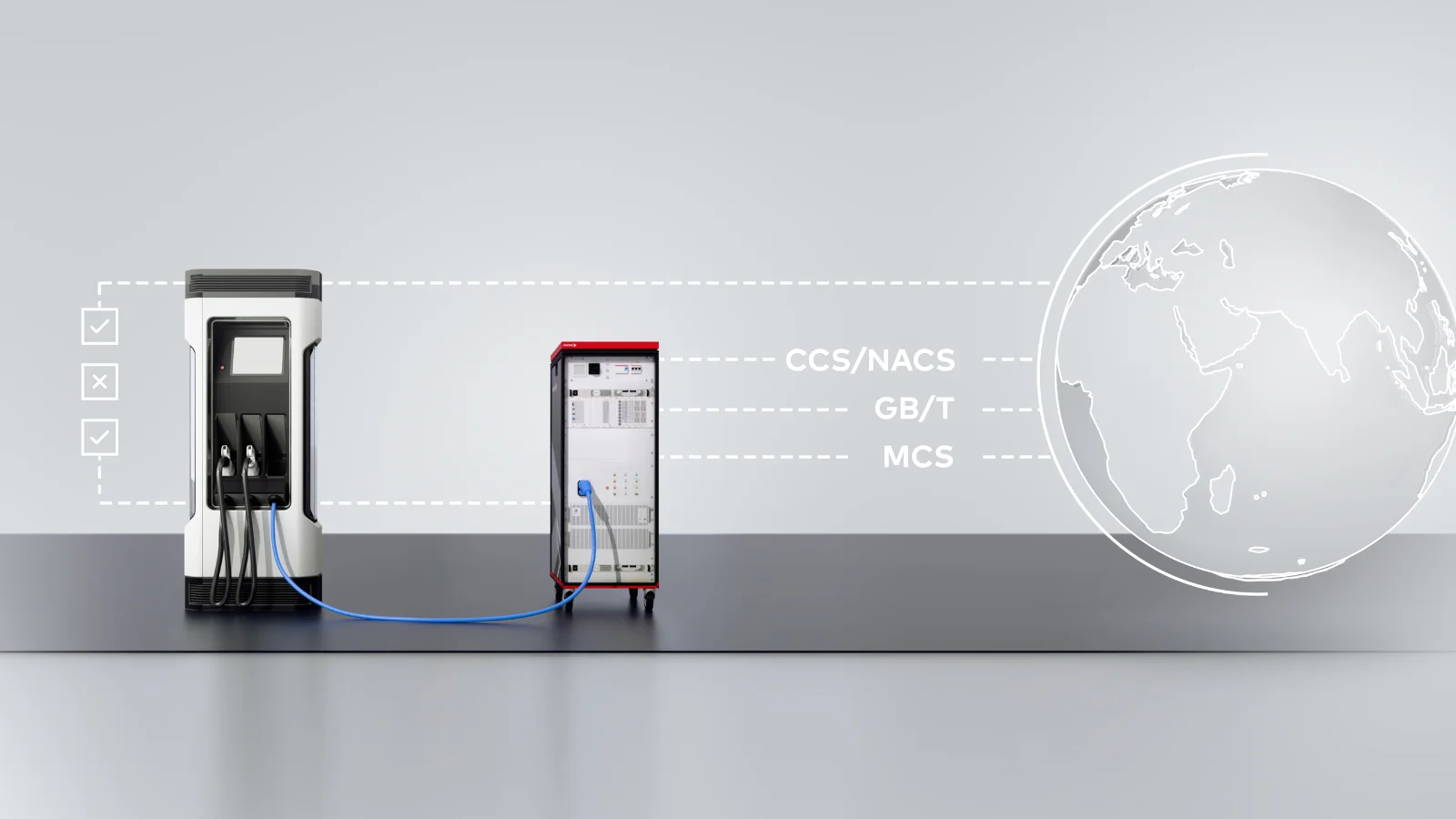
CANoe Test Package EVSE
Standardized test cases for validating charging stations. Ensures reliable interoperability with different EV implementations.
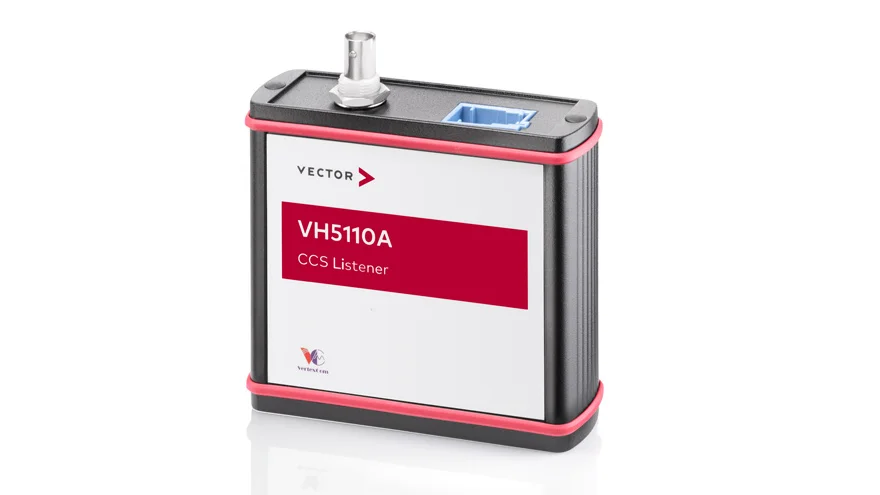
VH5110A (CCS Listener)
Capture and analyze charging communication on the control pilot line. Enables detailed debugging in lab and field environments.
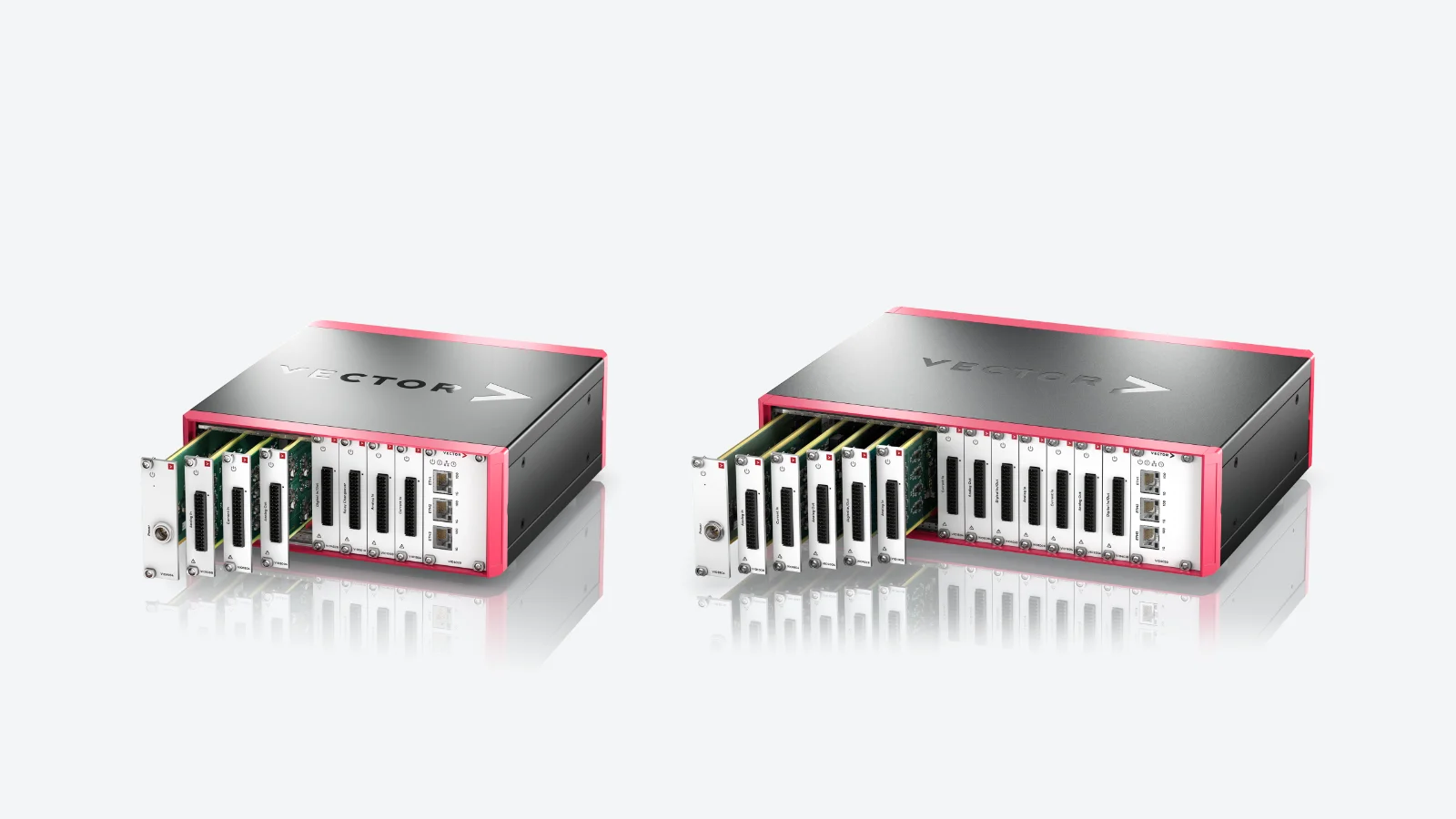
VT System
Hardware-based testing of charging communication. Enables realistic system-level validation with integrated components.
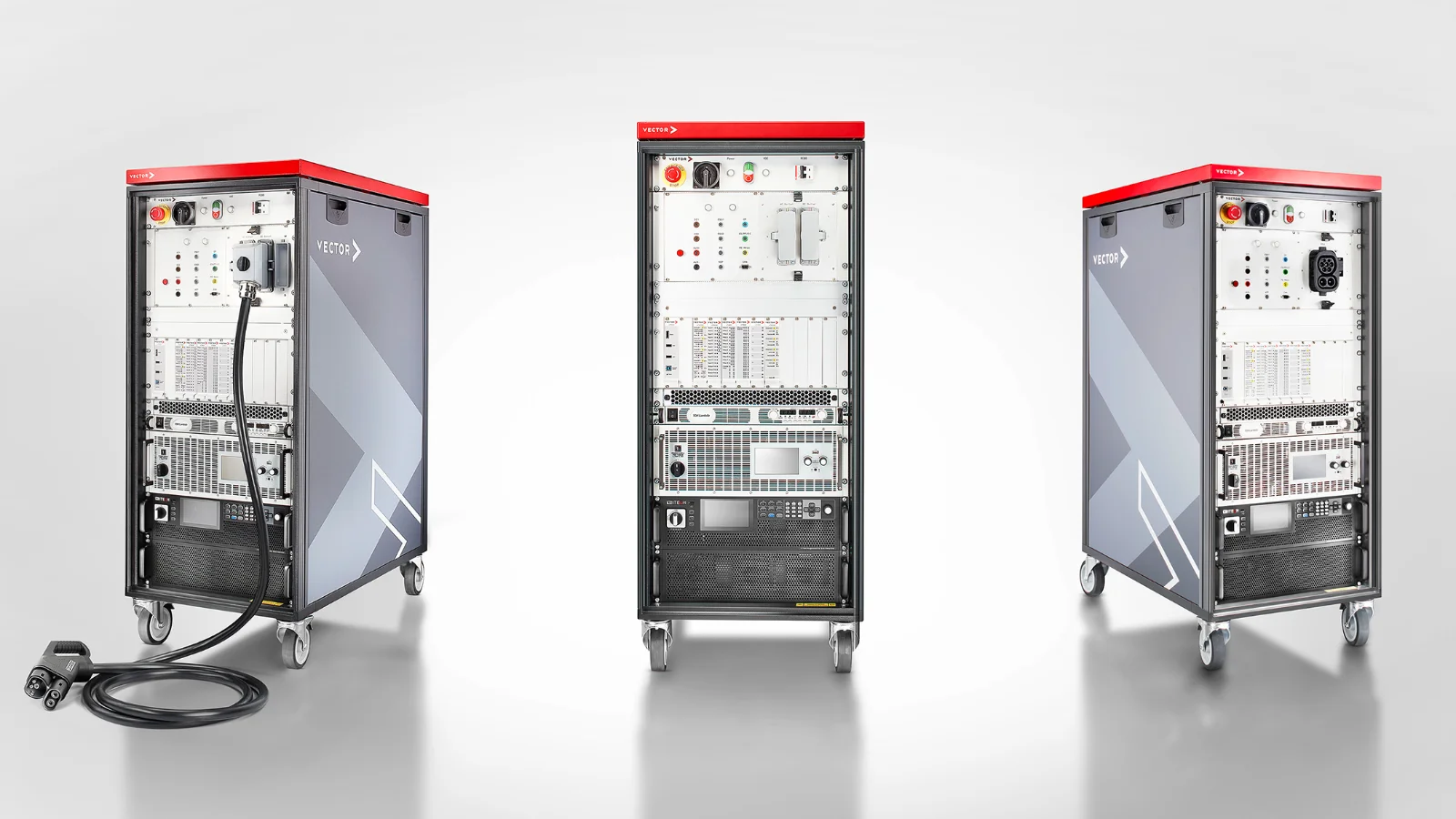
vCTS
Scalable platform for executing automated conformance and interoperability tests.

vCTS.performance
Load and endurance testing under high charging power. Validates system robustness and performance under realistic conditions.
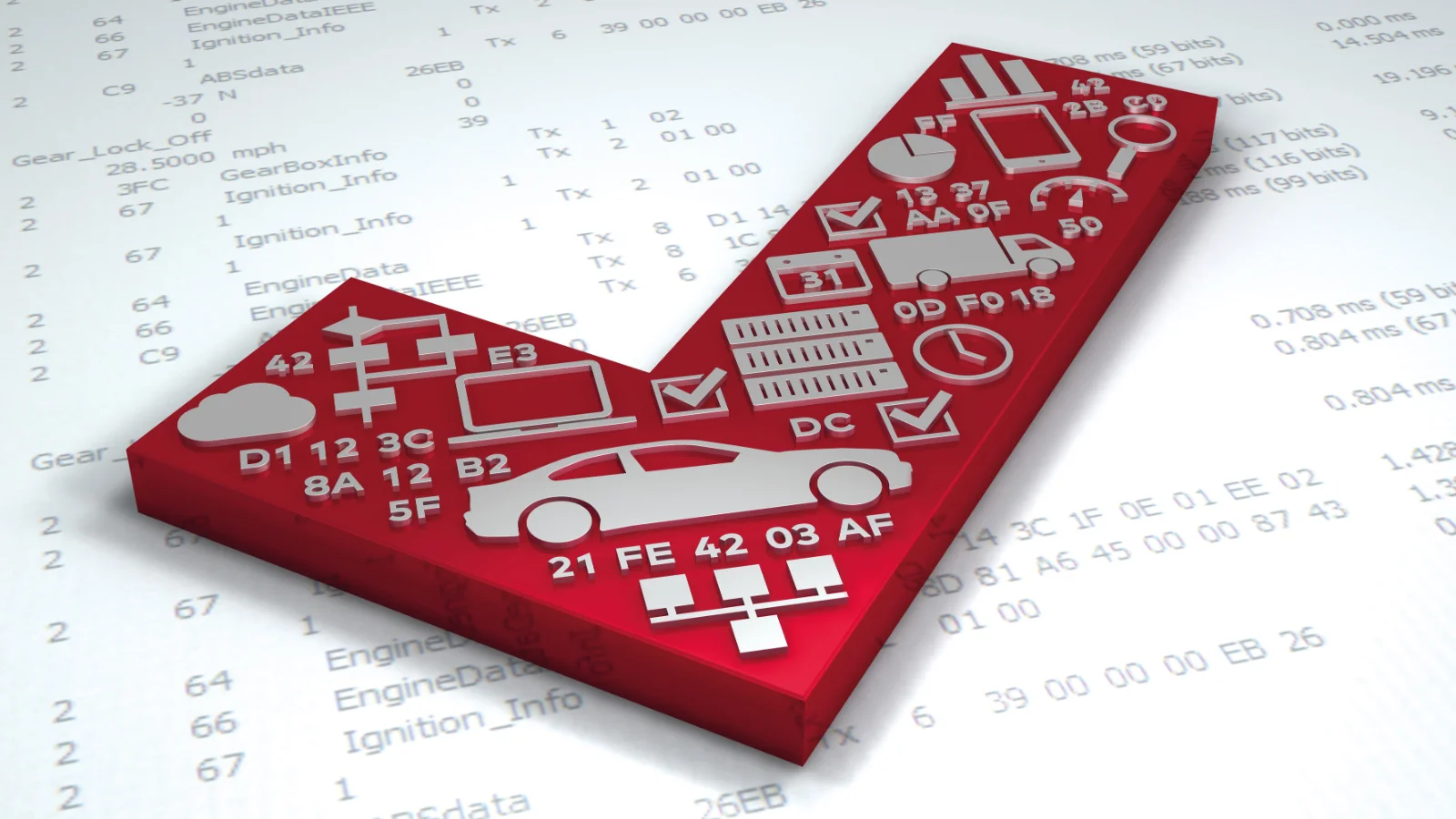
vTESTstudio
Create and manage automated test sequences. Enables structured and reusable test design within integrated workflows.
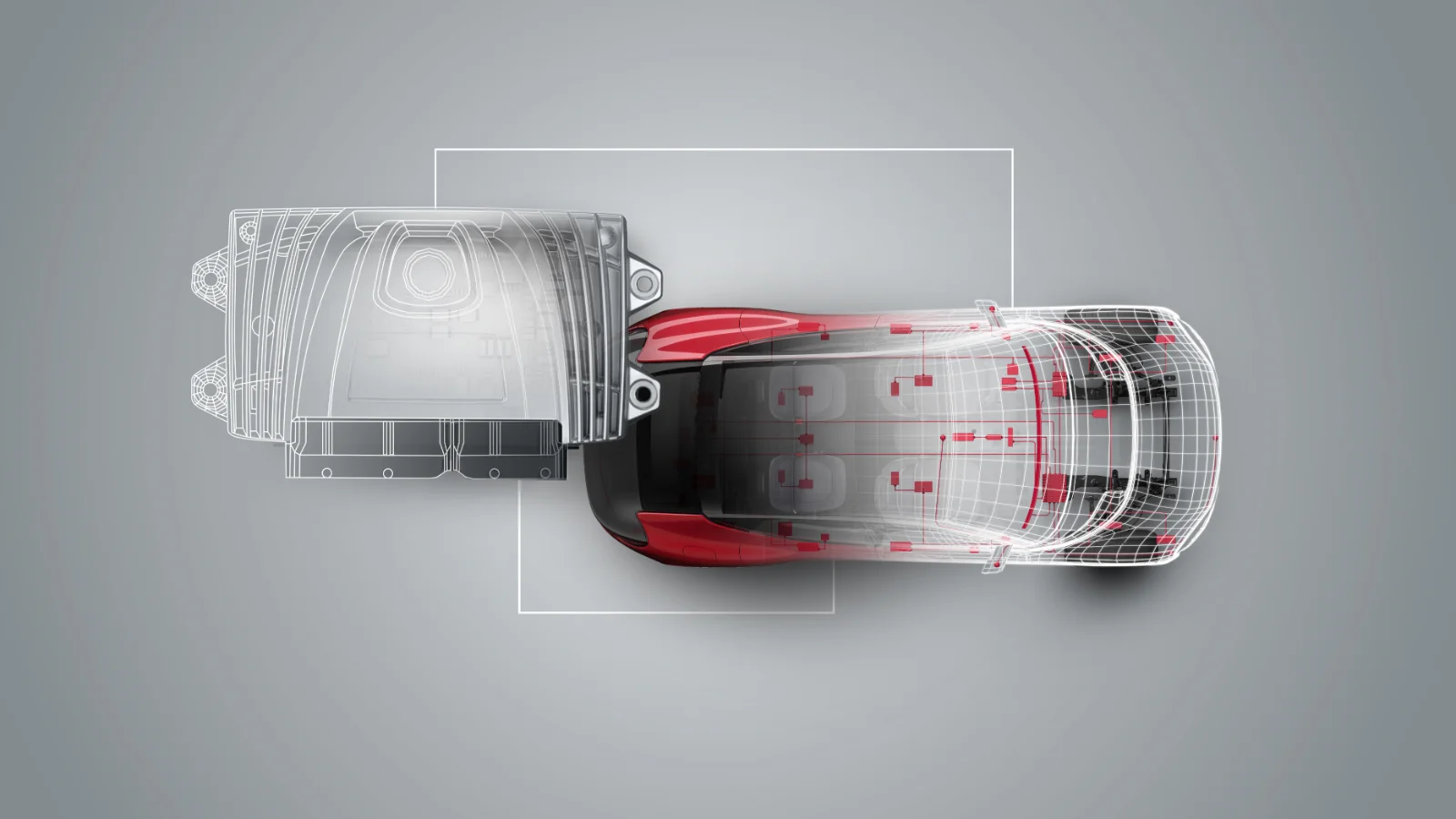
vVIRTUALtarget
Generate virtual ECUs for Software-in-the-Loop testing. Enables early validation of embedded software without hardware.
SIL Kit
Connect distributed SIL environments for virtual testing. Enables scalable and consistent validation in fully virtual setups.
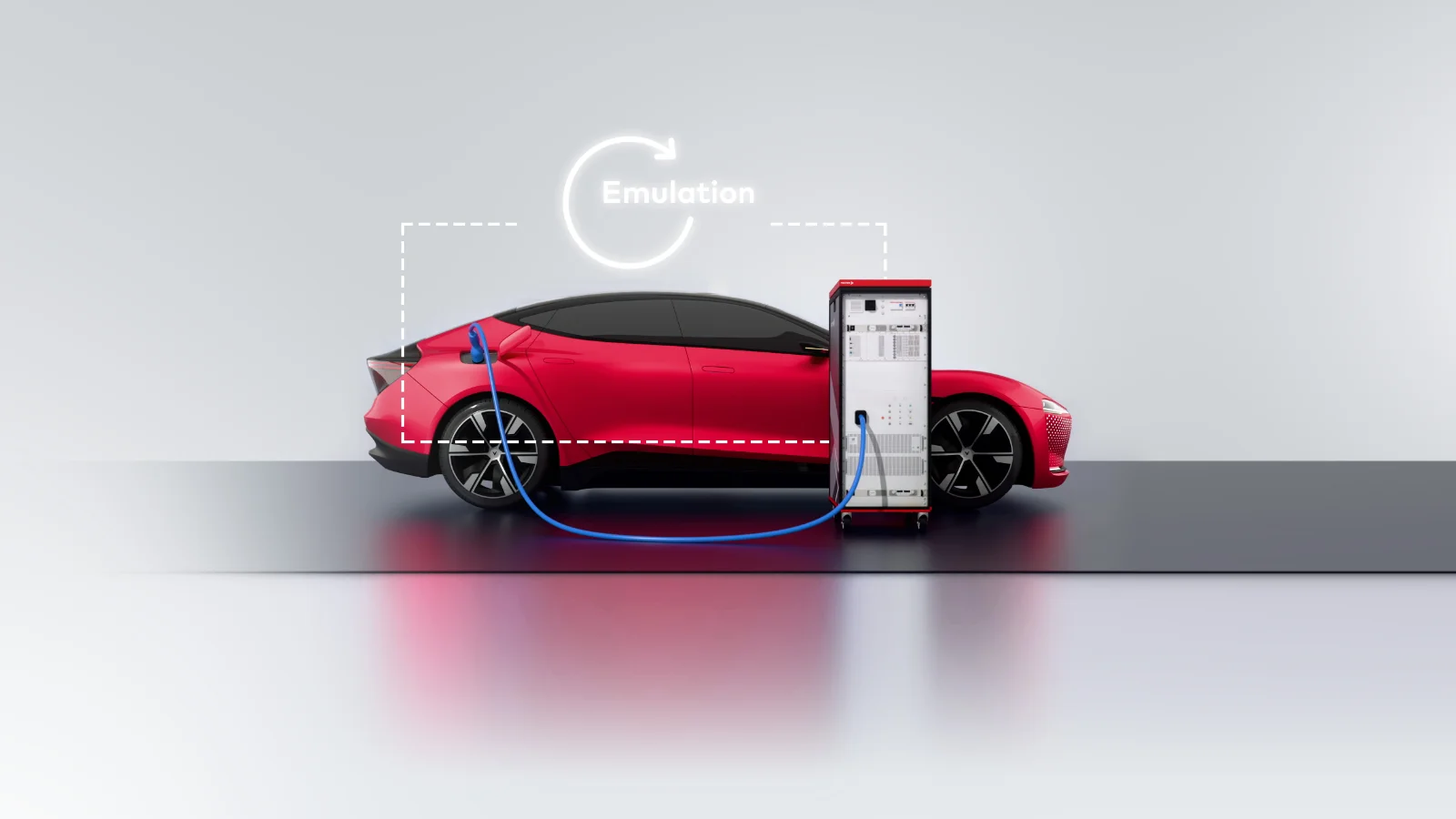
CANoe Emulation Package EV
Reproduce communication behaviour of real charging stations. Enables reliable testing in the lab wothout repeated on-site testing.