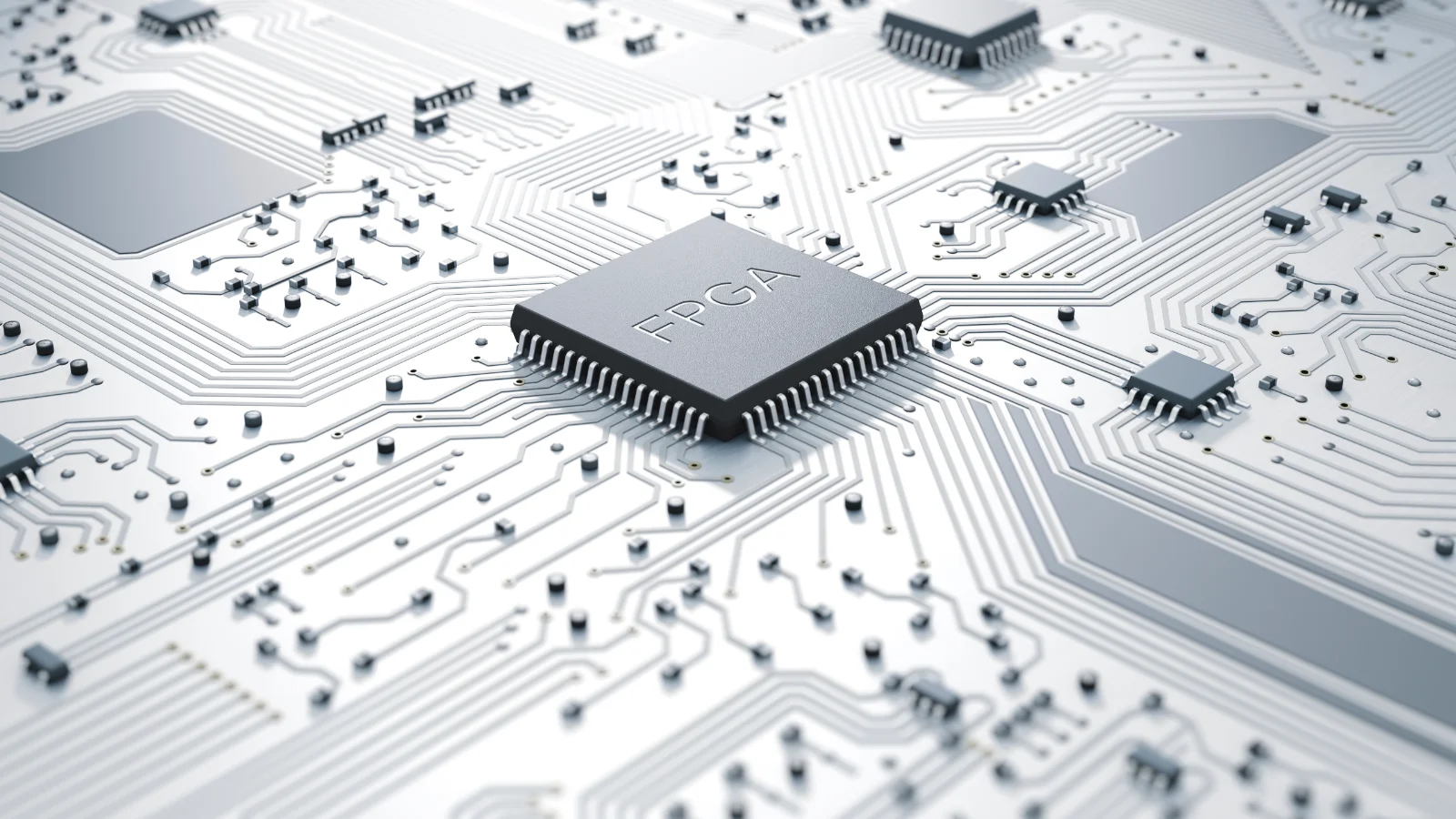
Harnessing the power of Field-Programmable Gate Arrays (FPGAs) takes your Hardware-in-the-Loop (HIL) testing to the next level.
With freely programmable logic directly integrated into the test system, you can create exactly the functionality your test setup requires. Whether it’s real-time signal processing, protocol implementation, or custom algorithms – User FPGAs offer maximum flexibility and performance for HIL testing with Vector’s VT System.
This means you benefit from maximum adaptability, shorter development cycles, and optimized test quality – precisely tailored to your specific requirements.
Why Choose User-Programmable FPGA Modules?
- Maximum Flexibility – Hardware can be reprogrammed at any time to suit a wide range of applications.
- Faster Results – Many test functions are already available thanks to the FPGA example library.
- Top Performance – Increased power through parallel processing of multiple tasks.
- Future-Proof – Update systems in the field without replacing hardware.
- Scalable & Cost-Efficient – Flexibly adapt designs and make optimal use of resources.
- Reusable – Deploy proven designs multiple times to save development time.
Application Areas
User FPGAs unlock a wide range of possibilities for Hardware-in-the-Loop (HIL) testing with Vector’s VT System – especially where standard hardware reaches its limits or specific requirements demand fast, deterministic signal processing.
- Real-Time Signal Processing:
Signal shapes are generated, filtered, or analyzed directly on the FPGA—for precise, low-latency response times. - Custom Protocols and Interfaces:
User FPGAs allow implementation of proprietary communication protocols and encodings—perfectly tailored to the test object. - Measurement and Stimulation Tasks:
Time-critical functions such as PWM, encoder evaluation, or stimulation patterns run with deterministic timing. - Signal Manipulation and Fault Injection:
Signals can be intentionally altered or disrupted to realistically test the behavior of the Device Under Test (DUT). - Hardware-Accelerated Models:
Computationally intensive models are implemented directly in FPGA logic—for maximum speed and real-time capability.
With User FPGAs, you lay the foundation for customized, high-performance, and ultra-precise HIL tests that meet your exact requirements—without compromise.
Individual FPGA Solutions for VT System Modules
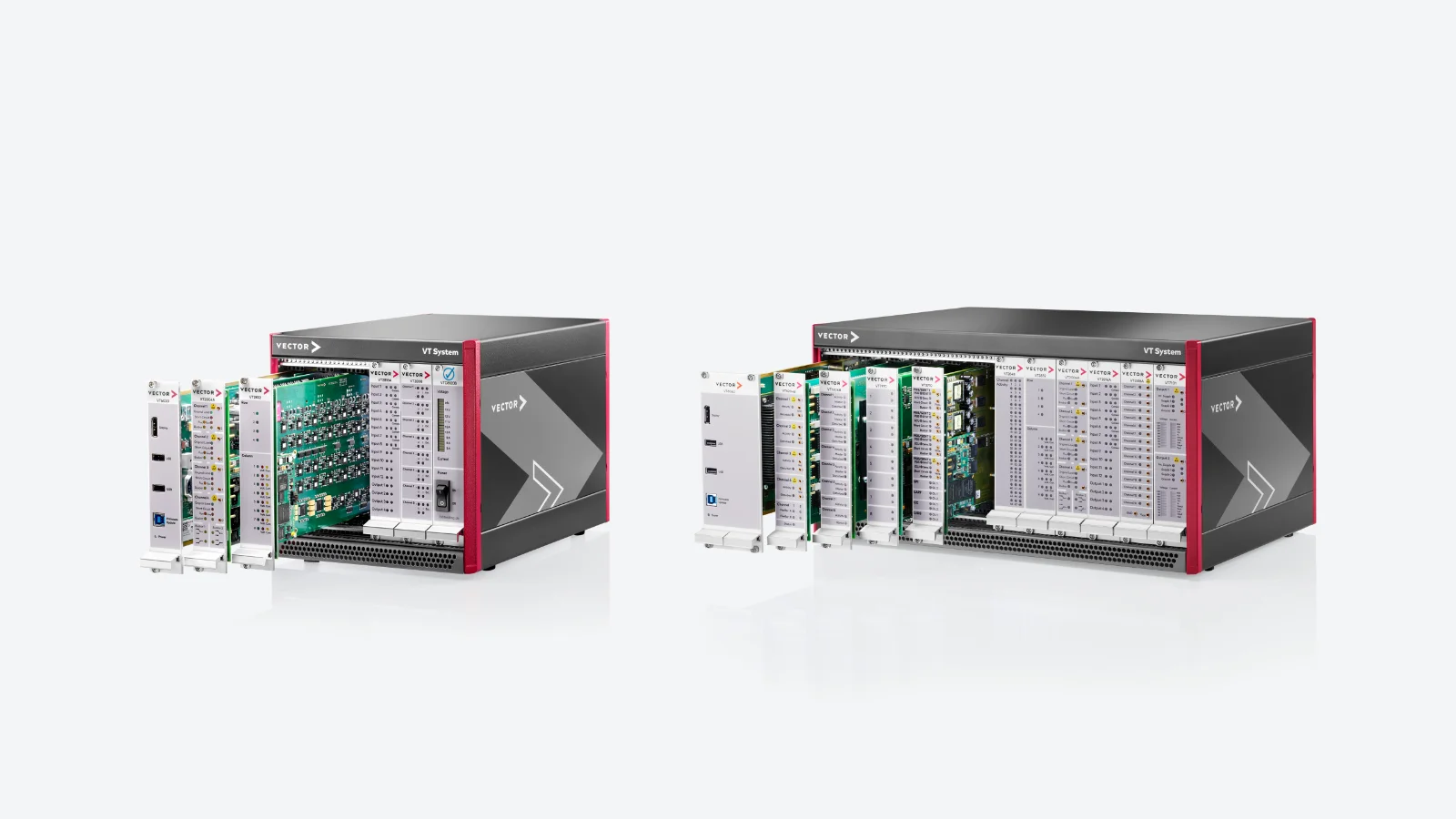
Vector offers special variants of selected VT System modules equipped with a user-programmable FPGA. This allows you to integrate your custom functionalities directly into the module—with direct access to VT module peripherals for maximum performance.
This enables you to tailor your VT System modules precisely to your specific requirements and unlock virtually unlimited possibilities for development and testing.
The following modules are available for this purpose:
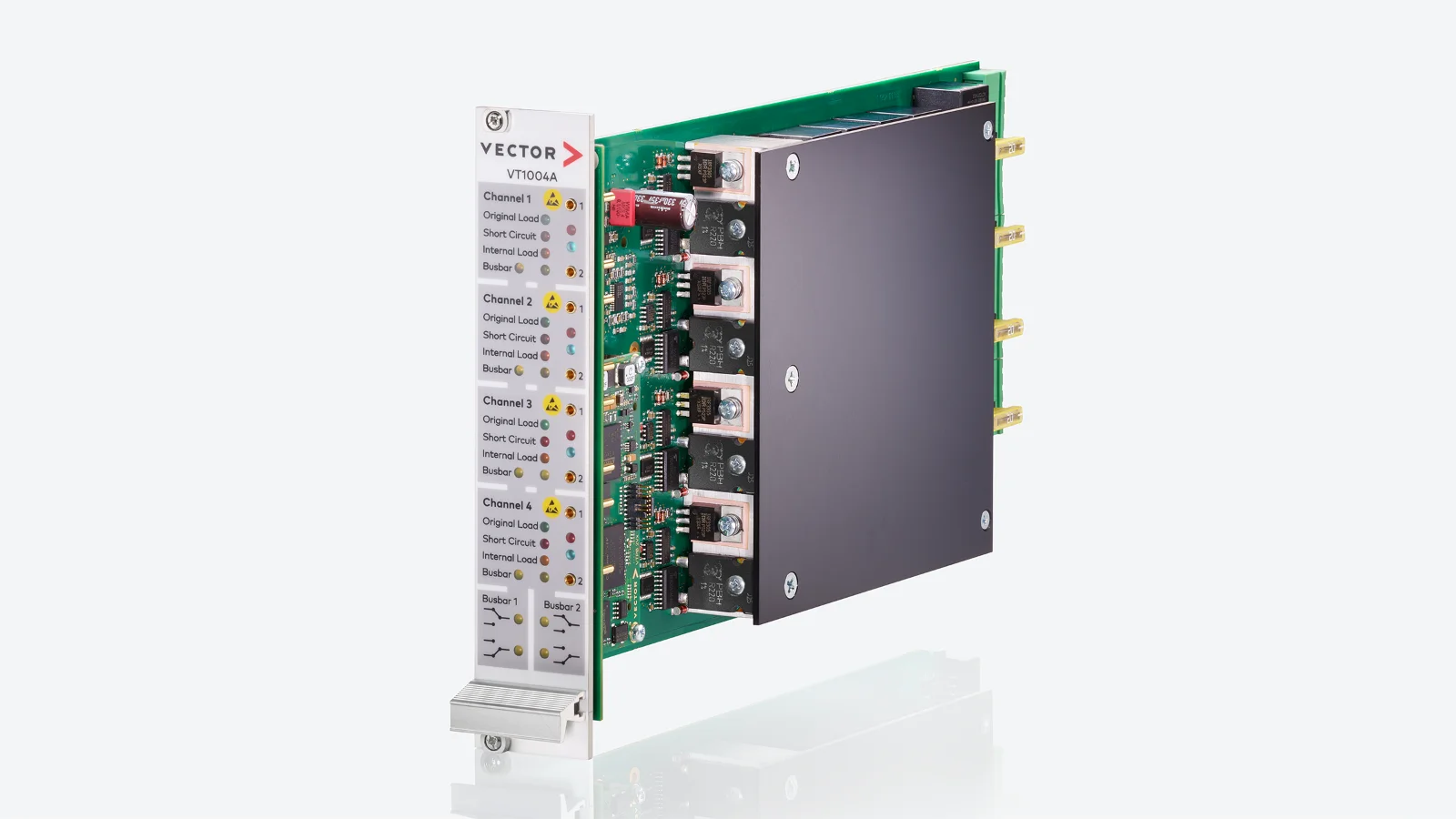
VT1004A FPGA
Voltage measurement, electronic load
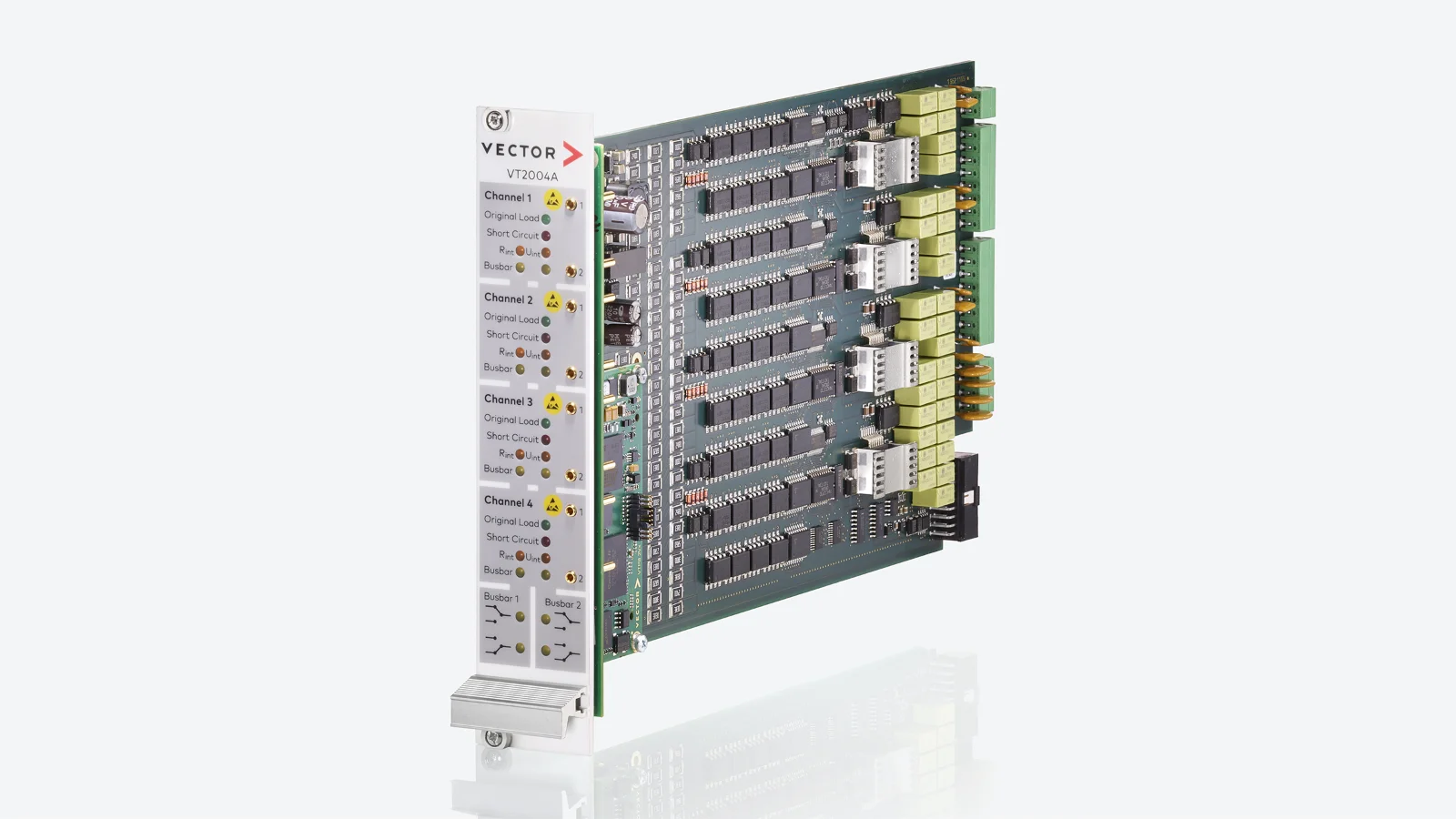
VT2004A FPGA
Voltage stimulation, resistance cascade
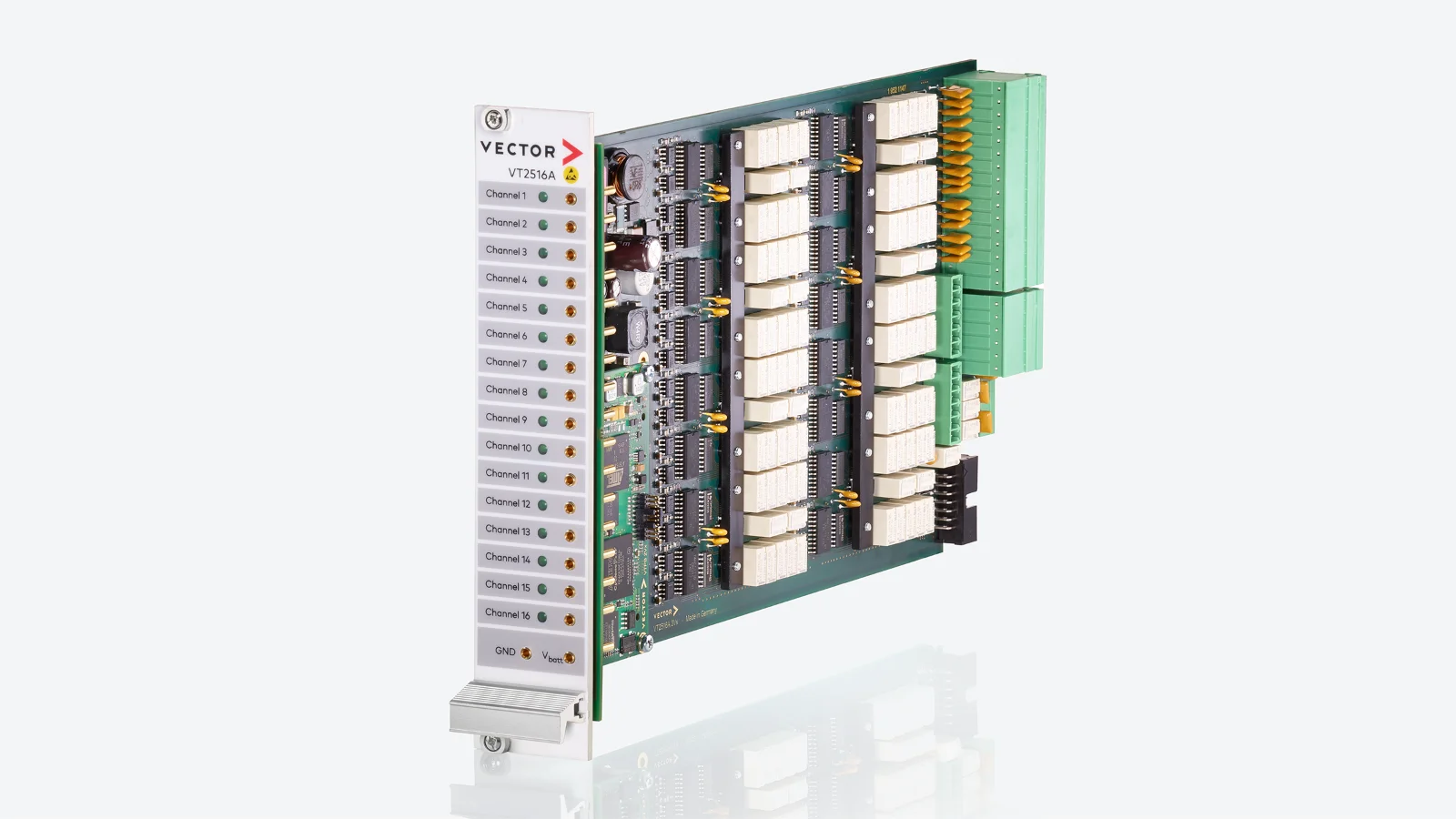
VT2516A FPGA
Digital input, digital signal generator, voltage measurement
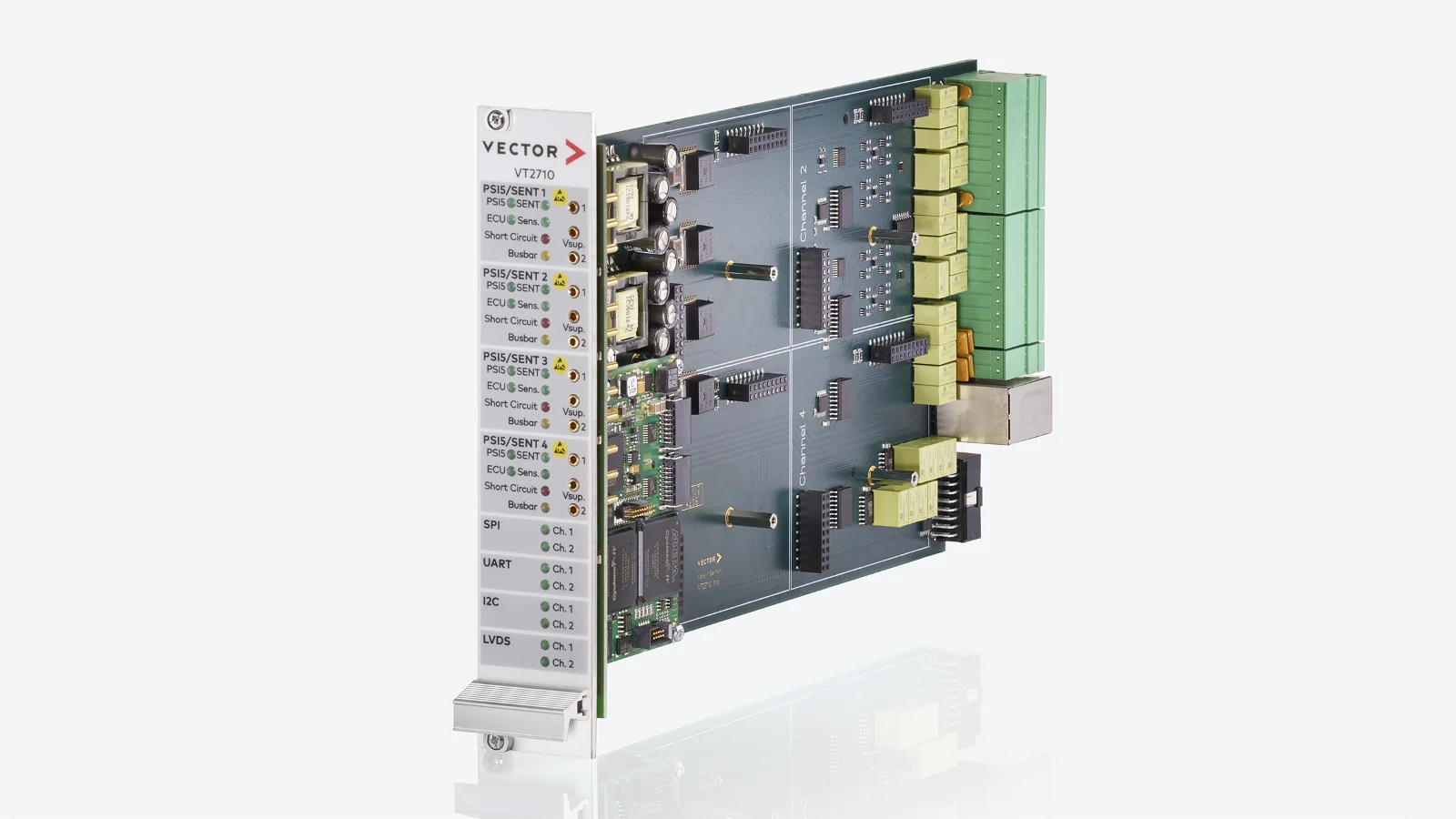
VT2710
Voltage measurement, electronic load
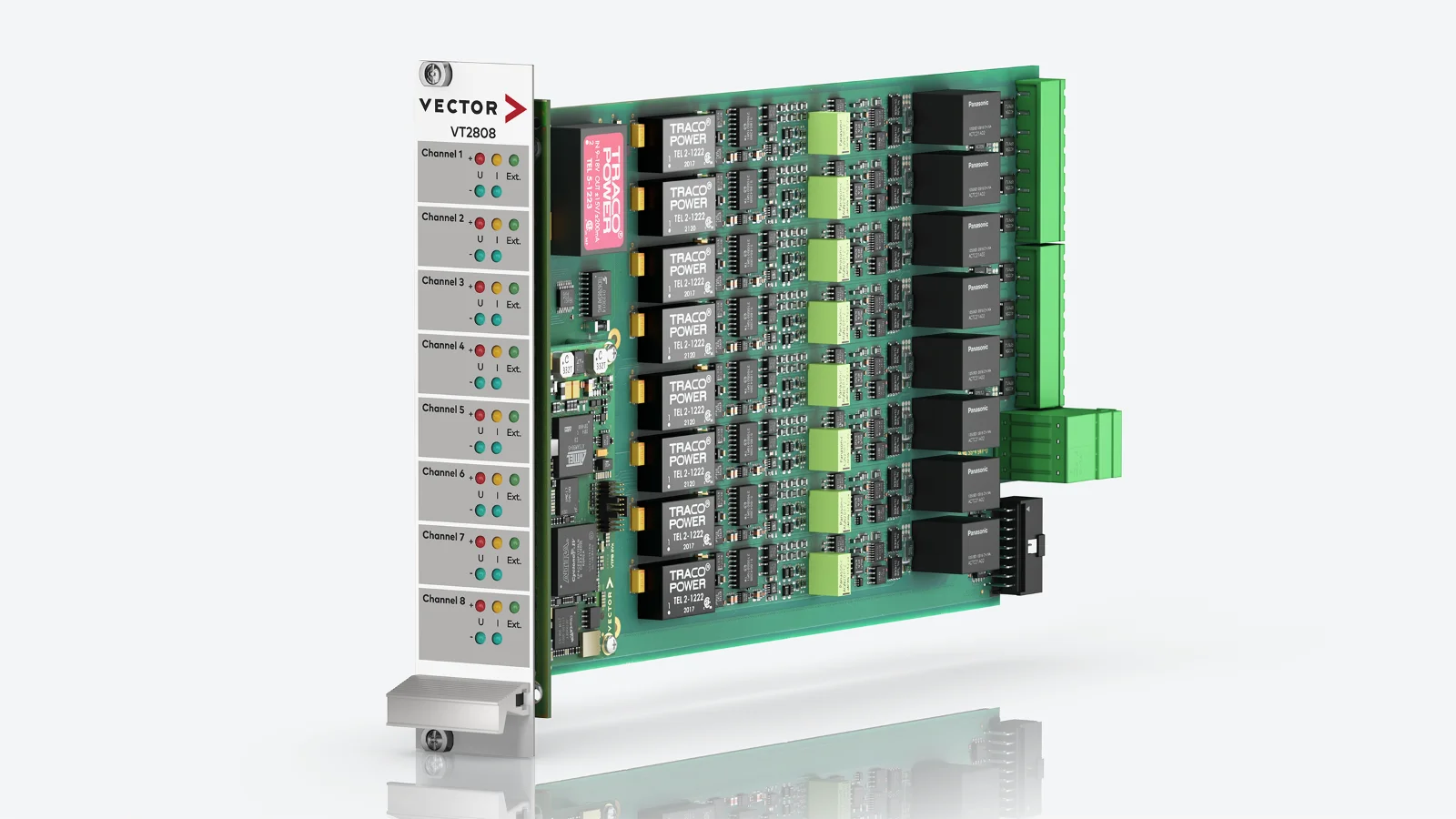
VT2808 FPGA
Current/voltage measurement
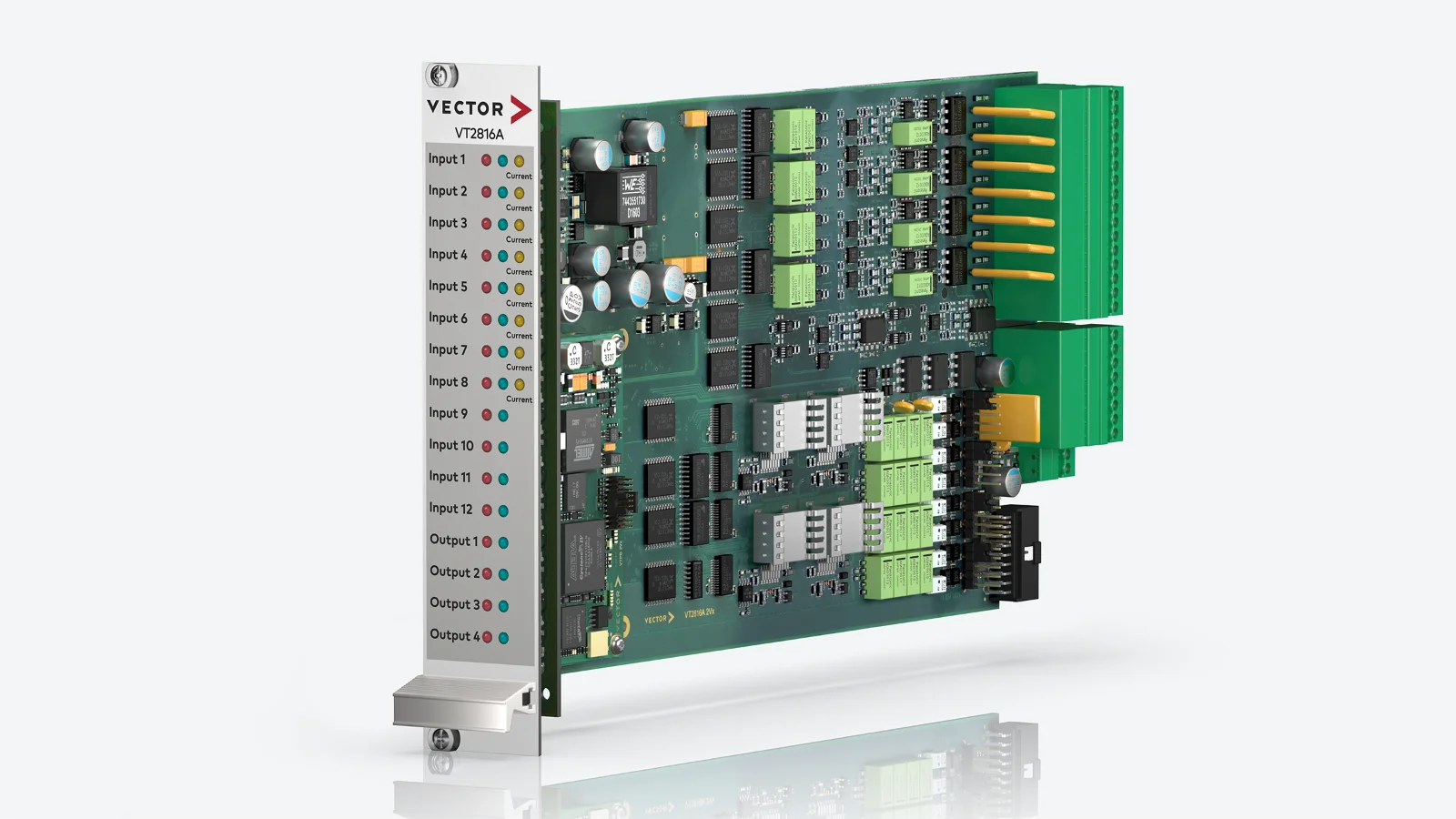
VT2816A FPGA
Voltage measurement/output
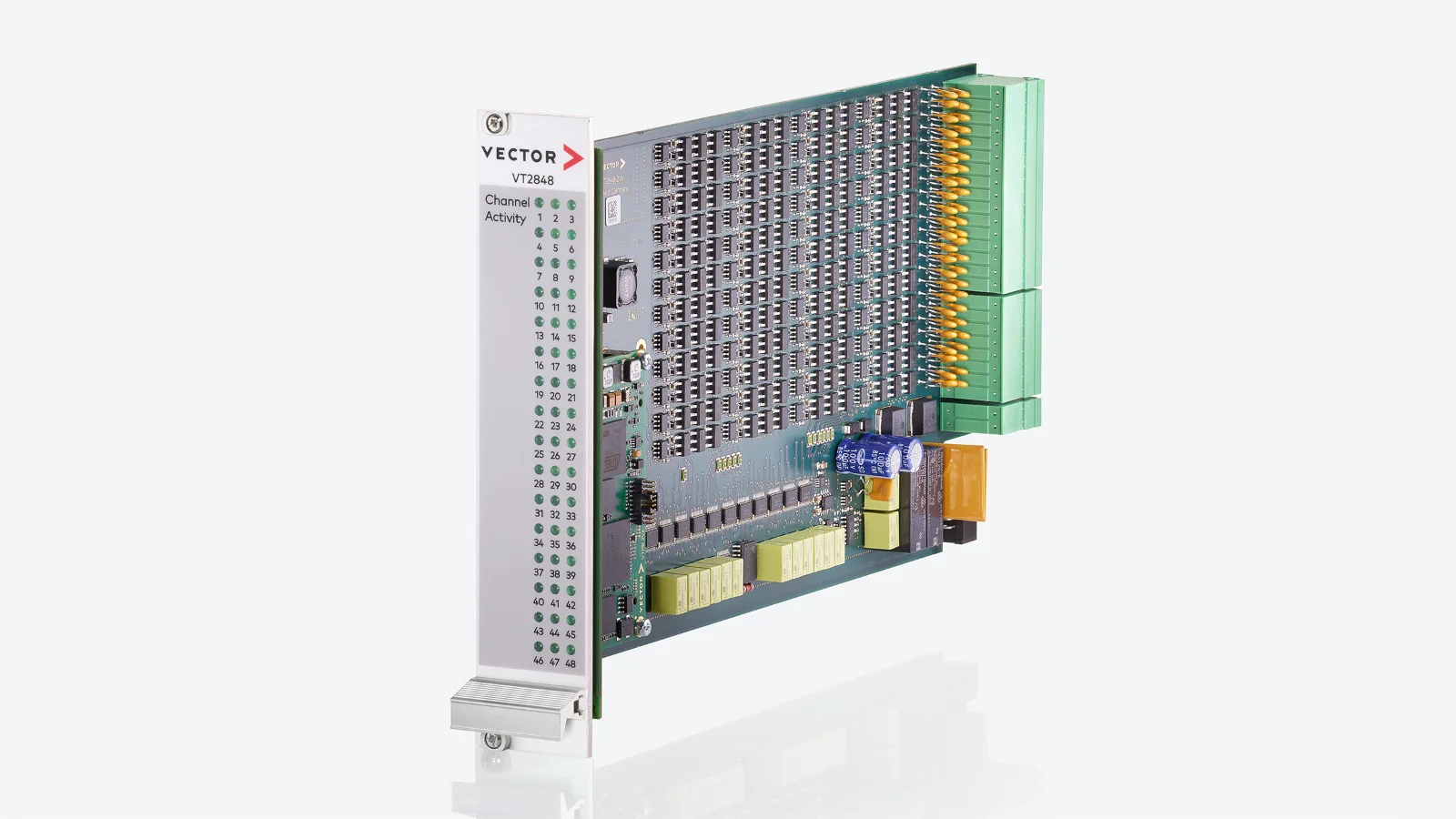
VT2848 FPGA
Digital I/O Module
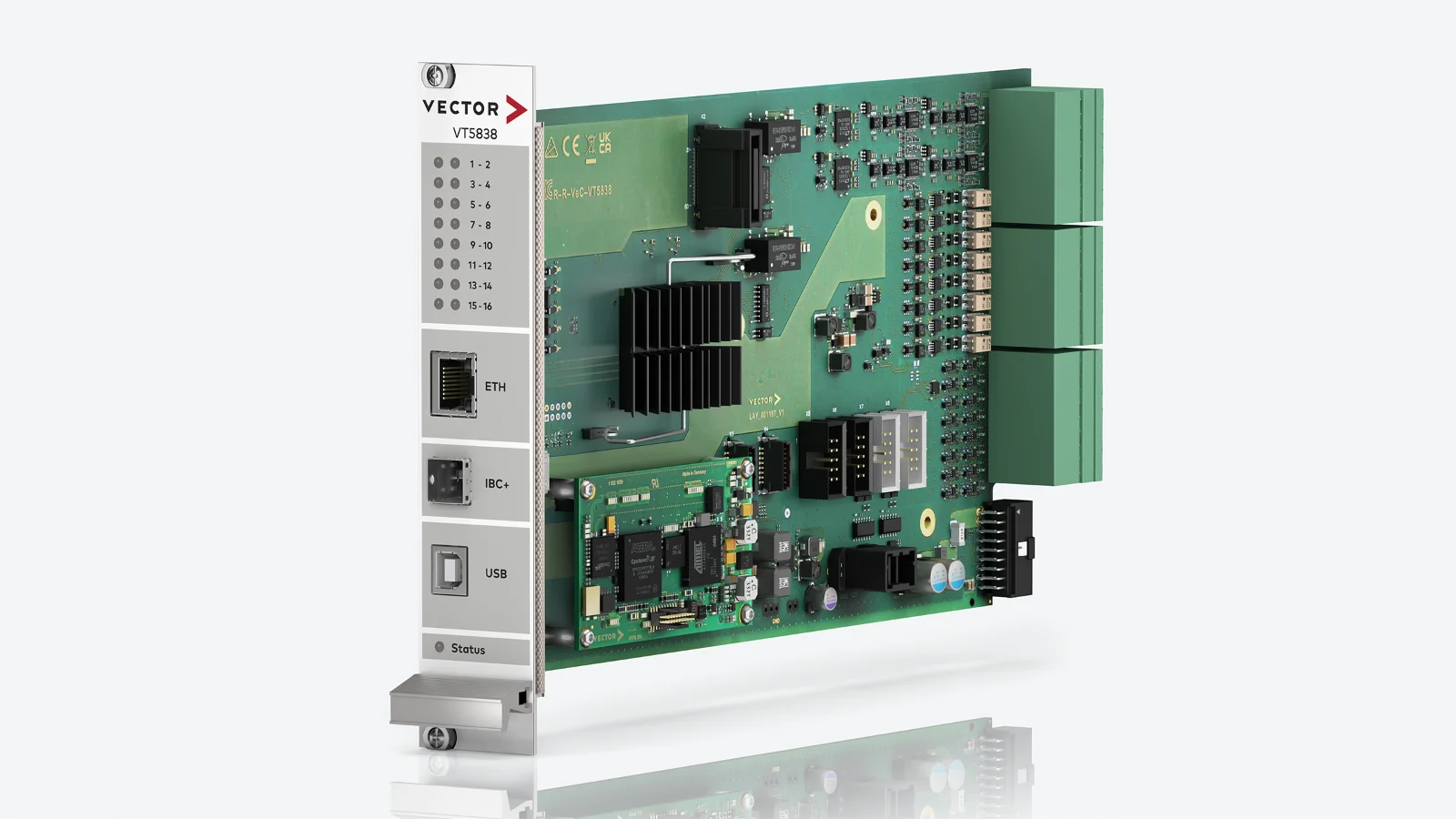
VT5838
Analog/digital I/O module, motor/inverter simulation
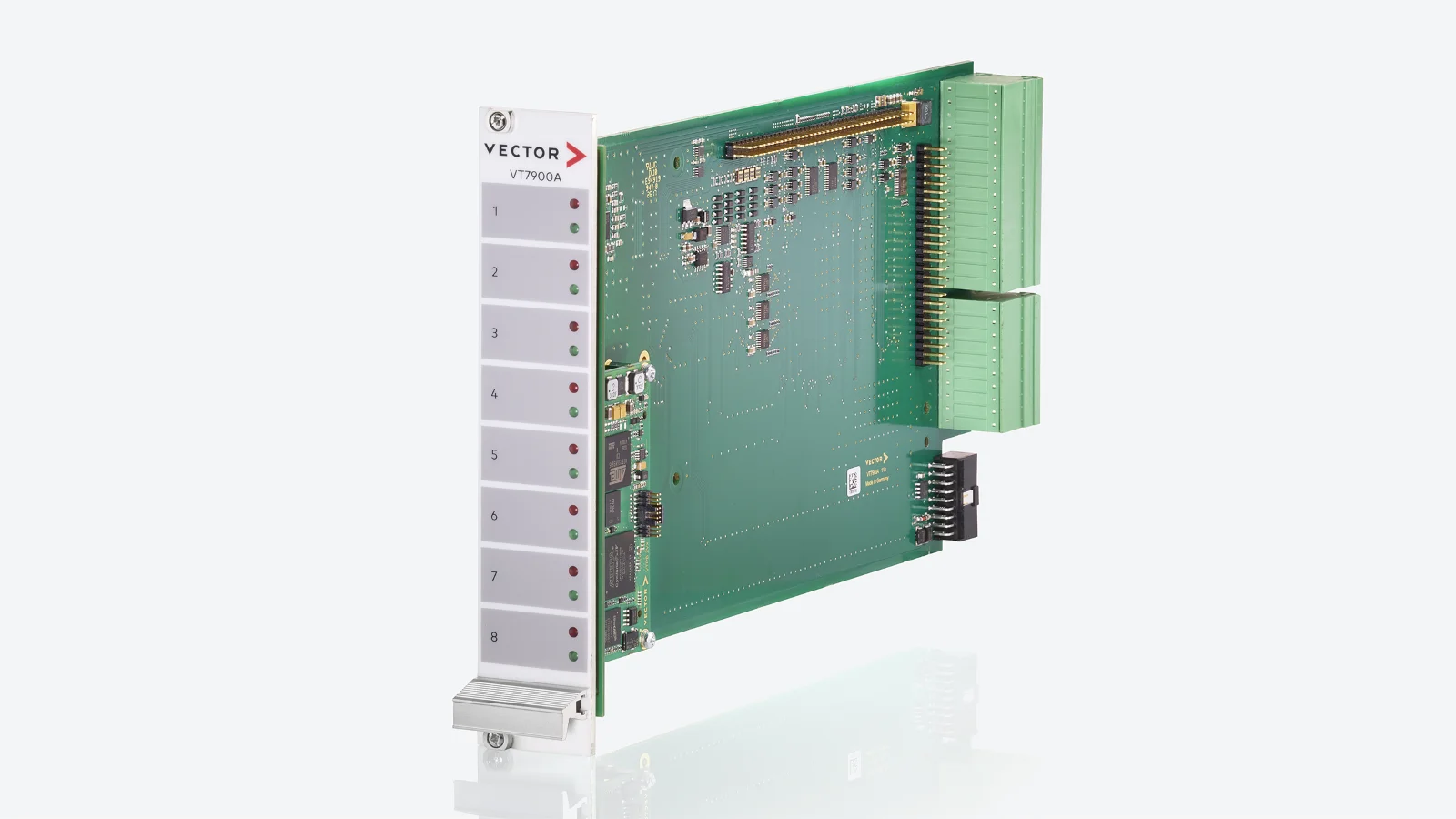
VT7900A FPGA
Expansion module for task-specific circuits
FPGA Architecture of the VT System
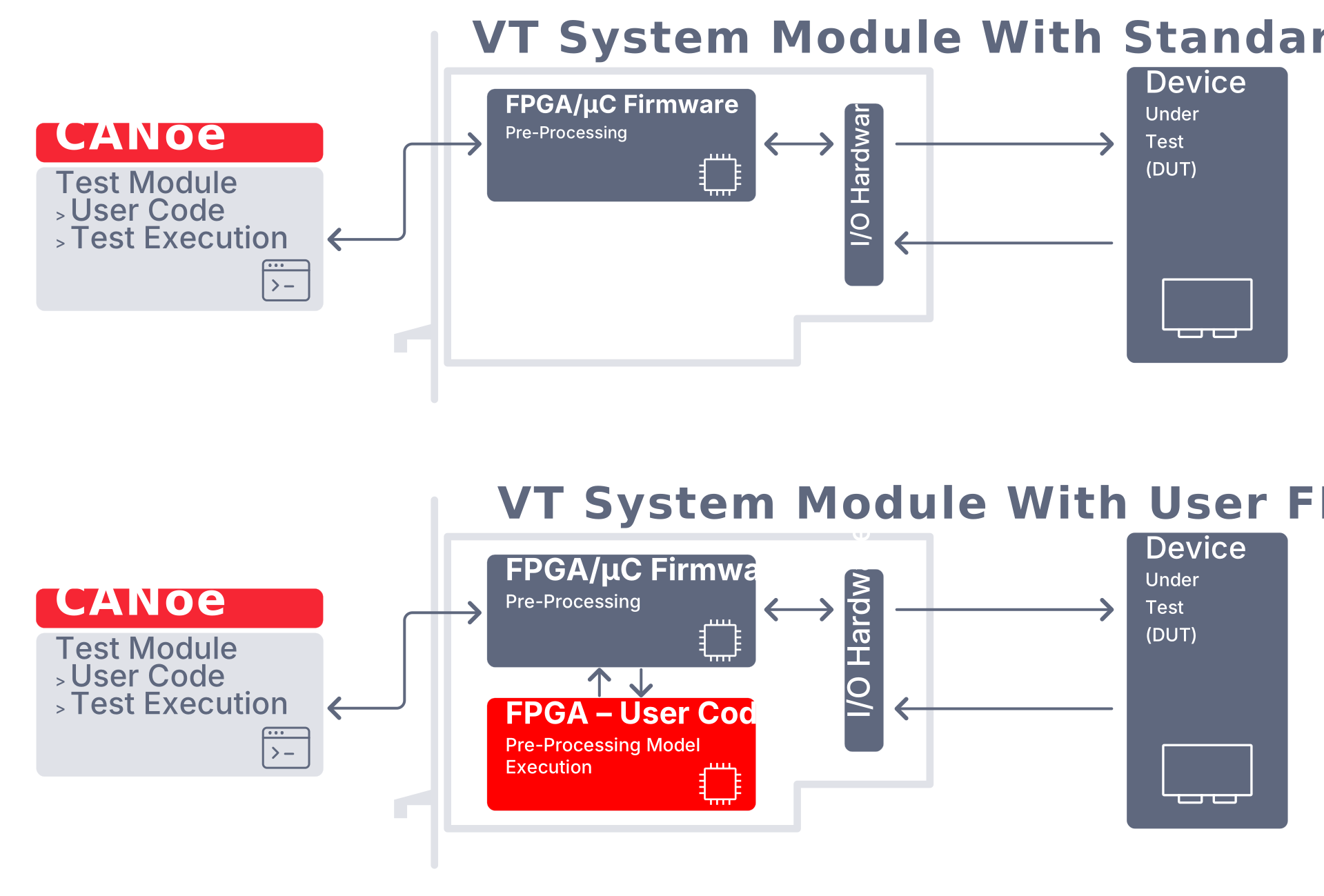
The modules in the VT System use Altera® FPGAs. The main FPGA handles data and signal processing as well as access to the I/O hardware. On selected modules, an additional user FPGA is available, which you can freely program and use specifically for your own applications.
The user FPGA is not directly connected to CANoe or the I/O hardware, and therefore not to the Device Under Test (DUT). This allows you to focus entirely on developing your data processing functions without having to worry about hardware control or CANoe communication.
The main FPGA fully manages I/O control and data preparation. It cyclically transfers the processed measurement data to the user FPGA and outputs its signals via the I/O hardware when changes occur. Communication with CANoe also runs through the main FPGA.
FPGA Manager – A Tool for Efficient FPGA Development
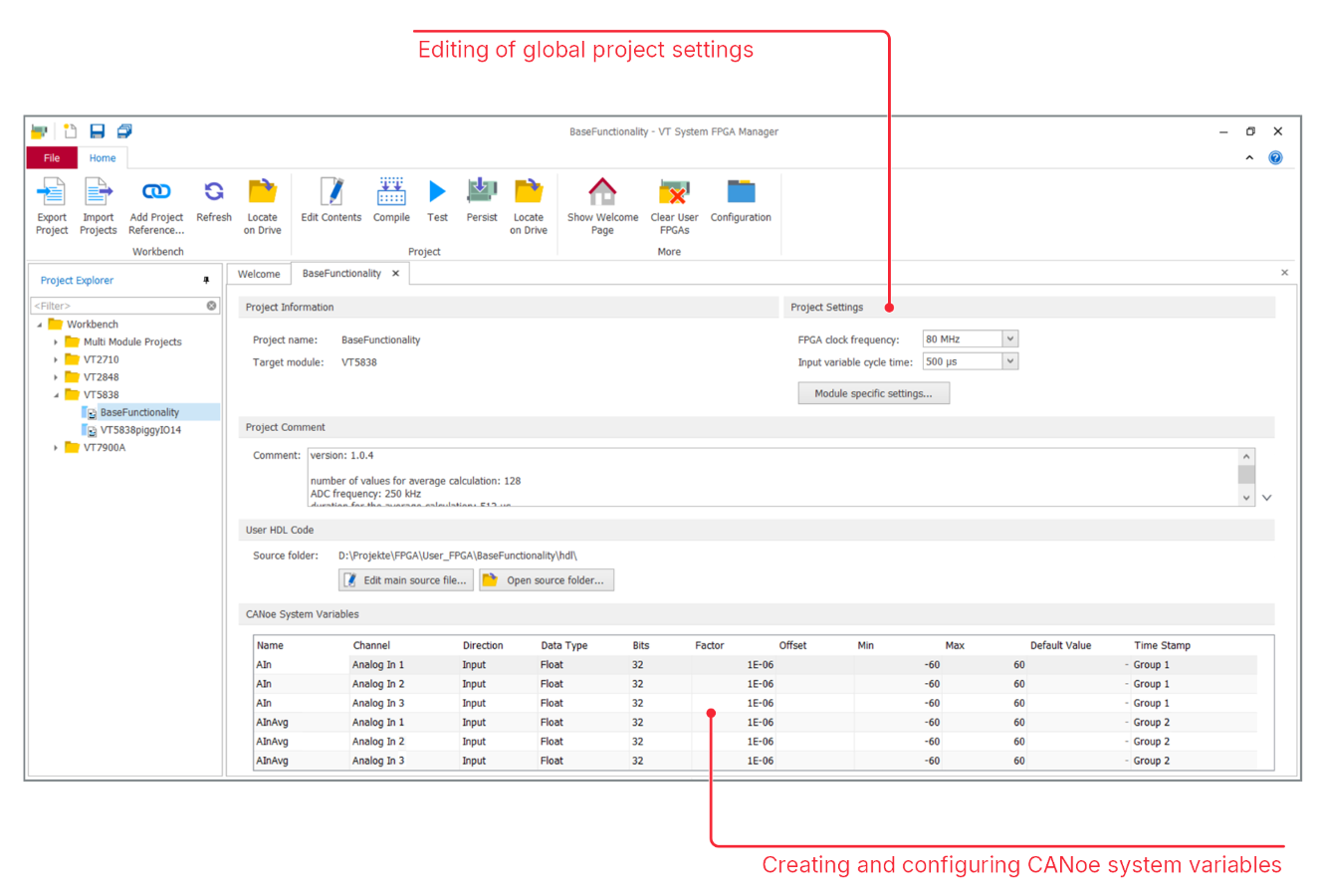
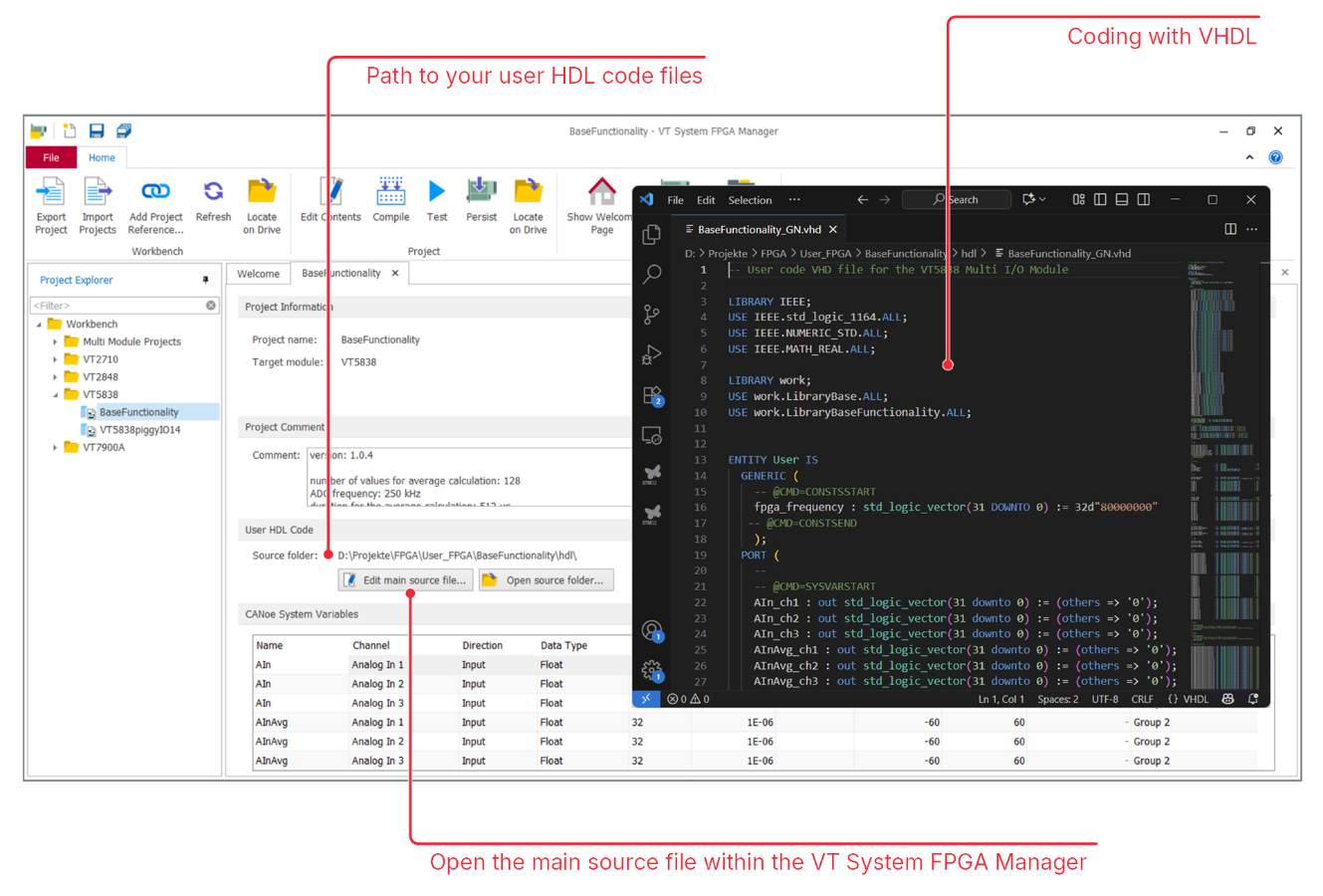
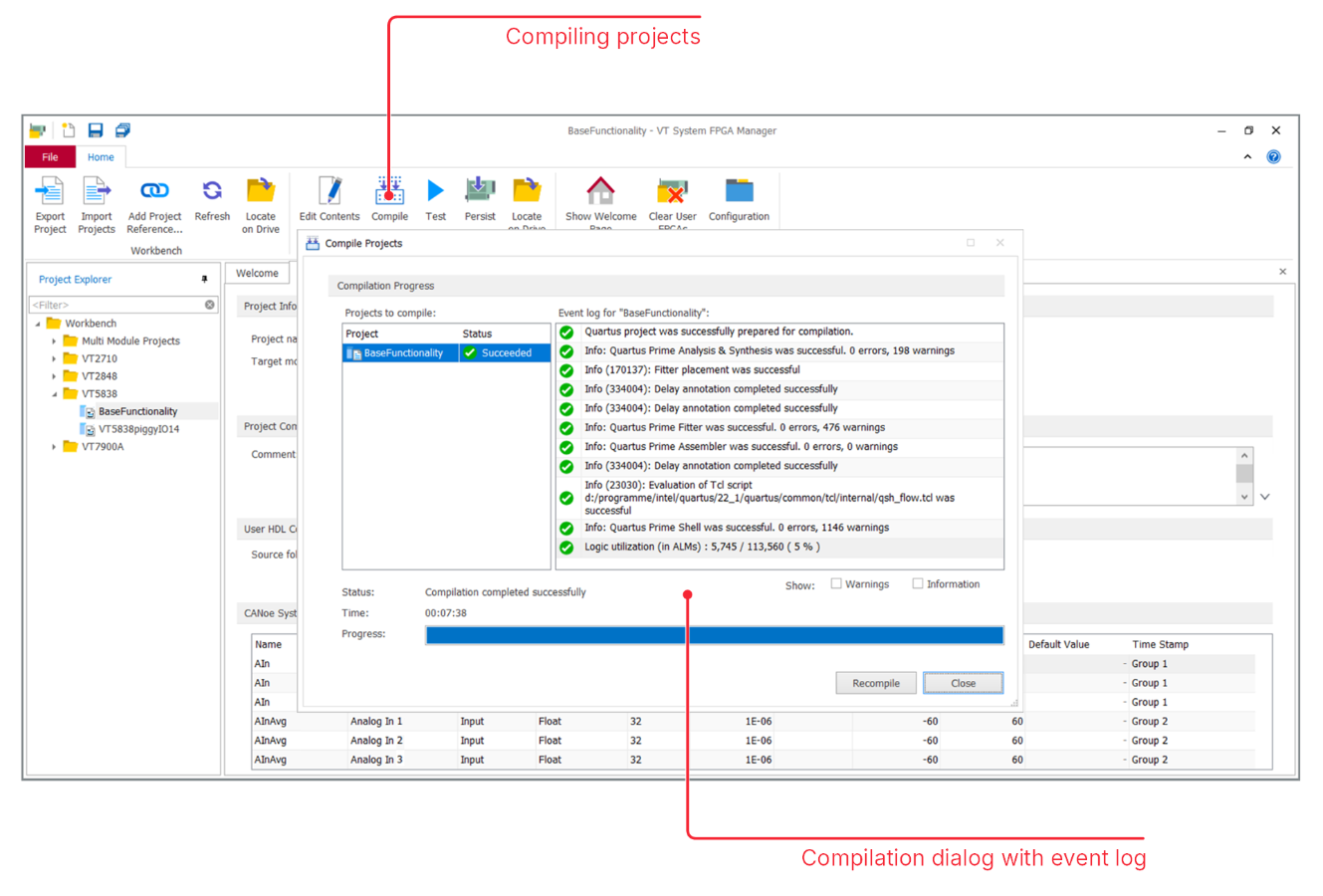
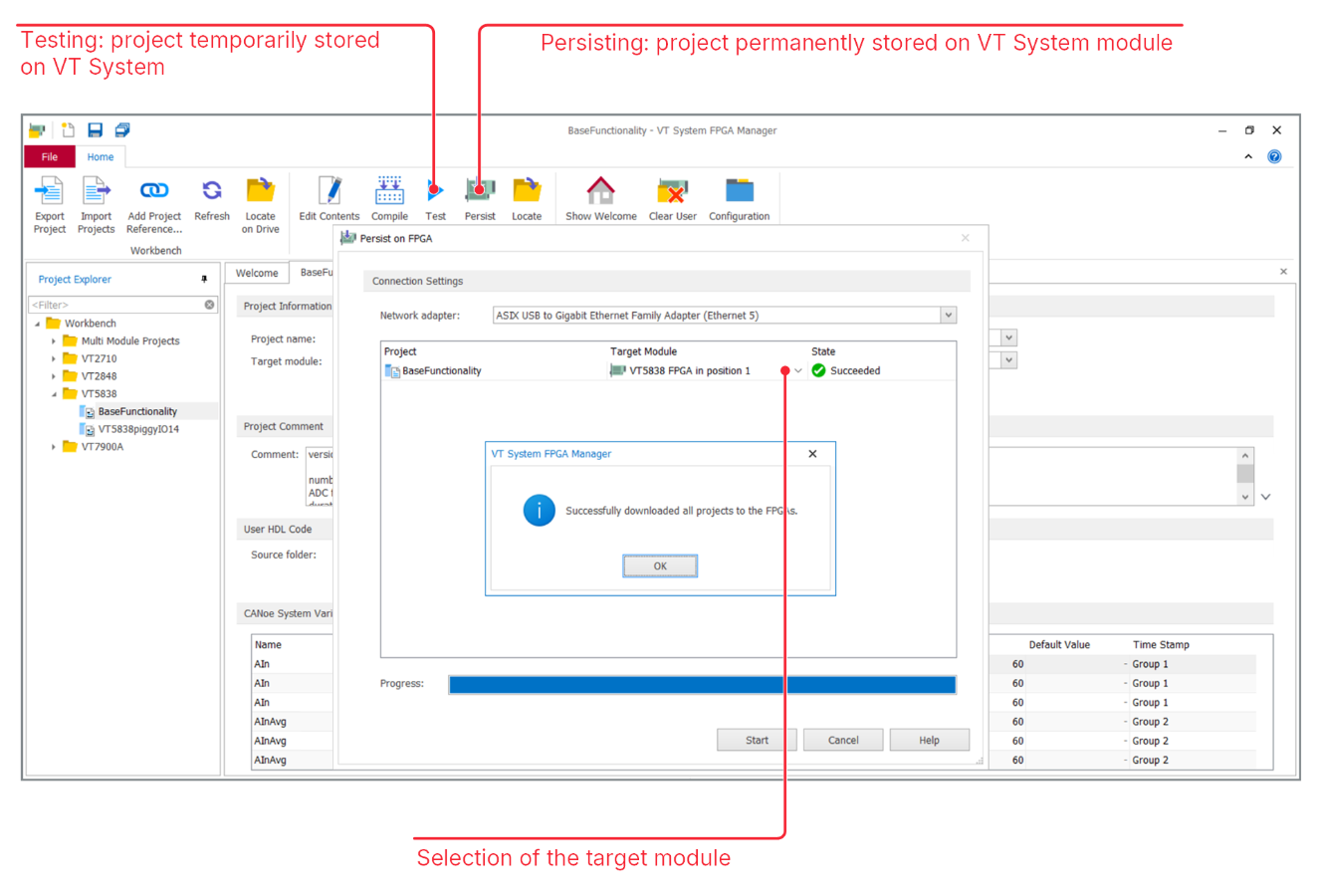
To support you in developing custom FPGA functionalities for FPGA-enabled VT System modules, Vector provides the VT System FPGA Manager. This tool allows you to conveniently manage your projects, compile your applications, and transfer them directly to VT System modules.
Its main tasks include:
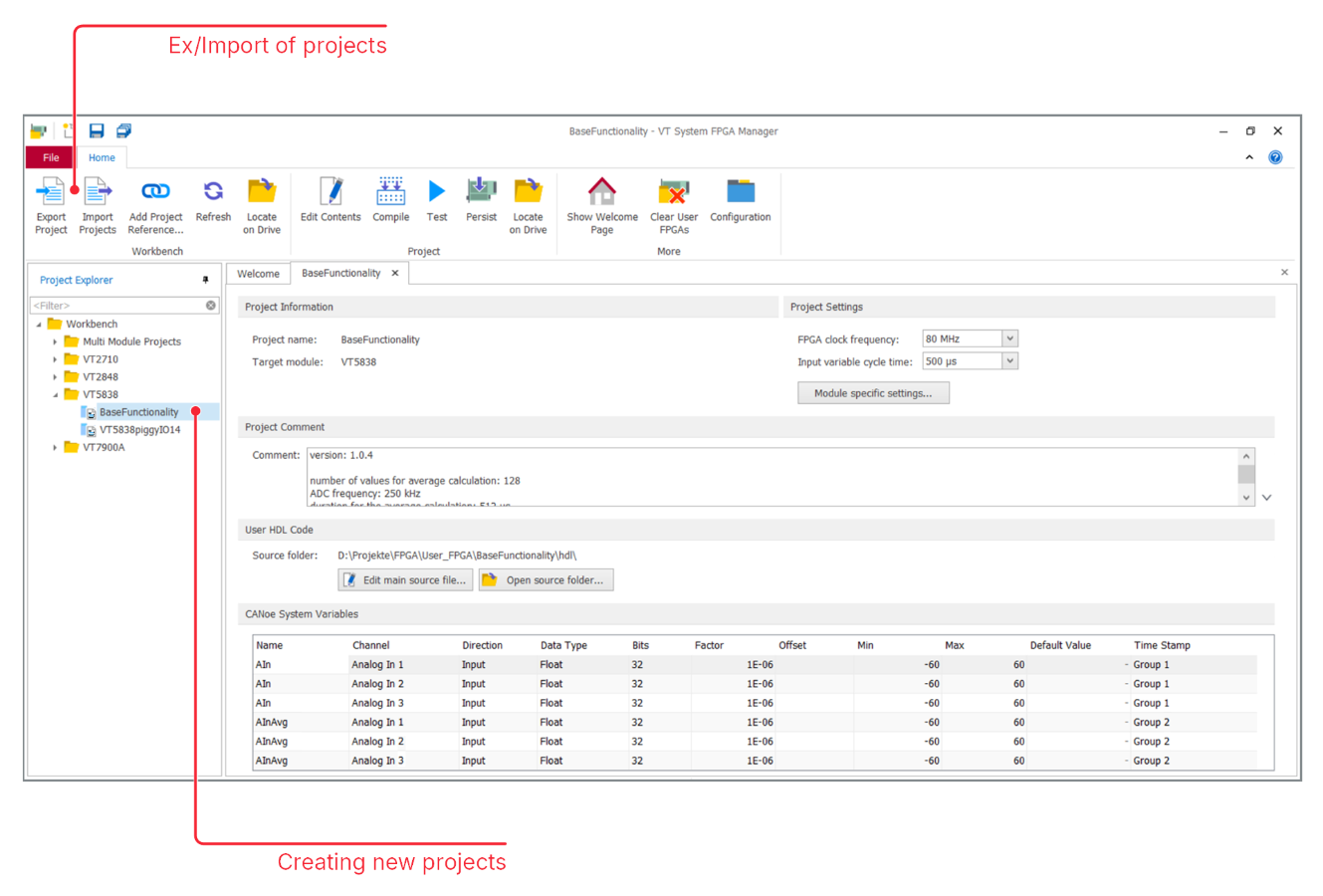
Add, modify, and delete projects
FPGA Toolchain – From Modeling to Implementation
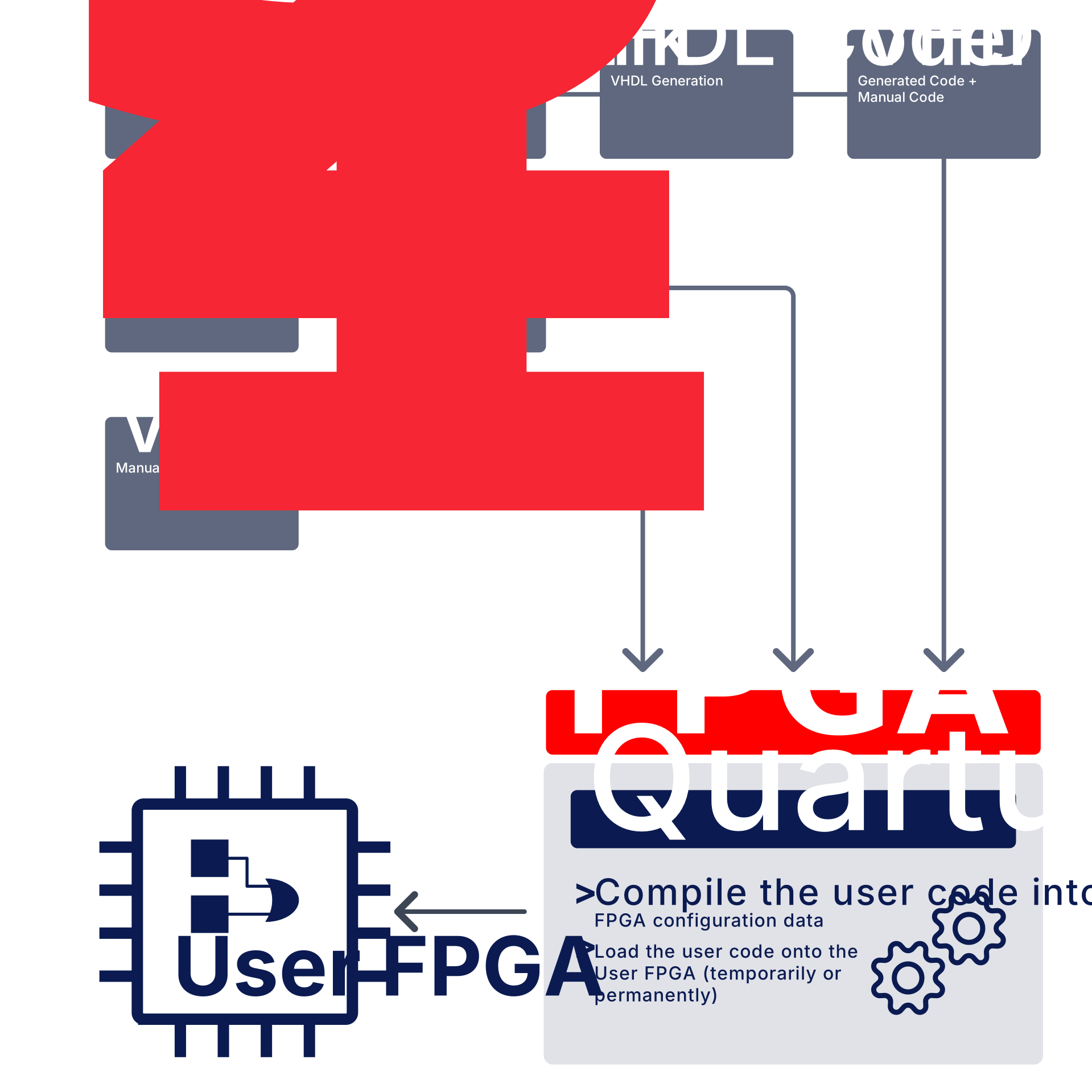
There are several flexible options for developing applications for the user FPGA:
- Manual coding, e.g., using VHDL
- Graphical modeling with Simulink®, using a dedicated blockset provided by Intel®
- Graphical modeling in Simscape®
The interface to CANoe is established via system variables created in the FPGA Manager. These variables are then mapped into the HDL code by the FPGA Manager.
Project compilation is handled by Altera® Quartus®, the design environment for Altera® FPGAs. This step runs automatically in the background, as Quartus® is fully controlled by the VT System FPGA Manager. The FPGA Manager also takes care of downloading the compiled code to the user FPGA.
This allows you to focus entirely on your development while the FPGA Manager reliably handles the rest.
FPGA Example Library – Fast Start for Your FPGA Projects
Our FPGA examples are the ideal starting point for your user FPGA project: proven in practice, flexible, and ready to use. Instead of spending time starting from scratch, you benefit from ready-made applications designed for performance, efficiency, and scalability.
Whether it's protocols, incremental encoders, waveform modulators, or measurement functionalities – the examples cover a wide range and can be quickly adapted to your specific requirements.
All user FPGA examples are available on GitHub, where they can be downloaded and integrated directly into your own projects. This shortens your development time and gives you more room for innovation.
Didn’t find what you were looking for? Contact us – we’ll develop custom FPGA solutions tailored precisely to your needs.
FPGA Model Library in Simulink – For Real-Time Simulation of Electric Machines
Successful implementation of Hardware-in-the-Loop (HIL) for power electronics applications requires precise models, ultra-fast execution with time steps in the nanosecond range, and low-latency I/O communication. This ensures that controllers are tested under realistic conditions.
Our FPGA library for electric machines provides an optimal environment for developing and testing control systems, power electronics, and electric drive systems. It delivers top performance and maximum testing flexibility—without the need for custom FPGA programming.