TestValidationDiagnostics_dark_SystemVisual_RGB-hd_jpg.jpg

Indigo

Vehicle and ECU Diagnostics Quick and Easy

Indigo empowers diagnostic testers to move faster and stay in full control of vehicle diagnostics. Indigo is designed for easy to use and intuitive diagnostic testing in the vehicle development as well as in the workshop. Indigo transforms complex diagnostic tasks into intuitive, use-case-driven experiences - so that you can focus on engineering insights instead of tool complexity. 

Whether in the lab, on the road, or in the workshop, Indigo connects your entire diagnostic ecosystem and adapts seamlessly to your way of working. 

You configure exactly the tester environment you need - tailored to your project, your vehicles, and your team - and share it across organizations to ensure consistency and efficiency at every stage. 

Gain instant transparency into vehicle status while diving deep into ECU-level diagnostics with precision and confidence.

Advantages

Intuitive

  • Use case oriented tool approach
  • Simple operation, decoupled from diagnostic services
  • Use Case Windows definable for each project, selectable from a ready-to-use diagnostic toolbox
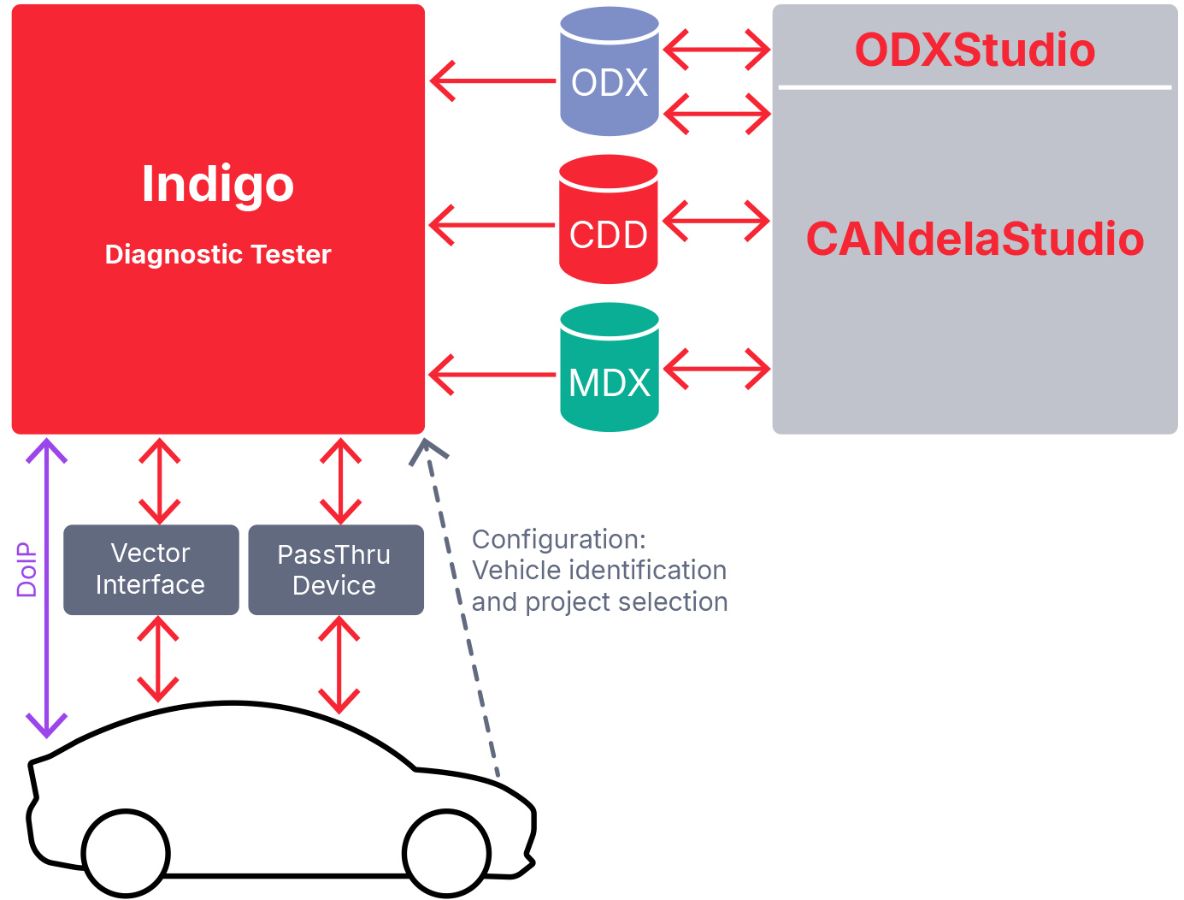
  • Automatic configuration of diagnostic parameters using ODX or CANdelaStudio (CDD) diagnostic descriptions

Flexible

  • Vehicle diagnostics and commercial vehicle diagnostics with many ECUs simultaneously, as well as diagnostics of individual ECUs in the vehicle or in a lab environment
  • Perfectly suited for OEMs and suppliers

Customizable

  • Can be integrated into existing development processes at OEMs and suppliers
  • Development of customized diagnostic windows in C# with the Indigo Software Development Kit (Indigo SDK)
  • Integrated environment for recording, editing and replaying diagnostic sequences/scripts using the Vector Diagnostic Scripting (VDS) library in C#

Completely

  • Simultaneous communication over different bus systems: CAN (FD), K-Line and DoIP/.TLS as well as different diagnostic protocols: UDS, KWP2000, OBD2, WWH-OBD, HD-OBD, OBDonUDS and ZEVonUDS.
  • Bus logging and (graphical) measurement of network signals from DBC/ARXML

Application Areas
OBD Diagnostics
OBD Diagnostics with Indigo

OBD Diagnostics

OBD Diagnostics 

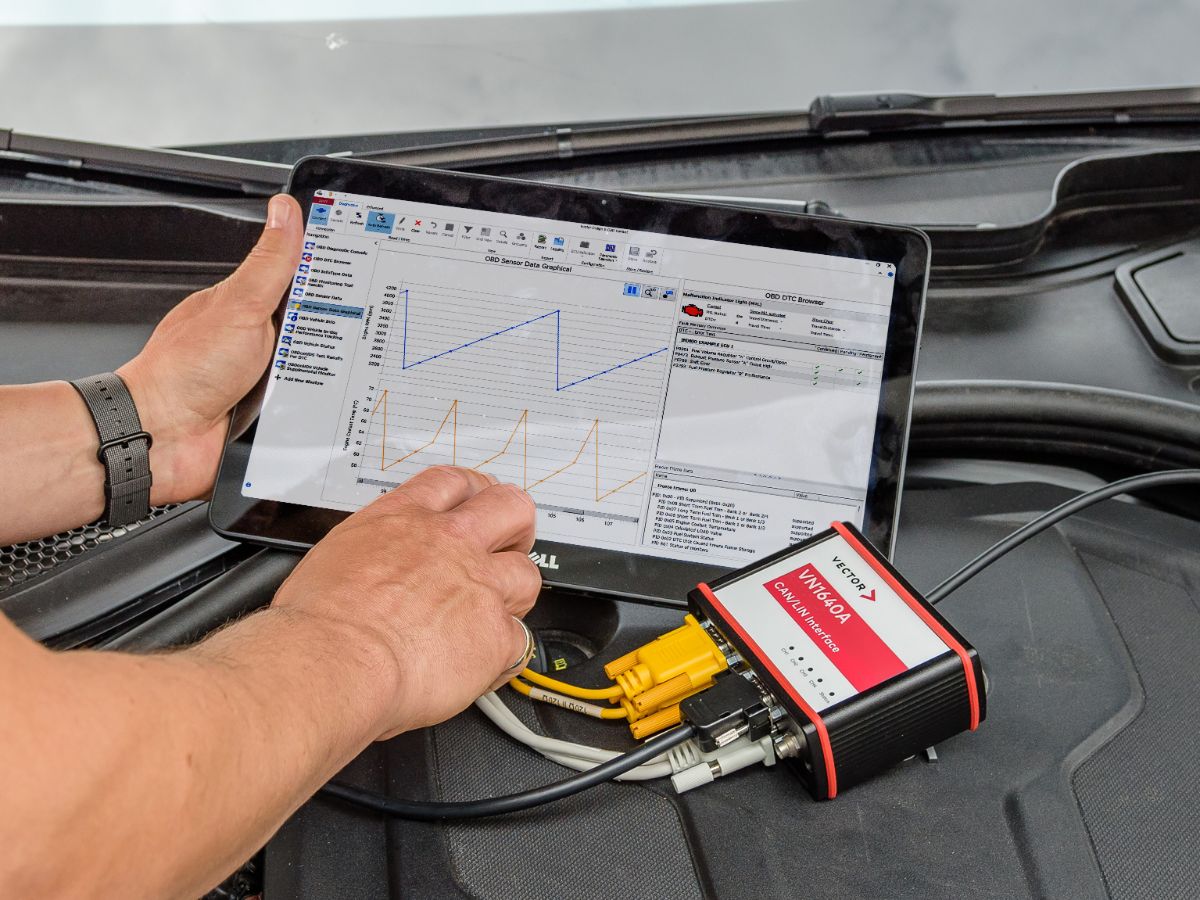
  • Scan tool for OBDonUDS, ZEVonUDS, OBD2 and WWH-OBD protocols.
  • Ideally suited for use in vehicle manufacturers' homologation departments or by service providers which perform homologation tests
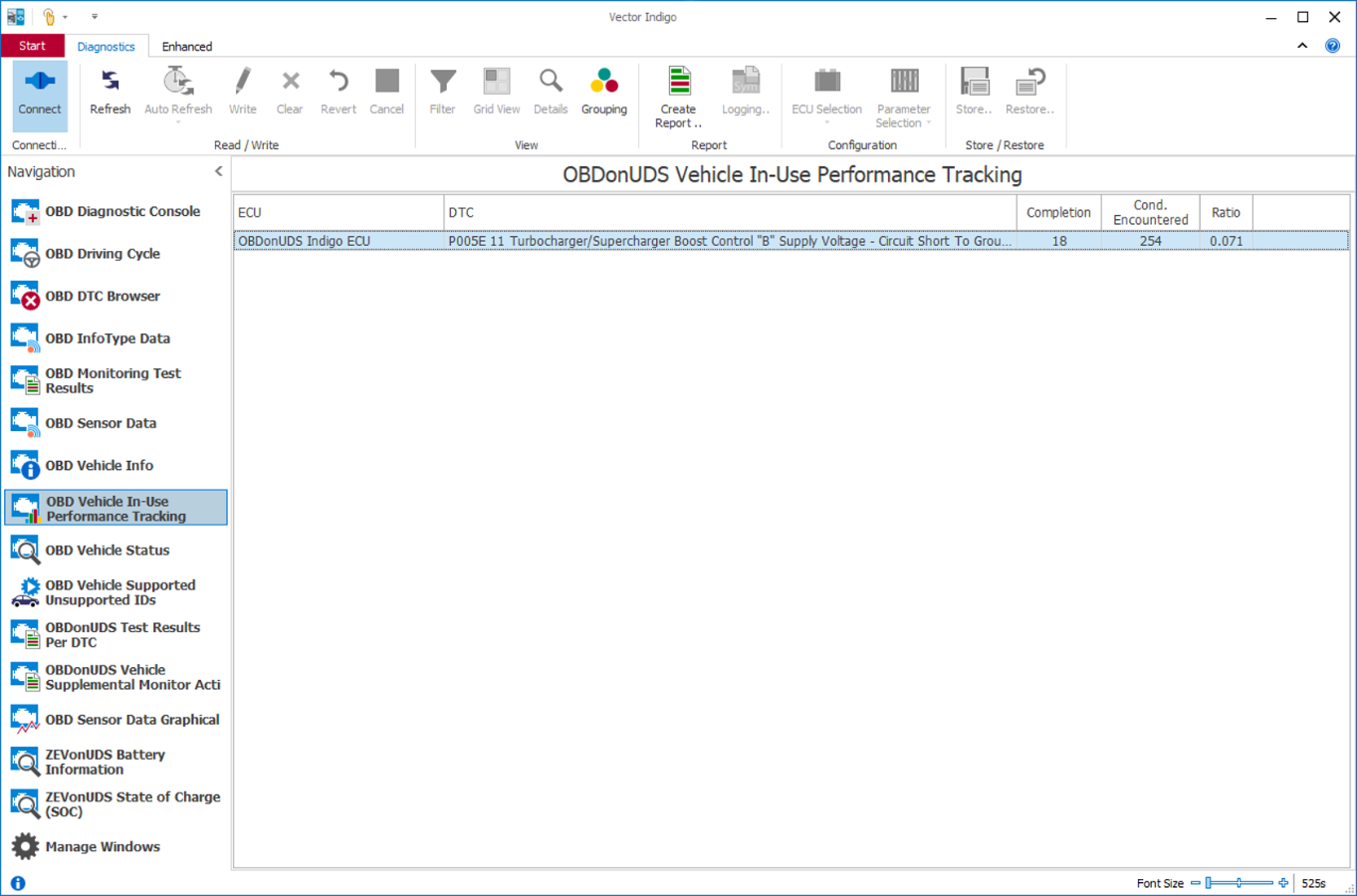
  • Inspection of the entire OBD scope (e.g., DTC aging, monitor reporting, IUMPR and IUMPR Light ratios)
  • Execution of OBD scripts and development of own OBD use case windows with the Indigo SDK (Software Development Kit)

Diagnostic Tester for ECU and Vehicle Development

Indigo is the perfect diagnostic tester in ECU and vehicle development. It is used throughout the entire development process, starting with the setup of ECUs in a laboratory environment, continuing through vehicle roll-out and modification in test workshops, and extending to vehicle test drives.

Freely Configurable User Interface

The user interface can be freely configured using predefined tools from a toolbox for different diagnostic tasks. The resulting interface is saved together with the diagnostic description files as a project or as Pack & Go.

The use of protected projects makes Indigo particularly suitable for collaboration with development partners and workshops:

  • Extraction of sensitive diagnostic data (e.g., databases and private keys) is prevented
  • Projects can be secured with passwords
  • Expiration dates can be defined

Efficient Operation During Test Drives

For use on test drives, Indigo is operated quickly and specifically via keys.
Key functions can be triggered directly, such as:

  • Measurement of data
  • Readout of fault memories

The acquired data can also be temporarily stored for later analysis.

Reporting and Documentation

For documentation purposes, the user can generate reports in a clear and customizable form with Indigo. This supports transparent evaluation and easy sharing of results.

Extensibility with Indigo SDK

Indigo is easily extensible. The Indigo Software Development Kit (SDK) allows the integration of customer-specific application windows, enabling tailored extensions of the system.

MAN_TruckBus_web.png
Case Study
Maximum Efficiency in the Diagnostic Testing Process at MAN: MAN is a strong brand of the Traton Group, a subsidiary of Volkswagen AG, and is one of the world's leading commercial vehicle manufacturers. For the development and testing of the TGX truck with its up to 60 ECUs and several thousand variant combinations, it was important for MAN to use an efficient diagnostic tester. MAN-Indigo – a complete engineering tool with individual functionality.

Key Features

Use Case Windows [1]

Read-out of the fault memory of individual ECUs or of an entire vehicle

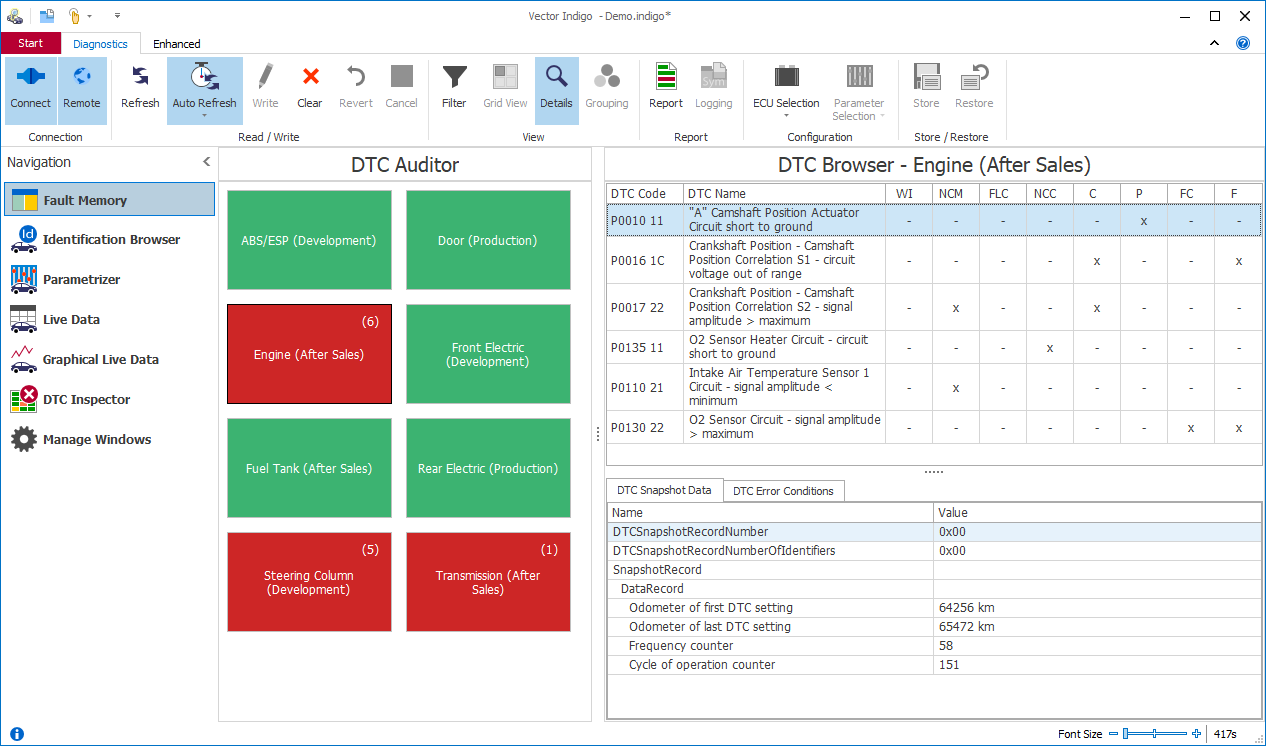
  • DTC Auditor: Graphical overview of all connected ECUs and their fault memory status with color coding.
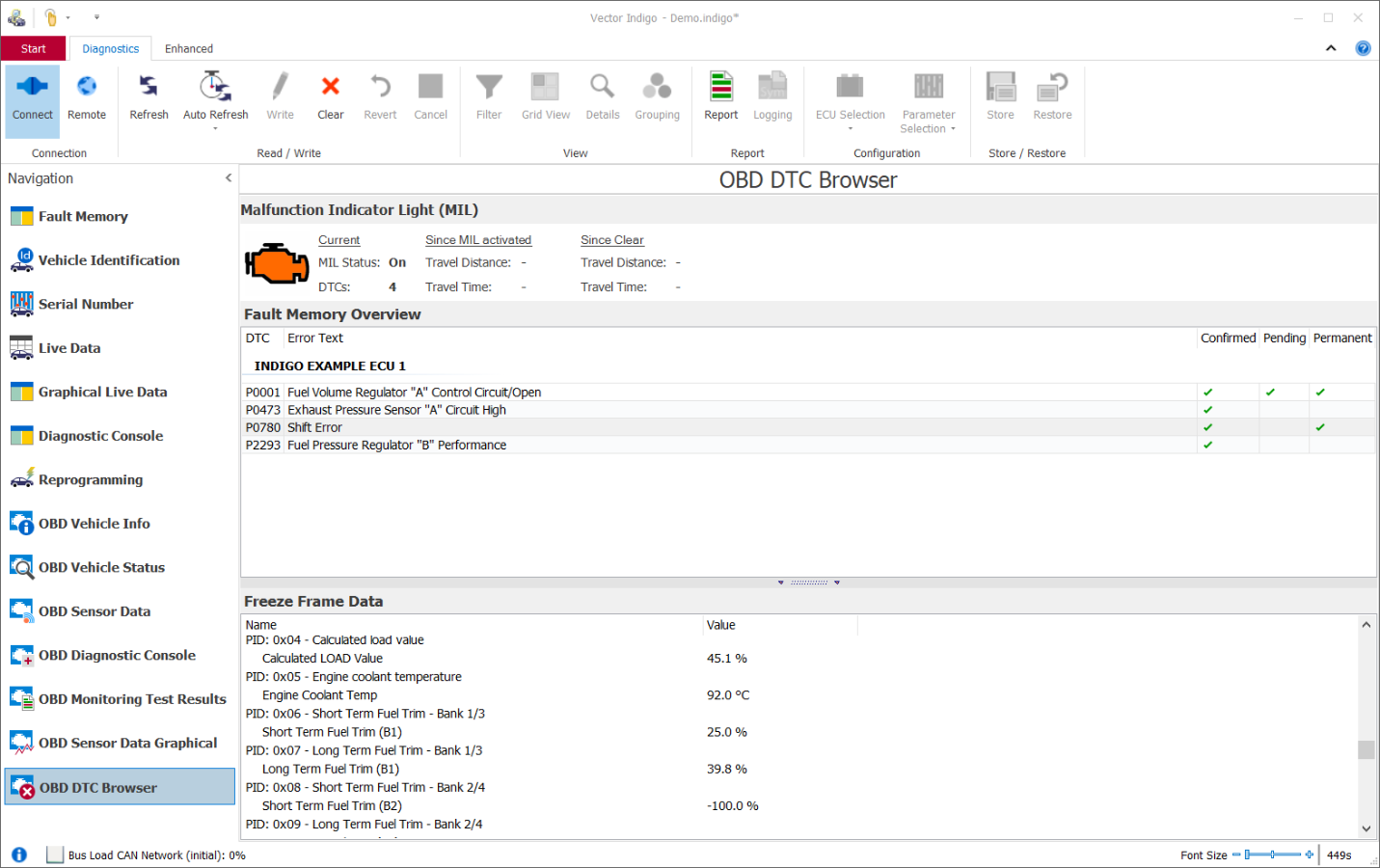
  • DTC Browser: Detailed display of identified DTCs per ECU with their status flags, environmental data and fault conditions.
  • DTC Inspector: Overview of all DTCs supported per ECU with color coding of the DTC status.

Check, analyze and write diagnostic data of single or multiple ECUs

  • Identification Browser: Capture of general information about the installed ECUs (e.g. serial number, version, VIN, ...).
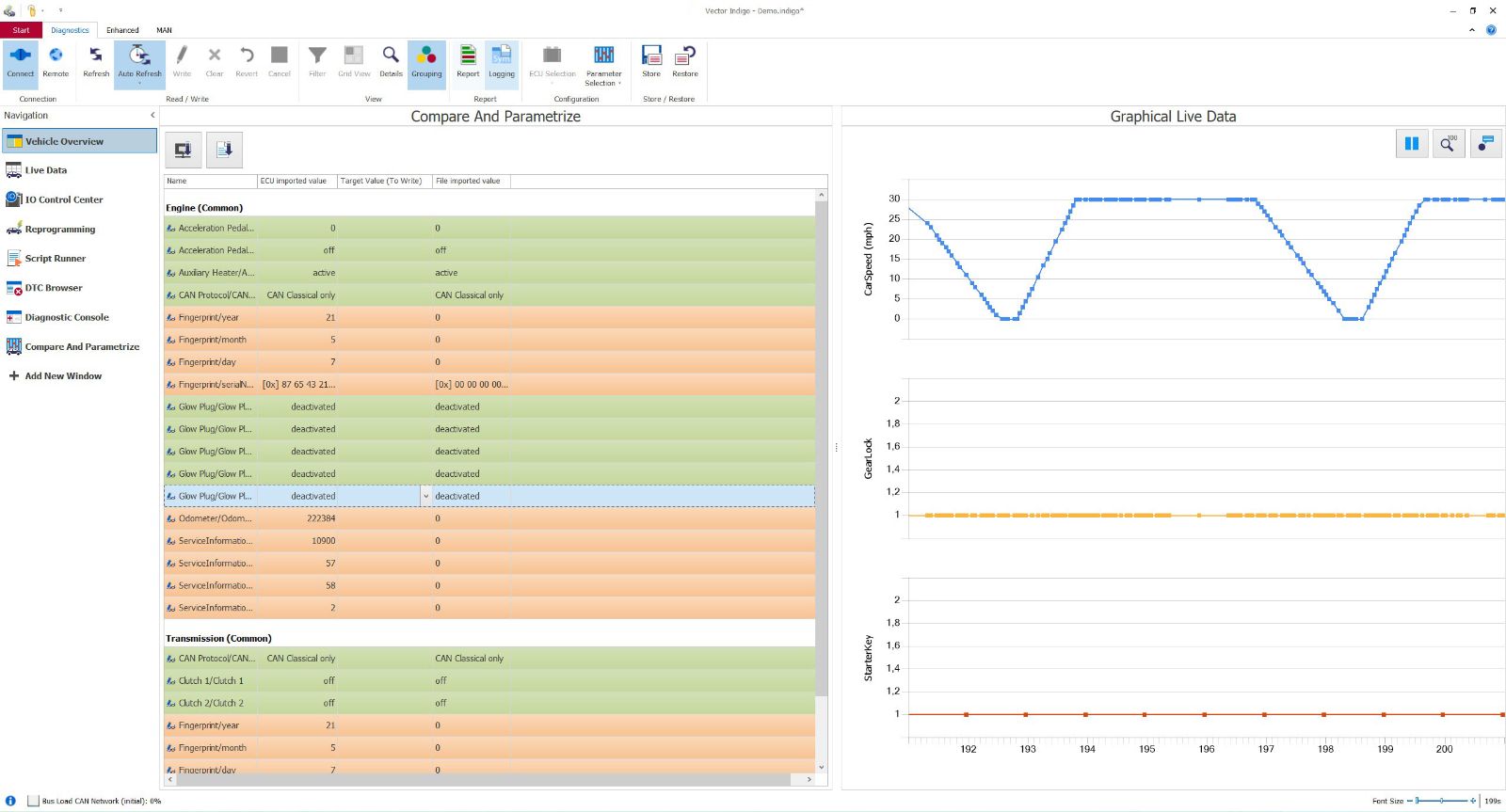
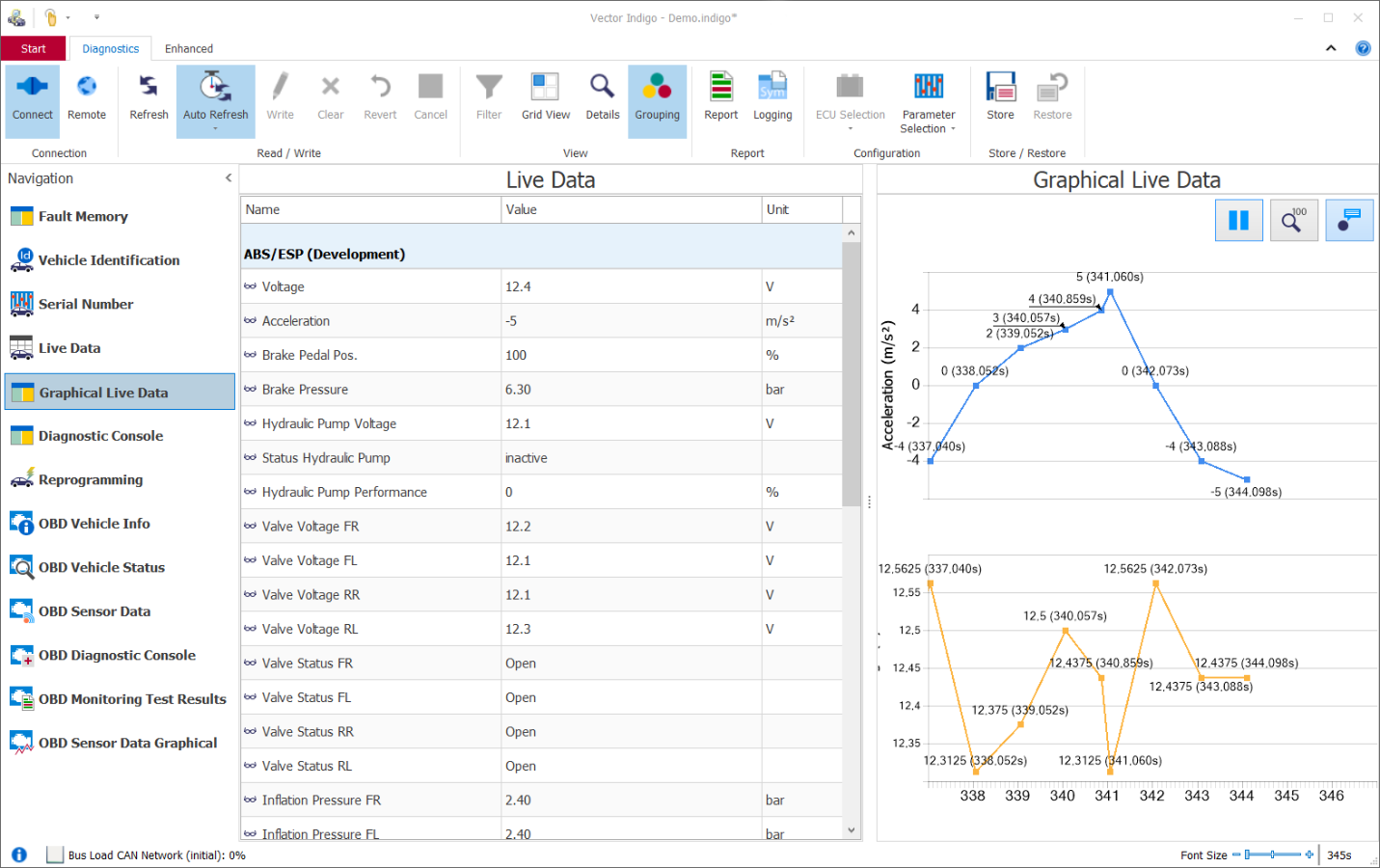
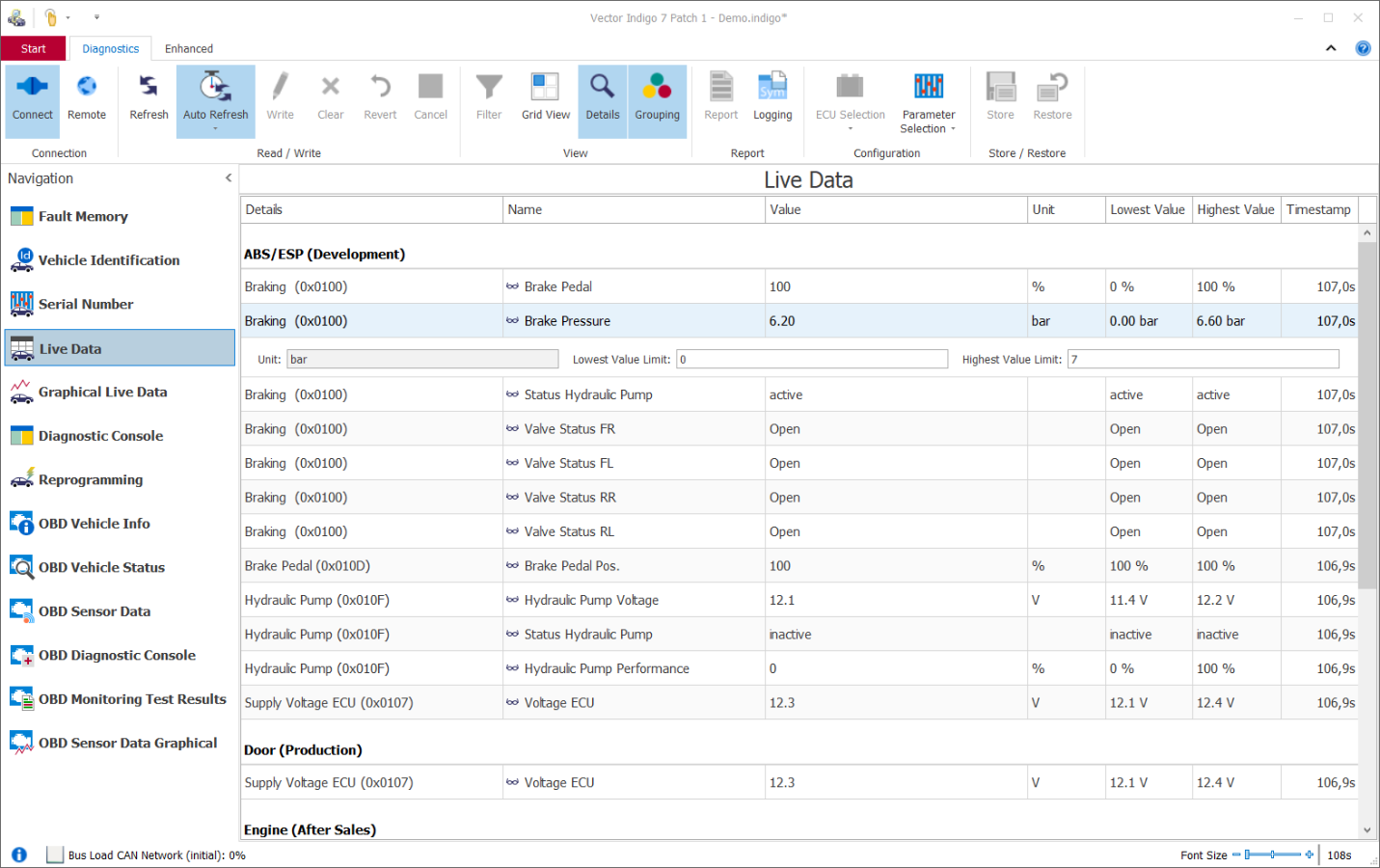
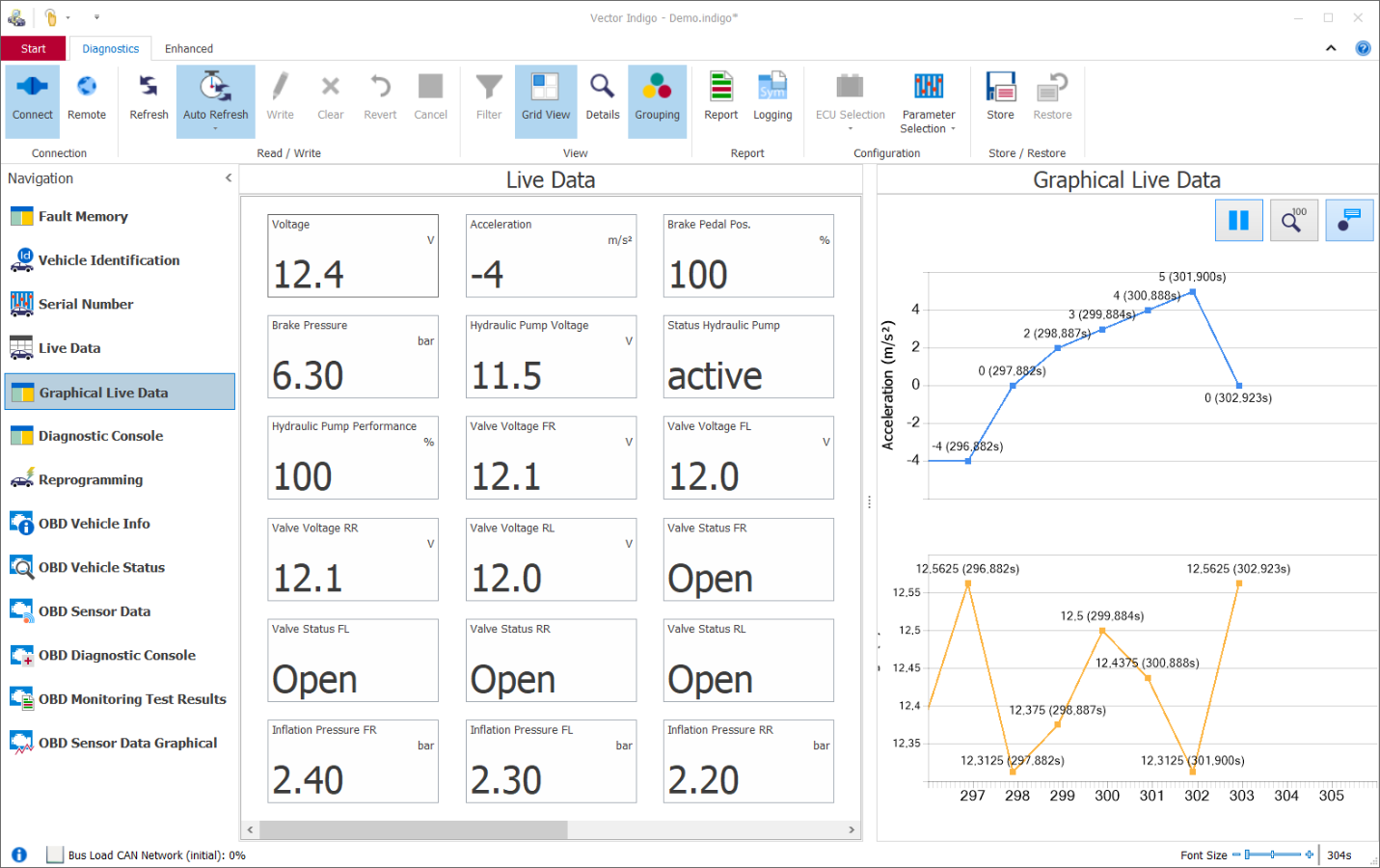
  • Live Data & Graphical Live Data: Measurement of diagnostic data and CAN signals. The display can be either tabular or graphical. Export of measurement data as CSV or standardized MDF4 files for analysis in tools such as Vector CANape.
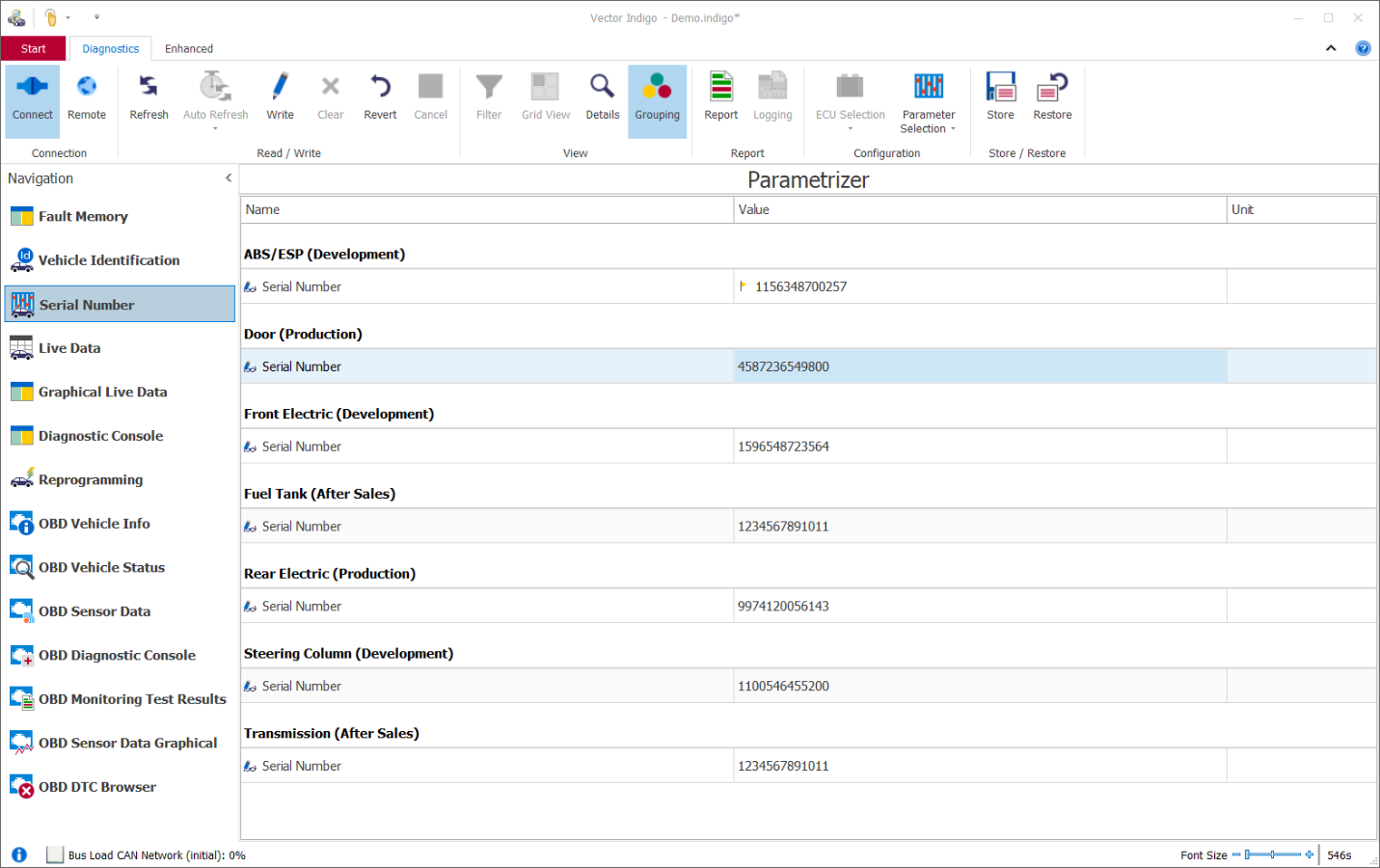
  • Parametrizer: Readout or modification of selected parameters. At the point of input, the validity of new parameters is checked. Parameter sets can be saved and restored as needed.
  • Compare and Parametrize: Compare an original ECU parameter set with the commissioning parameter set.

Execution of routines stored in ECUs

  • Routine Control Center: Start or stop the execution of remote routines (e.g. UDS service 0x31) and check the result of the routine.

Testing actuators of single or multiple ECUs

  • IO Control Center: Convenient control for selected actuators in the ECU.

Use Case Windows [2]

Overview of the status of the installed ECUs in the vehicle

  • Quick Check: Display of cross-vehicle identification data and number of fault memory entries per ECU.

Execution of diagnostics required by law

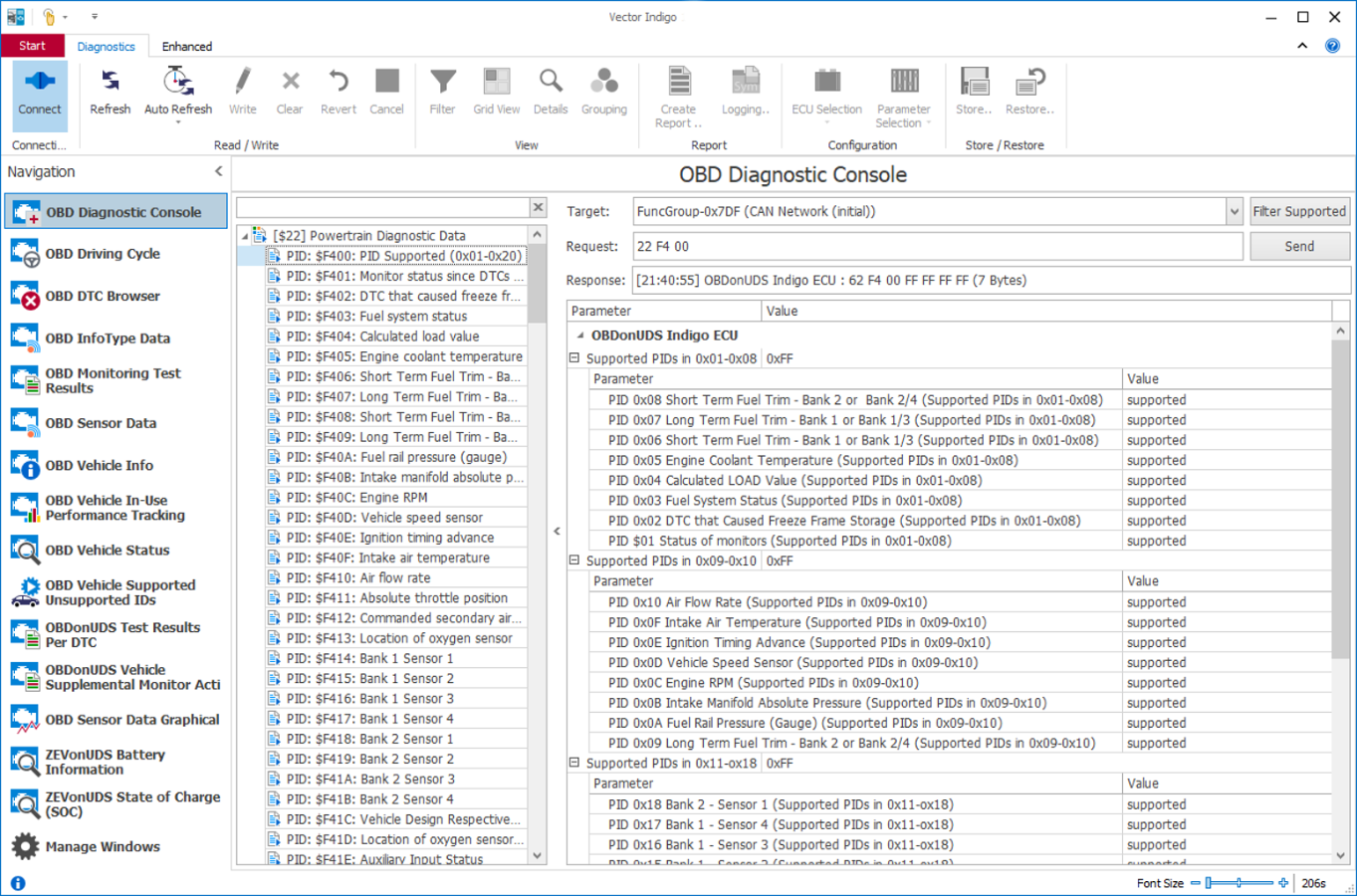
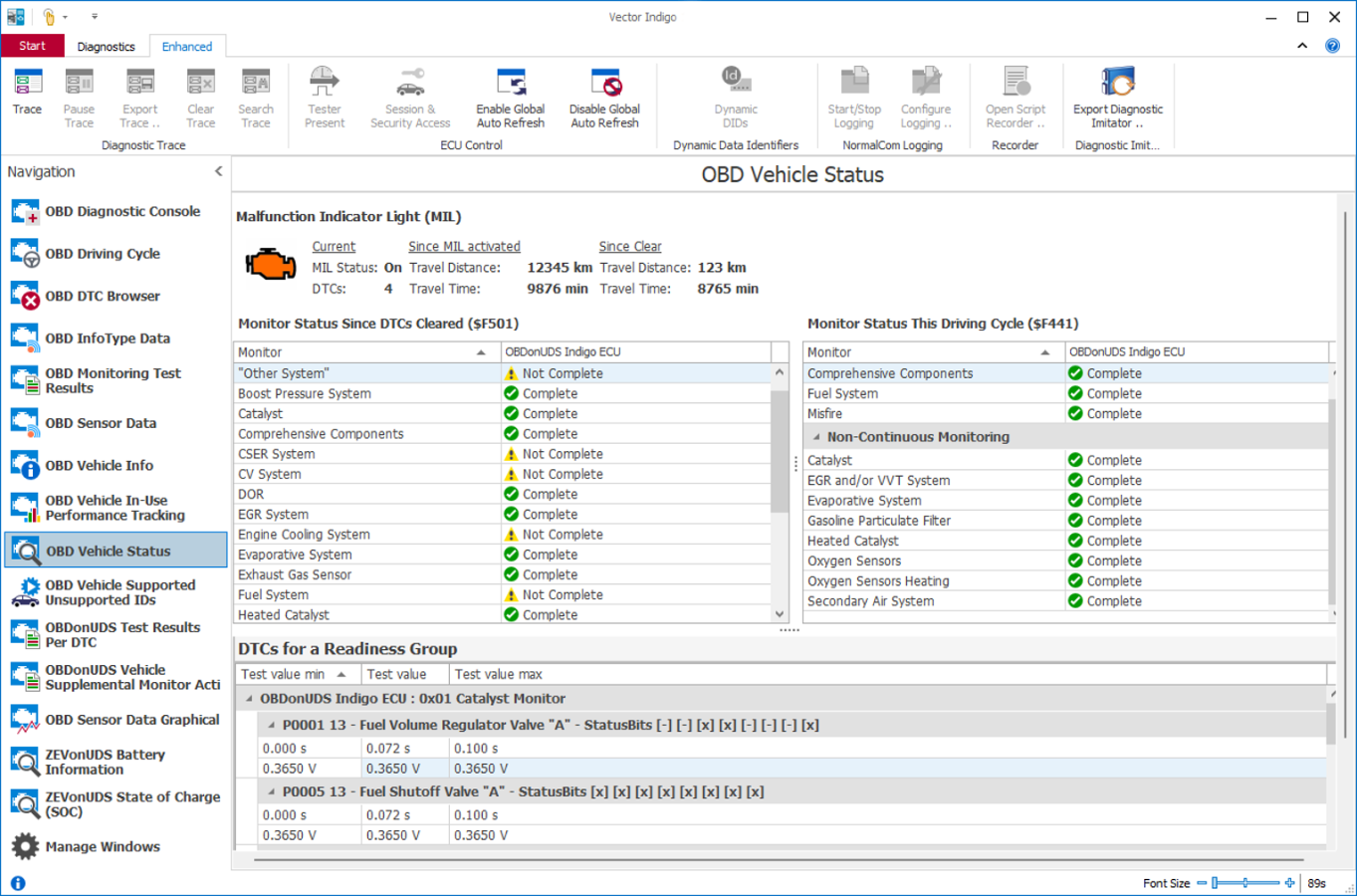
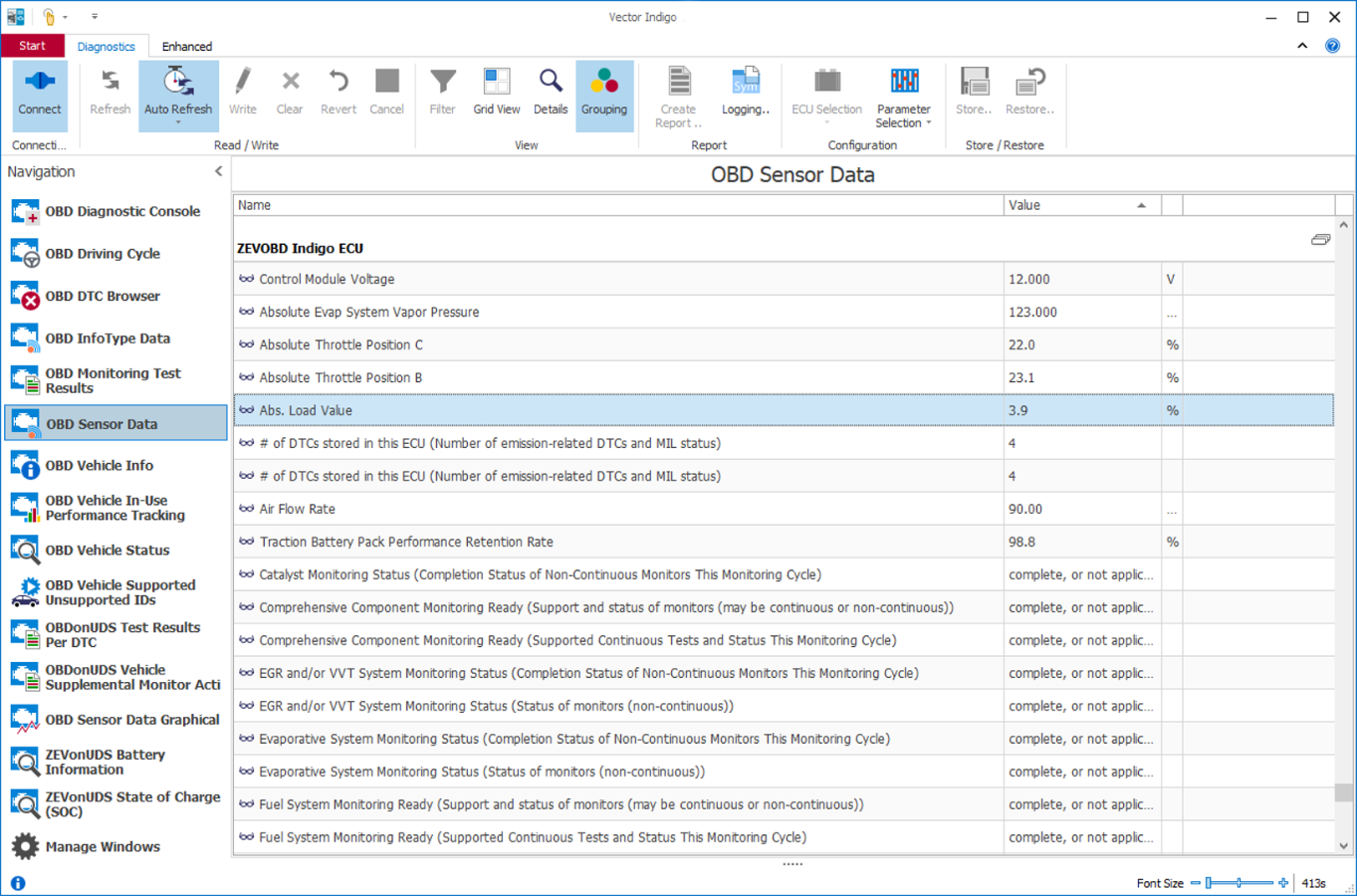
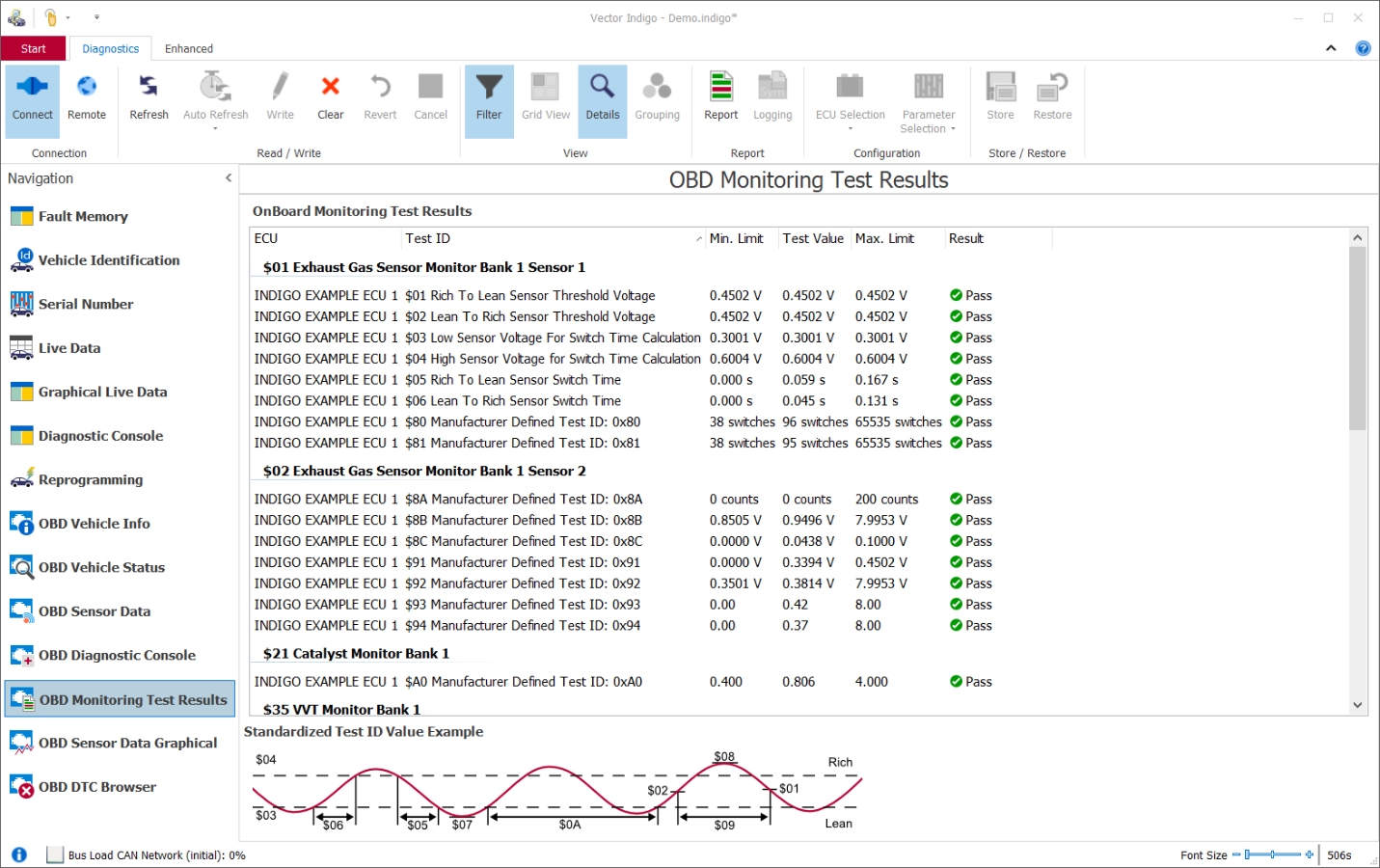
  • OBD Tools: Read and evaluate various predefined OBD data across different OBD standards (OBDonUDS, ZEVonUDS, OBD2, WWH-OBD or HD-OBD), such as Fault Memory and Environmental Data, Vehicle Info, Vehicle Status, Monitoring Test Results, Vehicle In-Use Performance Tracking, Vehicle Sensor Data and Vehicle Sensor Data Graphical.
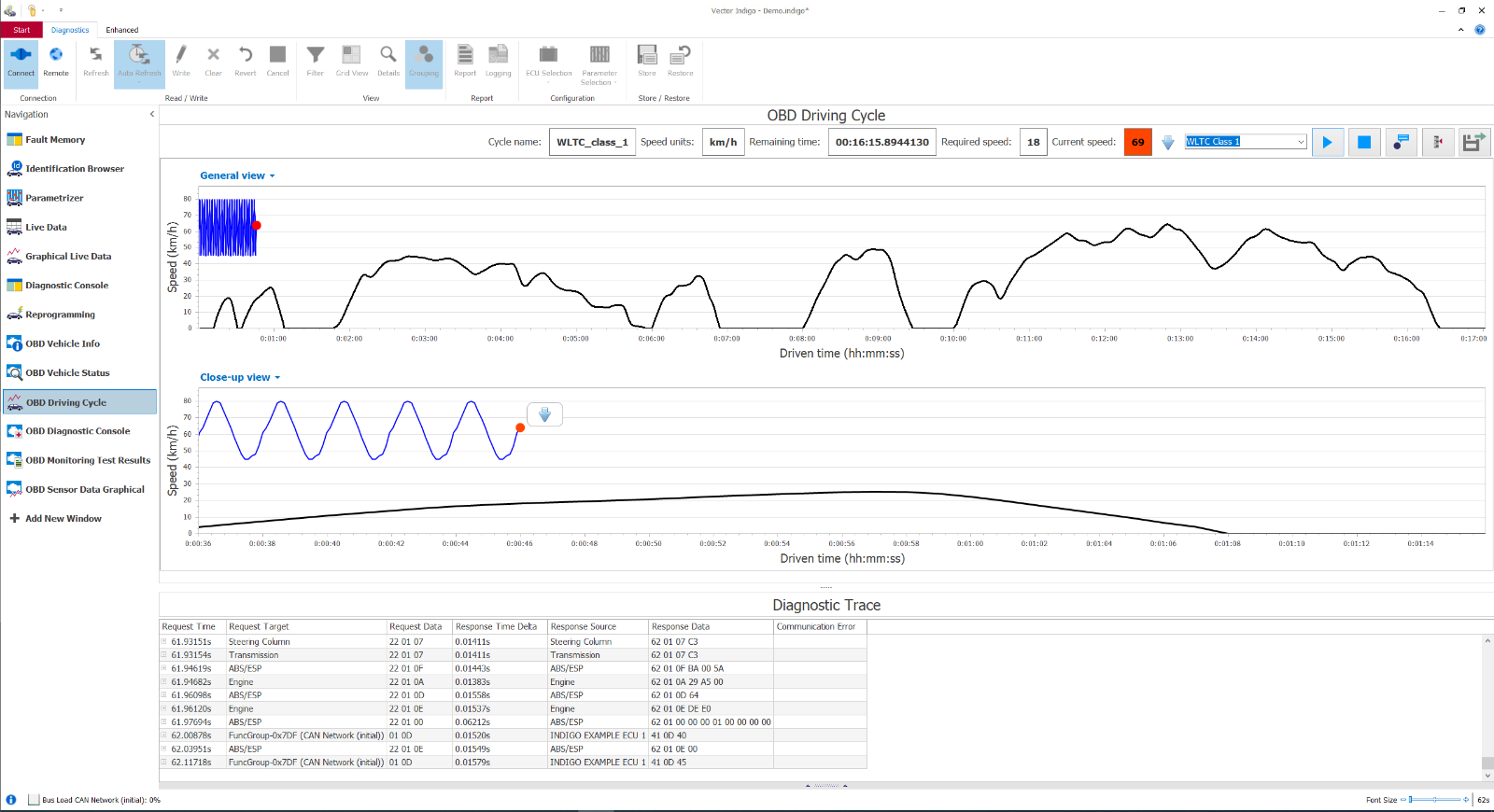
  • OBD Driving Cycle: Running of emission test driving cycles with graphical support for the test driver.

Configuration of ECUs for communication with charging infrastructure

  • Plug and Charge: installation of contract certificates and private keys for smart charging according to ISO 15118.
  • Value Added Services: Vehicle preconditioning according to VAS/VDV 262.

Direct access to diagnostic services

  • Diagnostic Console: Manual execution of diagnostic services from the diagnostic description file.

Updating ECU software

  • Reprogramming: Execution of vFlash Pack&Go projects. An installation and license of vFlash is required for this. Supported vFlash hardware is available at www.vector.com/vflash.
Indigo_Diagnostic_Imitator.jpg
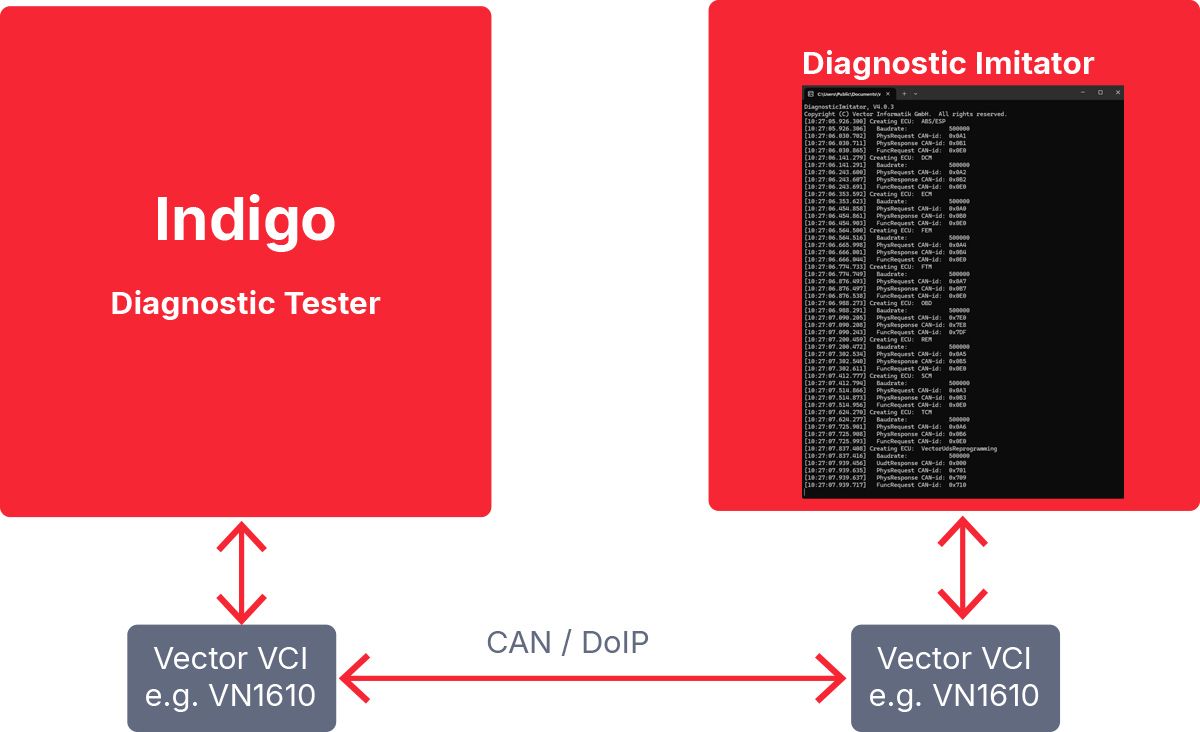
Diagnostic Imitator for simulation of the diagnostic behavior of ECUs

Advanced Functions

Live display of diagnostic telegrams

  • Trace Window: Tool-wide display of sent and received diagnostic telegrams (including interpretation). The contents of the Trace Window can be saved as a log file for later analysis.

Logging of CAN bus communication

  • Normal-Com Logging: Tool to record all CAN bus raw data independent of the source. Export of CAN bus logs to CANoe ".asc" or to ".blf" files.

Convenient settings for session and security access management

  • Session & Security Access: Tool for changing the status per ECU, changing the session, unlocking the ECU and authentication on the ECU.
  • Cyber Security: Indigo supports security access via a Seed&Key dll as well as additional diagnostic authentication using the Vector Security Manager.

Recording and execution of repetitive diagnostic sequences

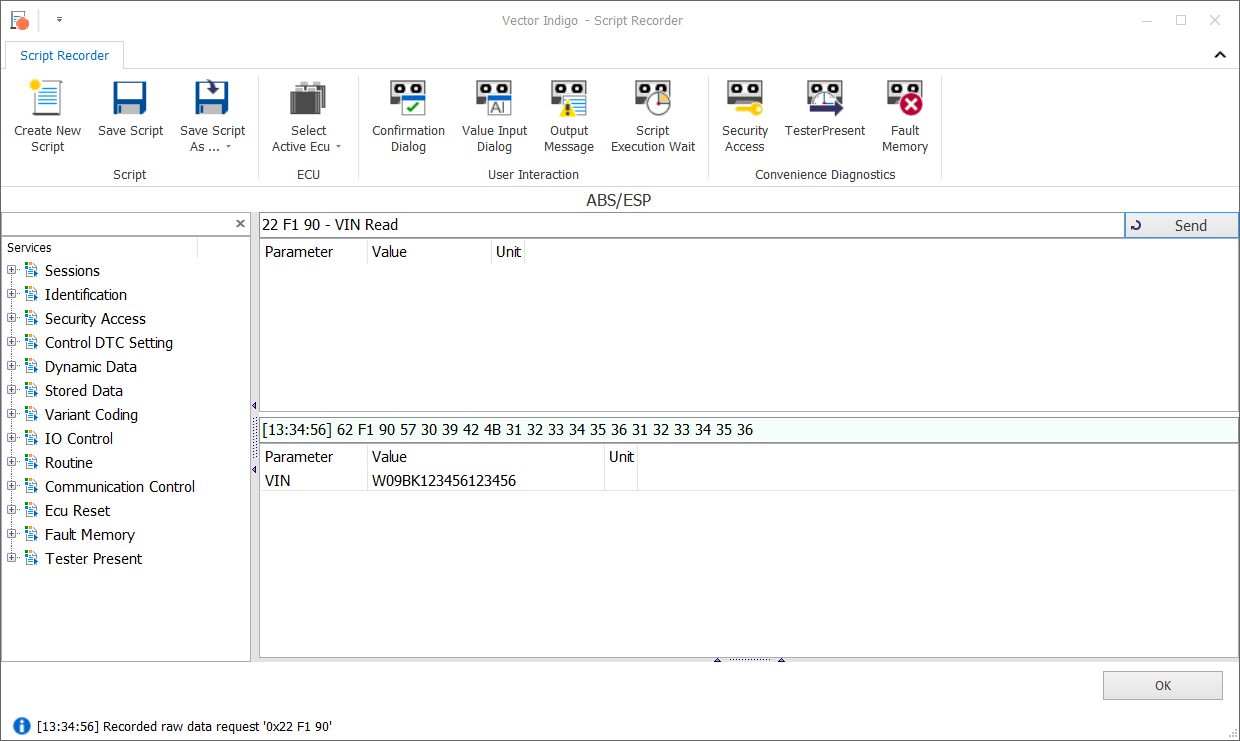
  • Script Runner/Recorder: Tool for convenient recording and execution of repetitive diagnostic sequences and creation of vFlash Custom Actions. The C#-based scripts (VDS) can be reworked with Visual Studio and reused in all Vector Testing Tools with diagnostic functionality (CANoe, CANape ...).

Customization of Indigo

  • Indigo Software Development Kit (SDK): tool for developing customer-specific diagnostic user windows. The C#-based windows can be implemented with Visual Studio by the customer or by Vector.

Diagnostic Imitator

  • The Diagnostic Imitator simply simulates the diagnostic behavior of ECUs. The imitator responds to Diagnostic Requests with predefined responses.
  • Fast automated configuration from a communication recording and a diagnostic database - ideal for realistic simulation of ECU and vehicle behavior - even faulty ones.
  • Easy manual configuration using the loaded diagnostics database in Indigo.
  • Efficient collaboration with suppliers: field problems can be specifically reproduced and analyzed using simulation.
  • Simple testing of diagnostic scripts - without any real ECUs or active diagnostic communication.

Videos

Images

Indigo_Setup_Configuration.jpg
Parameterization and Configuration of Indigo
Indigo_Diagnostic_Imitator.jpg
Diagnostic Imitator for simulating the diagnostic behavior of ECUs
Screenshot_Indigo_10_SP2_5.png
Indigo Fault Memory Overview
Indigo_11_OBD_DiagnosticConsole.png
OBD view: Diagnostic Console
Indigo_11_OBDVehicleStatus.png
OBD view: OBD vehicle status
Compare_and_Parametrize.jpg
Use Case Window: "Compare and Parametrize" and "Graphical Live Data"
DriveCyle.png
Use-Case Window: OBD Driving Cycle
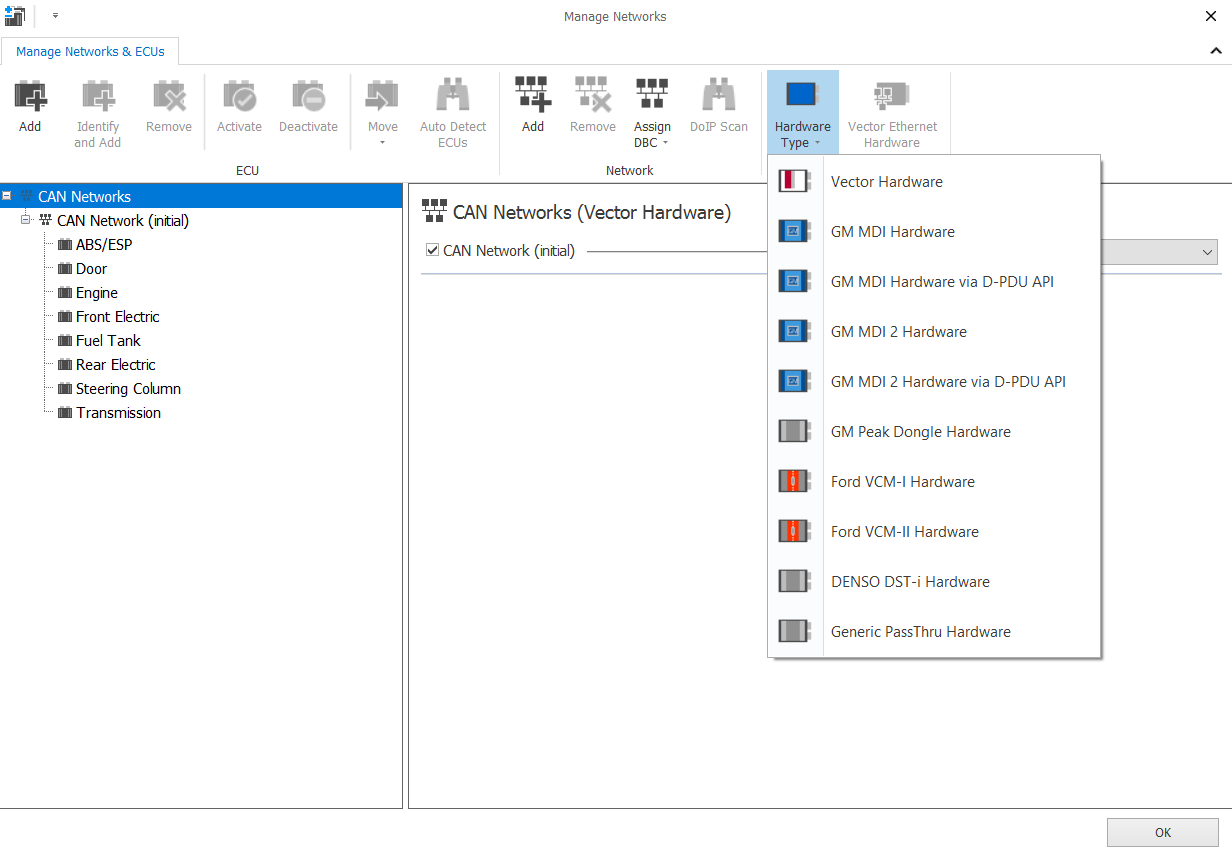
Indigo_Hardware_Support.png
Indigo Hardware Support
Graphical_Measurement_Data_LiveData_List_Display.png
Live Data: Measurement List View
Live-Data_Measurment_Diagnostic_Data.png
Live Data View: Measurement of Diagnostic Values
Graphical_Measurement_Data_Live_Data.png
Live Data: Measurement View
OBD_DTC_Browser.png
OBD DTC Browser
Indigo_11_OBDSensorData.png
OBD view: OBD sensor data
Indigo_11_OBDIUMPR.png
OBD view: IUMPR data
Indigo_11_OBDZEVonUDS_BatteryInformation.png
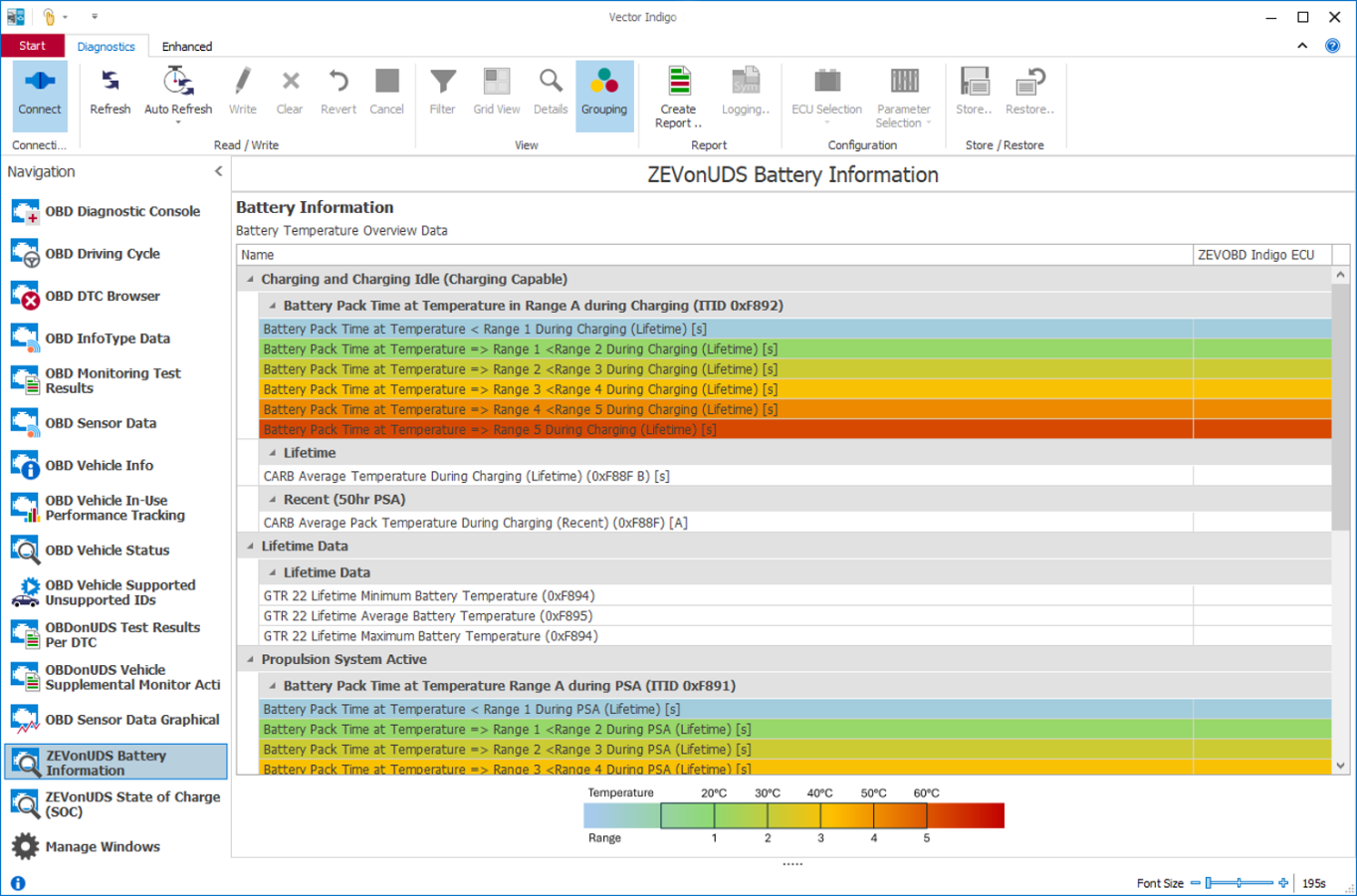
OBD view: Information on the battery status of e-vehicles via ZEVonUDS
Monitoring_OBD_TestResults.png
OBD Monitoring Test Result
Parametrizer.png
Parametrizer
Script_Recorder.png
Script Recorder

Highlights of Version 12

Extended OBD Functionality

Indigo 12 extends OBD diagnostics to include the latest standards, new value ranges, and a comprehensive vehicle report.

OBD Standards and DTCs:

  • Indigo 12 supports new OBD DTCs in accordance with SAE J2012-DA:202510, as well as expanded value ranges for ZEVonUDS battery information and State of Charge

OBD Vehicle Report:

  • The new OBD Vehicle Report consolidates OBD data from all detected ECUs into a single report. Users can flexibly specify which information should be included. This quickly provides a clear overview of the vehicle’s diagnostic status.

OBD Vehicle Info:

  • For DoIP-based OBD scenarios, the display of ECU information has been improved: Instead of an empty CAN-ID field, Indigo now displays the ECU’s logical destination address.

Benefits:

  • Comprehensive OBD vehicle report covering all detected ECUs
  • Flexible selection of report content
  • Greater clarity in DoIP-based OBD scenarios

Option Flash: Software Updates Directly from Indigo

With the new Indigo Flash option, Indigo 12 becomes an even more comprehensive platform for diagnostics and software update processes.

The Flash option expands Indigo’s capabilities to include the ability to perform software updates via diagnostics – based on existing Vector vFlash projects. This allows diagnostic and flash tasks to be more closely integrated without requiring users to reconfigure their established vFlash projects.

What makes this special: Customers can decide specifically whether they need software update functionality. Those who need it can activate the option. Those who perform only diagnostic tasks can stick with a streamlined Indigo configuration. This provides economic flexibility and ensures clear, fair licensing.

Benefits:
•    Software updates directly from Indigo
•    Use of existing vFlash projects
•    Attractive subscription model
•    Fair cost structure: pay only for what you need

DoIP

The DoIP version reported by the ECU is now automatically retrieved from the Vehicle Announcement Message. In addition, users can select the appropriate TLS client configuration for DoIP over TLS for each individual ECU.

This reduces manual effort and enhances security in modern Ethernet-based diagnostic environments.

Benefits:

  • Automatic retrieval of the ECU’s DoIP version
  • Reduced configuration effort
  • Targeted TLS selection per ECU
  • Enhanced security for DoIP over TLS

Additional Enhancements

Expanded PassThru Support

  • New support is now available for DoIP-VCIs in accordance with SAE J2534 PassThru 05.00 and CAN-FD-VCIs in accordance with SAE J2534 PassThru 04.x. This allows Indigo to be integrated even more flexibly into existing test, development, and workshop environments.

CAN FD Baud Rate Configurator

  • Indigo 12 now supports adjustment of the baud rate, including relevant bit timing values such as Tseg, Sam, and Sjw. This simplifies the configuration of CAN and CAN-FD communication and reduces potential sources of error during commissioning.

Improved Access to External Files

  • Files referenced in Indigo projects or distributed via Pack&Go or Sealed Projects can now also be used from SDK windows and VDS scripts.

DTC History View: Track Changes to the Fault Memory

  • The new DTC History View makes changes to the fault memory visible and traceable. Users can now manually trigger a fault and use the DTC History View to verify whether the fault is correctly detected by the ECU.

FAQs

Supported Hardware

  • Vector: VN16xxVN56xx
  • PassThru devices: SAE J2534 Hardware
  • D-PDU API devices based on ISO 22900-2
Start a Conversation
Cebrail Özay
Business Development Manager Diagnostics & Flashing
Start a Conversation
Are you interested in solutions and tools for next generation diagnostics & flashing? Then lets talk!

Request a Trial Version

Related Products